A viral X post is calling it a “leak,” but the repository itself is public — and that correction actually makes the story more useful.
The post points developers toward a GitHub project that attempts to map the AI-agent ecosystem into one searchable, structured collection. The viral framing says someone mapped 300+ AI agents into a single repo; the upstream project has already grown beyond that number.
The viral X post presents the repository as a shortcut through the current agent-tool explosion: instead of testing every framework, coding agent, browser agent and orchestration tool individually, developers get one place to start comparing what exists.
The repository is public — and much larger than “300+” now
The upstream Awesome AI Agents 2026 repository describes itself as a structured, production-focused guide to AI agent frameworks, tools and resources. Its agent-facing documentation now says the catalog contains more than 470 frameworks, tools, protocol specifications, evaluation benchmarks and infrastructure projects across more than 32 categories.
That distinction matters. This is not a stolen internal shortlist or a breached database. It is an open-source directory whose usefulness comes from organization, update cadence and breadth.
What is actually inside the map
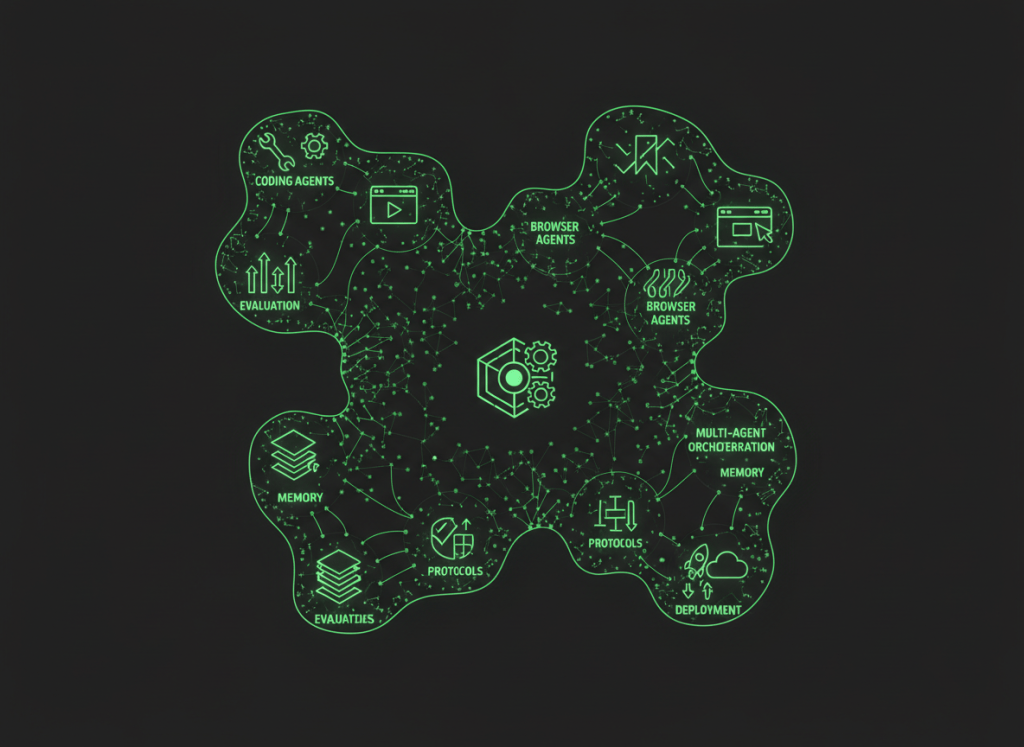
The project is broader than a list of chatbots. Categories include orchestration frameworks, coding agents, memory and context systems, multi-agent platforms, agent communication protocols, browser and computer-use agents, deployment tooling, observability, testing, evaluation, secure execution environments, deep-research agents, local and self-hosted systems and industry-specific agents.
That is why the viral post resonates. The current problem for developers is often not “where can I find an AI agent?” It is “which layer of the stack am I actually trying to solve?” A coding agent, browser agent, orchestration framework and evaluation harness may all use similar marketing language while solving very different problems.
The list is becoming infrastructure for discovery
The repo now includes an AI Registry Explorer and structured project documentation intended to make the catalog searchable and machine-readable. That pushes it beyond a traditional “awesome list” and closer to a discovery layer for developers trying to assemble agent stacks.
The broader industry is moving in the same direction. TechCrunch reported this week on Brian Chesky’s argument that AI agents ultimately need something closer to an operating-system layer so agents can interoperate rather than remain isolated apps.
A giant categorized agent index does not solve interoperability, but it exposes the same underlying problem: the ecosystem is becoming too large for developers to navigate by brand recognition alone.
The useful shortlist is not one tool — it is one category at a time
The best way to use the repository is not to install 470 tools. It is to narrow the decision tree. Need autonomous coding? Start in coding agents. Need agents that operate websites? Look at browser and computer-use systems. Need multiple agents coordinating a workflow? Compare orchestration and multi-agent frameworks. Need to know whether any of it works reliably? Move to testing, evaluation and observability.
That filtering mindset lines up with BitcoinVersus.Tech’s recent coverage of Claude Code mods that can rewrite agent behavior from inside the tool, Jeff Dean’s viral 100-agent orchestration lecture, and AI agents being used to attack a quantum-algorithm benchmark.
The real “leak” is how crowded the agent market has become
The viral post works because it feels like someone revealed a hidden menu. In reality, the information is already public. What changed is the packaging: hundreds of agent projects are being compressed into one index that makes the scale of the market obvious at a glance.
That may be the more important signal. AI agents are no longer a small category centered on a few headline products. They are becoming a layered software ecosystem with frameworks, protocols, runtimes, evaluation systems, security tools and specialized applications — enough that finding the right tool is becoming its own engineering problem.
BitcoinVersus.Tech
Advertisement
Editor’s Note
We volunteer daily to ensure the credibility of the information on this platform is Verifiably True. If you would like to support to help further secure the integrity of our research initiatives, please donate here: 3C9o19EH5HSiwEPyCTmEKzxhNCbo2X6TTb
BitcoinVersus.tech is not a financial advisor. This media platform reports on financial subjects purely for informational purposes.


Leave a comment