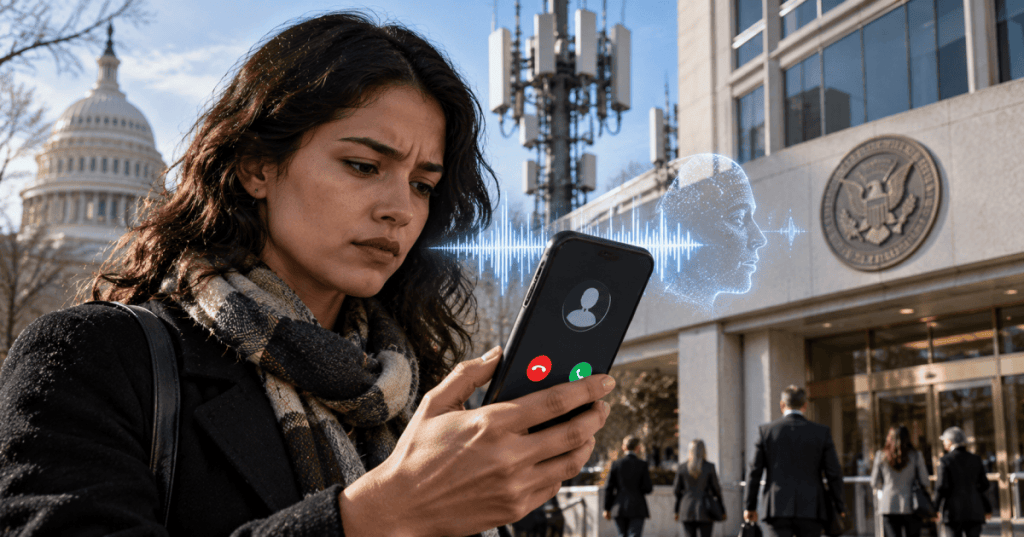
What We Know
- The Federal Communications Commission is considering a petition from Club for Growth that seeks an exemption allowing certain noncommercial political calls to wireless numbers using artificial, prerecorded, or AI-generated voices without prior express consent.
- The FCC has not approved the request. It opened the petition for public comment, with reply comments due October 19, 2026.
- The proposal would change a consent rule for some political calls, but it would not legalize fraud, voter intimidation, impersonation, or every form of automated political calling.
A live FCC proceeding has become a test of how election speech, artificial intelligence, consumer consent, and communications law should fit together just weeks before the 2026 midterm elections.
On September 4, the FCC’s Consumer and Governmental Affairs Bureau released Public Notice DA 26-940, seeking comment on a request from Club for Growth. The filing asks the commission for a limited waiver of its rules and an exemption under federal law so callers could make certain noncommercial political calls to wireless telephone numbers using an artificial or prerecorded voice—including an AI-generated voice—without first obtaining the recipient’s express consent.
That wording matters. The FCC is reviewing a petition. It has not announced a new rule, and the existing consent requirements remain in effect unless and until the commission acts.
What the Petition Actually Requests
The legal target is narrow but consequential. Club for Growth is asking for relief from 47 CFR § 64.1200(a)(1)(iii) and an exemption from 47 U.S.C. § 227(b)(1)(A)(iii). Those provisions generally restrict calls using artificial or prerecorded voices to wireless numbers without prior express consent.
The FCC’s own notice summarizes the request as permission for calling parties to make noncommercial political calls to wireless numbers using an artificial or prerecorded voice, including an AI-generated voice, without obtaining prior express consent from the recipient.
Club for Growth argues that current restrictions are outdated and can burden political speech. Reporting by Reuters and the Associated Press says the group has also argued that newer calling technology could help campaigns communicate in more languages, reach more voters, and improve polling or voter-contact efforts.
The FCC Is Building a Record, Not Announcing a Decision
The September 4 public notice is a procedural step. The bureau asked interested parties to submit comments in CG Docket No. 02-278. Initial comments were due October 5, and reply comments are due October 19.
A public-comment notice does not tell the public how the commission will ultimately vote. The FCC can grant the request, deny it, narrow it, impose conditions, or take no immediate action.
That distinction is especially important because the current debate is occurring close to the midterm election. Headlines that describe the agency as already “allowing” AI political robocalls would overstate what has happened so far.
Why AI Changes the Stakes
Artificial voices make automated political calls more flexible than traditional prerecorded messages. Modern voice systems can imitate natural speech, translate messages quickly, generate different versions for different audiences, and potentially participate in interactive conversations rather than simply playing a fixed recording.
Those capabilities create both legitimate communications uses and new risks. Campaigns and advocacy groups could use AI to reach more people at lower cost or communicate across languages. At the same time, synthetic voices can make it harder for recipients to tell whether they are hearing a real person, a prerecorded statement, or an AI-generated interaction.
The FCC confronted that problem directly in 2024. In FCC 24-17, the commission concluded that AI-generated human voices fall within the Telephone Consumer Protection Act’s rules for artificial or prerecorded voices.
The 2024 New Hampshire Robocall Is the Key Precedent
The modern policy debate accelerated after New Hampshire voters received automated calls using an AI-generated voice that imitated then-President Joe Biden before the state’s 2024 presidential primary.
The message falsely suggested voters should skip the primary and preserve their votes for the general election. Federal and state authorities responded with enforcement actions, and the FCC later emphasized that AI voice cloning does not escape existing artificial-voice restrictions simply because the voice was generated by newer technology.
That episode is frequently cited by opponents of loosening the consent rule because it showed how low-cost synthetic audio could be used in an election context. It is also important not to overread the precedent: the current petition does not ask the FCC to legalize deceptive voter-suppression calls.
The Argument for the Waiver
Supporters of the petition frame the issue primarily around political speech and technological neutrality. The argument is that political organizations should not face stricter barriers to using modern automated voice tools than some other categories of callers using prerecorded technologies.
Club for Growth has argued that political communication receives strong First Amendment protection and that the current regulatory framework can make it harder to adopt emerging AI calling tools. The group also says automation could improve outreach efficiency, multilingual communication, and voter-contact coverage.
Those claims are policy arguments rather than established findings. Whether AI calling actually improves polling quality, participation, or campaign communication would depend heavily on how the technology is implemented and how recipients respond to it.
The Argument Against the Waiver
Opponents focus on consent, deception risk, privacy, and timing. FCC Commissioner Anna Gomez has publicly urged the commission not to approve the request, arguing that consumers expect robocall protections to remain stable close to Election Day.
Consumer and democracy-focused groups cited by the Associated Press have also warned that AI-driven calling could create large volumes of unwanted calls while making political messages more difficult to evaluate. Interactive AI callers could potentially collect information from voters or generate answers dynamically during a conversation.
Those concerns do not mean every AI political call would be deceptive. The policy question is whether removing the prior-consent requirement would make harmful uses easier or simply give political speakers access to the same communications tools already used elsewhere.
What Has Not Changed
No FCC rule change has been approved. The petition remains under consideration.
Even if the FCC grants some form of waiver or exemption, separate laws and regulations would continue to matter. Rules addressing fraud, caller-ID spoofing, voter intimidation, impersonation, deceptive election practices, and other misconduct are not automatically erased by an exemption from one robocall consent provision.
The Associated Press also reports that a granted waiver would still be subject to conditions such as opt-out mechanisms and limits on call frequency under the framework being discussed. The final details would depend on the FCC’s actual order, if one is issued.
What the FCC Will Have to Decide
- Consent: whether political speech justifies an exemption from the ordinary prior-consent rule for artificial or prerecorded wireless calls.
- AI treatment: whether AI-generated voices should be treated differently from traditional prerecorded political audio for this purpose.
- Timing: whether changing the rule shortly before a federal election creates additional risk or simply delays access to lawful communications technology.
- Conditions: what opt-out, disclosure, frequency, identification, or recordkeeping requirements should apply if the FCC grants relief.
- Scope: whether any relief should apply broadly to political callers or narrowly to the specific petition before the commission.
What to Watch
The next immediate date is October 19, when reply comments are due in the FCC docket. After that, the commission can decide whether to act on the request.
The most important document will not be another political statement from either side. It will be the FCC’s eventual order—if one is issued—because that document would define the legal scope, conditions, timing, and reasoning behind any change.
Until then, the accurate description is straightforward: the FCC is considering an exemption request involving unsolicited political calls and AI-generated voices; it has not approved the exemption.
Primary Sources
- FCC Public Notice DA 26-940 — September 4, 2026
- FCC 24-17 — AI-Generated Voices and the TCPA
- Reuters — FCC petition and stakeholder positions
- Associated Press — political robocall petition and consumer concerns
Editor’s Note
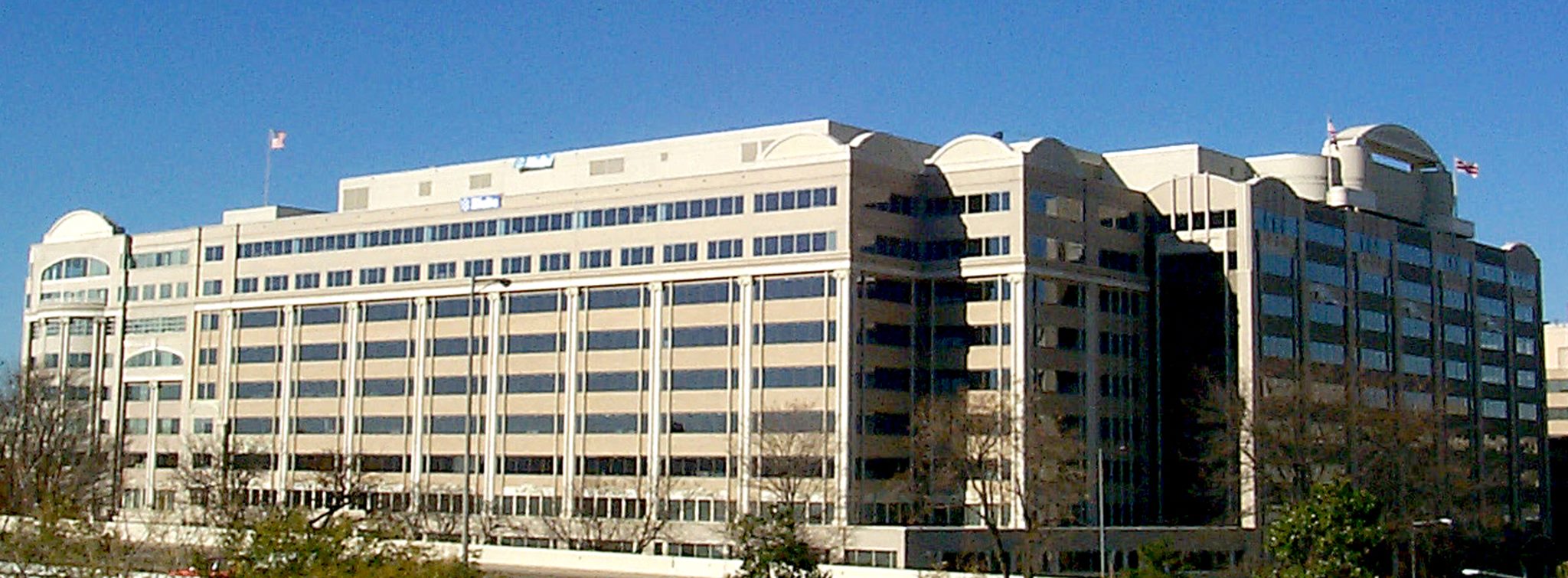
This report treats statements from Club for Growth, FCC commissioners, advocacy organizations, and other political actors as attributed positions rather than established fact. The featured image is an original 1200×630 photorealistic editorial illustration created specifically for this report. The separate body image is a public-domain FCC photograph. Standard responsive Gutenberg content is used throughout with no text boxes.
BitcoinVersus.Tech reports on technology, policy, science, business, and finance for informational purposes.


Leave a Reply