
Hashrate and mining difficulty are closely connected, but they measure two different things. Hashrate is the speed of the miners. Difficulty is how hard the Bitcoin network makes the proof-of-work target.
If more mining machines join the network, total hashrate rises and blocks tend to arrive faster. Bitcoin eventually responds by increasing difficulty. If large amounts of hashrate disappear, blocks tend to slow down and the next difficulty adjustment can make mining easier.
Hashrate measures speed
Hashrate tells us how many cryptographic hash attempts are being performed every second. One ASIC might operate at 200 TH/s. A mining company may operate at tens of EH/s. The global Bitcoin network combines the estimated work of all miners.
Our companion explainer What Is Hashrate? breaks down H/s, TH/s, PH/s, EH/s, and ZH/s. The key point is that hashrate measures how many attempts miners can make.
Difficulty measures how rare a winning hash must be
Every Bitcoin miner is generating candidate block-header hashes. Most are invalid for proof of work because their numerical value is above the network target.
Mining difficulty is a human-friendly way of expressing how hard that target is to hit. Higher difficulty means a smaller acceptable target and therefore more hash attempts are expected before somebody finds a valid block. Lower difficulty means a larger target and fewer attempts are expected on average.
The Bitcoin developer documentation explains that a valid block header must hash below the target threshold and that Bitcoin periodically changes that target to keep block production near its intended pace.
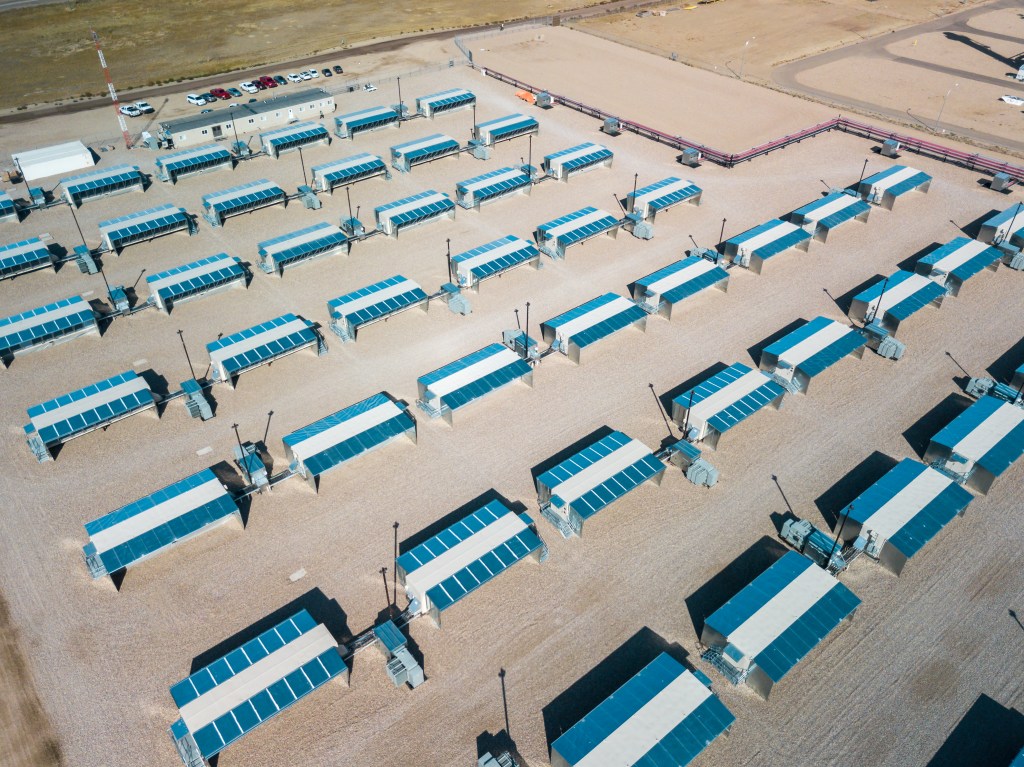
More hashrate initially makes blocks arrive faster
Imagine Bitcoin is operating with a fixed difficulty and the network suddenly doubles its hashrate. Miners are now making roughly twice as many attempts per second against the same target.
Until difficulty changes, blocks would tend to arrive faster than the roughly 10-minute target. Bitcoin does not immediately change the target after every block. It waits until the end of a difficulty period.
Difficulty adjusts every 2,016 blocks
Bitcoin recalculates its proof-of-work target every 2,016 blocks. At exactly 10 minutes per block, 2,016 blocks would take 20,160 minutes—or 14 days.
- If the period was too fast: difficulty rises.
- If the period was too slow: difficulty falls.
- If the period was almost exactly two weeks: difficulty changes only slightly.
In simplified form, Bitcoin compares the actual time taken by the prior difficulty period with the target time. The adjustment is bounded so one retarget cannot make the target more than four times easier or four times harder than the previous target.
Hashrate goes up first; difficulty reacts later
This timing is why hashrate and difficulty often appear to move together but not at the exact same moment.
Mining companies can plug in new ASICs today. That immediately adds hashrate. The protocol does not know that someone installed 5,000 new machines. It only observes the resulting block timestamps and then adjusts after the next 2,016-block boundary.
BitcoinVersus was already tracking this relationship in our February 2024 network-hashrate analysis, when rapid ASIC deployment was pushing total computational power upward and creating corresponding pressure on difficulty.
Hashrate can also fall before difficulty catches up
The same process works in reverse. If unprofitable miners shut down, a heat wave forces curtailment, electricity prices spike, or a large region loses power, hashrate can fall immediately while difficulty remains unchanged until the next retarget.
During that temporary gap, blocks can take longer than the target average because fewer hash attempts are attacking the same difficulty.
A real example arrived on June 14, 2026, when Bitcoin difficulty fell 10.09% from 138.96 trillion to 124.93 trillion after the prior epoch ran about 15.6 days instead of the 14-day target. Galaxy Research attributed the adjustment to hashrate coming offline as miner margins were squeezed.
Difficulty protects Bitcoin’s timing
Without difficulty adjustment, every major generation of faster ASICs would permanently accelerate Bitcoin’s block schedule. Blocks could arrive every five minutes, then every two minutes, then even faster as hardware improved.
That would also accelerate new bitcoin issuance because the block subsidy is paid per block.
Difficulty pushes against that hardware growth. More hashrate does not permanently create more blocks per day because the target becomes harder. Less hashrate does not permanently freeze the chain because the target can become easier.
This is why Bitcoin currently targets roughly 450 newly issued BTC per day regardless of whether the network contains hundreds of EH/s or more than a ZH/s of computation.
Hashrate vs. difficulty for an individual miner
For an individual miner, rising network hashrate and rising difficulty usually mean more competition for the same block subsidy.
If your machine remains at 200 TH/s while the rest of the network grows substantially, your share of global hashing power becomes smaller. After difficulty catches up, the expected amount of bitcoin earned by that unchanged 200 TH/s generally falls, assuming block subsidy, transaction fees, uptime, and pool economics remain comparable.
This is one reason ASIC efficiency matters so much. BitcoinVersus examined that hardware pressure in our 2025 coverage of diminishing efficiency gains in Bitcoin mining hardware. Miners are not only racing to add hashrate; they are trying to produce each terahash with fewer joules.
Overclocking changes your hashrate, not Bitcoin’s difficulty instantly
If you overclock one Bitaxe and raise it from 1.2 TH/s to 1.6 TH/s, your miner gets more attempts per second immediately. Bitcoin does not create a special difficulty just for that machine.
The network difficulty applies globally. Only when changes across all miners alter the pace of block production enough over an adjustment period does the next network retarget respond.
Our 2025 Bitaxe overclocking report is a useful small-scale example: changing a miner’s operating settings altered its hashrate immediately, while Bitcoin’s global difficulty remained a network-wide consensus parameter.
Hashrate vs. mining difficulty
| Question | Hashrate | Mining difficulty |
|---|---|---|
| What does it measure? | Hash attempts per second | How hard the proof-of-work target is to hit |
| Common units | TH/s, PH/s, EH/s, ZH/s | Difficulty ratio / target-derived value |
| Who changes it? | Miners adding, removing, tuning, or curtailing hardware | Bitcoin consensus rules at the retarget boundary |
| How quickly can it change? | Immediately | Every 2,016 blocks |
| If it rises alone? | Blocks tend to arrive faster temporarily | Valid hashes become rarer |
| If it falls alone? | Blocks tend to arrive slower temporarily | Valid hashes become easier to find |
| Main purpose | Measures computational throughput | Stabilizes average block timing |
The easiest way to remember it
Hashrate is the accelerator. Difficulty is the automatic resistance Bitcoin adds or removes to keep the system near its 10-minute rhythm.
More miners push harder. Bitcoin raises the bar. Miners leave, the chain slows temporarily, and Bitcoin lowers the bar. The result is a self-correcting feedback loop that lets mining hardware change by enormous orders of magnitude without rewriting Bitcoin’s basic block schedule.
BitcoinVersus.Tech Editor’s Note: Network hashrate is estimated from observed block production and difficulty rather than directly reported by every miner. Individual block times remain probabilistic, so the 10-minute interval is a long-run target, not a fixed timer.
Follow BitcoinVersus.Tech for Bitcoin mining, ASIC hardware, firmware, networking, semiconductors, energy, and open-source infrastructure coverage.
Support independent technology reporting: Bitcoin donations help fund BitcoinVersus.Tech research and publishing.
Disclaimer: BitcoinVersus.Tech provides technology news and education for informational purposes only.


Leave a Reply