Trending News
-
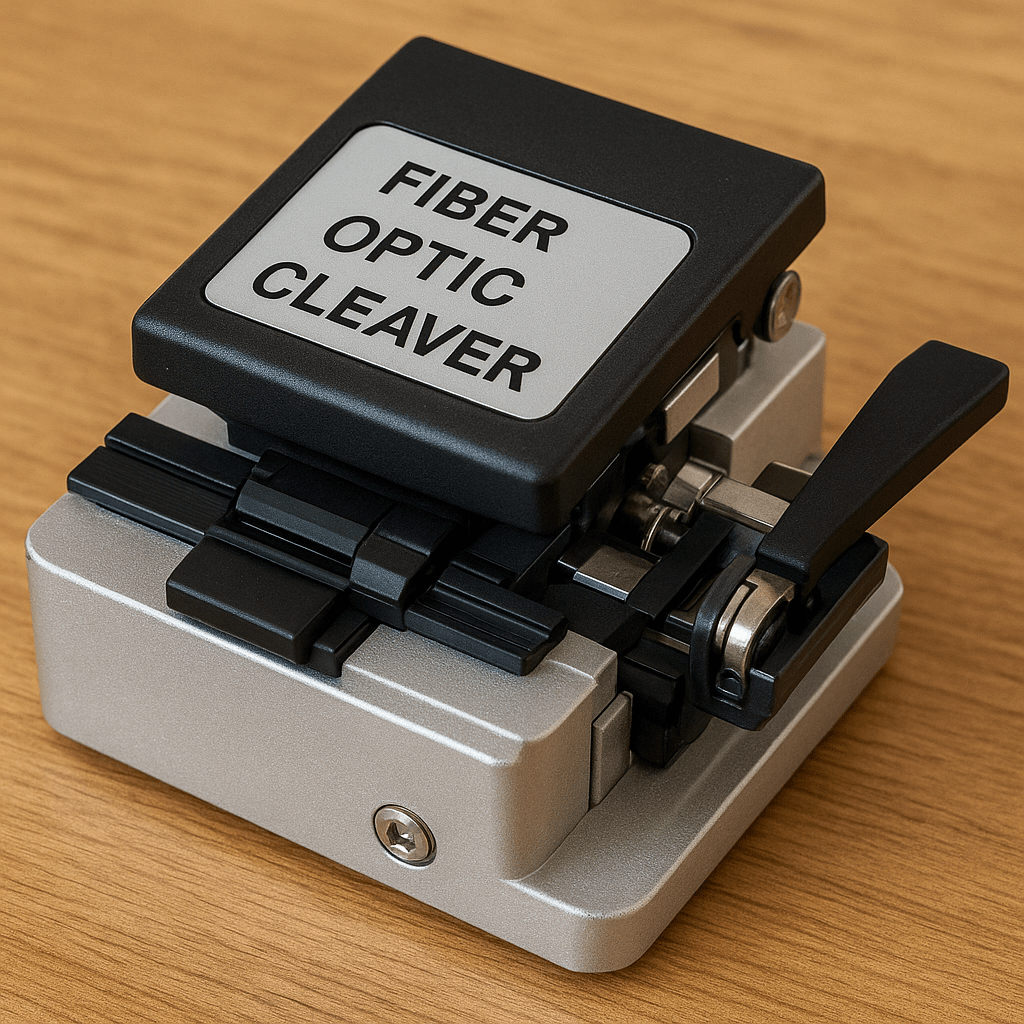
Cleaving fiber is a controlled mechanical process used to prepare optical fibers for splicing or termination by creating a clean, flat break at the end of the fiber. The goal is to produce an end face that is perpendicular to the fiber’s axis with minimal surface defects, which is critical for achieving low insertion loss…
-

An MPO test set is a specialized optical testing instrument designed to evaluate the integrity and performance of MPO fiber links by measuring insertion loss, return loss, polarity, and continuity across all fibers simultaneously. These test sets typically include an Optical Loss Test Set (OLTS) with MPO interface adapters, a Visual Fault Locator (VFL), and…
-
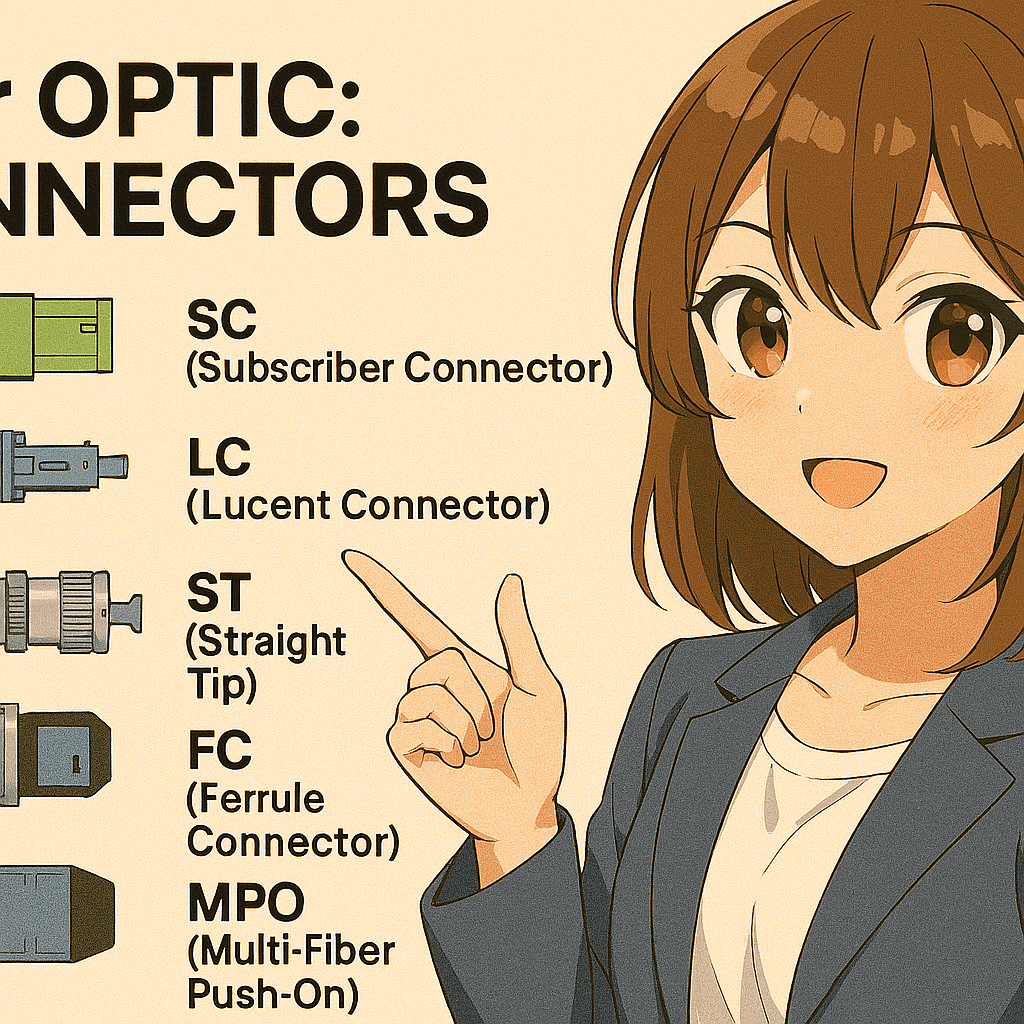
The most commonly known fiber connectors among fiber optic technicians are SC, LC, ST, FC, and MPO. Each has distinct physical characteristics and use cases, with SC and LC dominating modern deployments. SC (Subscriber Connector)The SC connector is a square-shaped, push-pull style fiber optic connector with a 2.5 mm ferrule. It’s widely used in telecom…
-

An MPO connector, short for Multi-fiber Push-On connector, is a compact, high-density fiber optic interface that accommodates multiple optical fibers—typically 8, 12, 16, or 24—in a single rectangular ferrule made of precision-molded thermoplastic. It uses a spring-loaded mechanism to maintain physical contact between fibers and is available in both male (with alignment pins) and female…
-
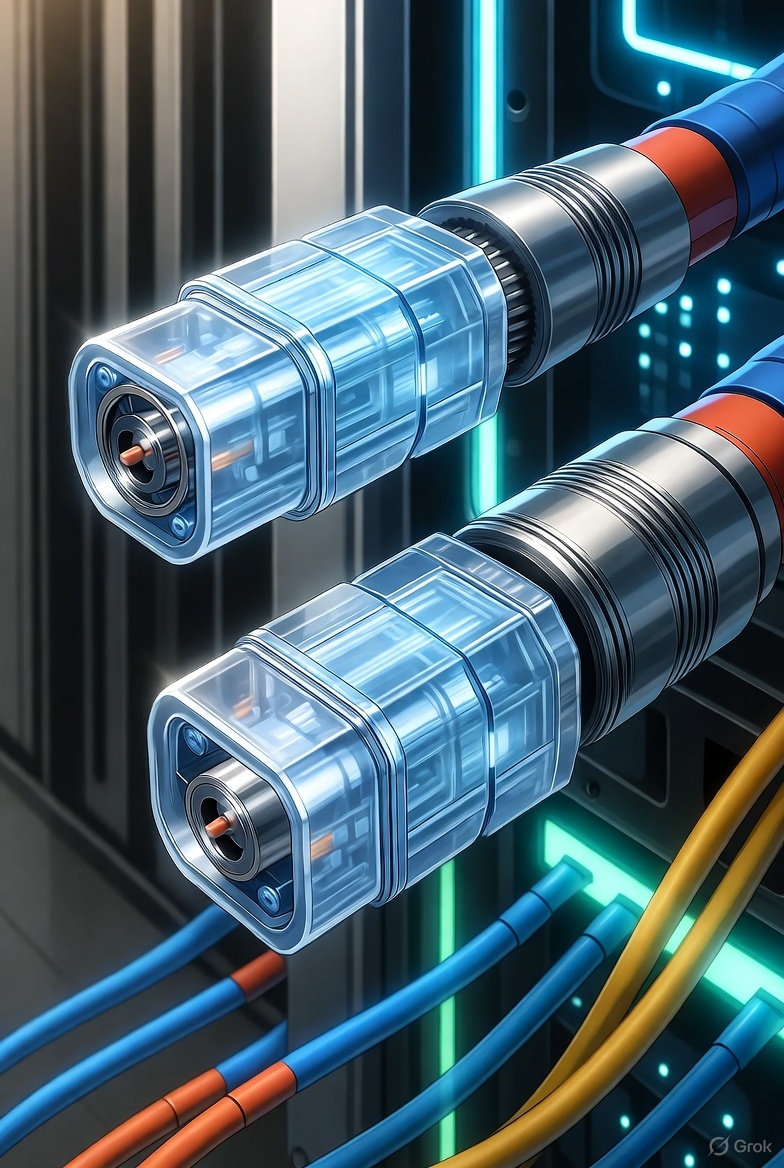
A splice-on connector is a type of fiber optic connector that allows technicians to fusion splice a pre-polished fiber stub housed within the connector body directly to a field fiber, combining the precision and low-loss performance of factory-terminated connectors with the flexibility of on-site installation. Splice-on connectors are ideal for high-performance environments where mechanical splicing…
-
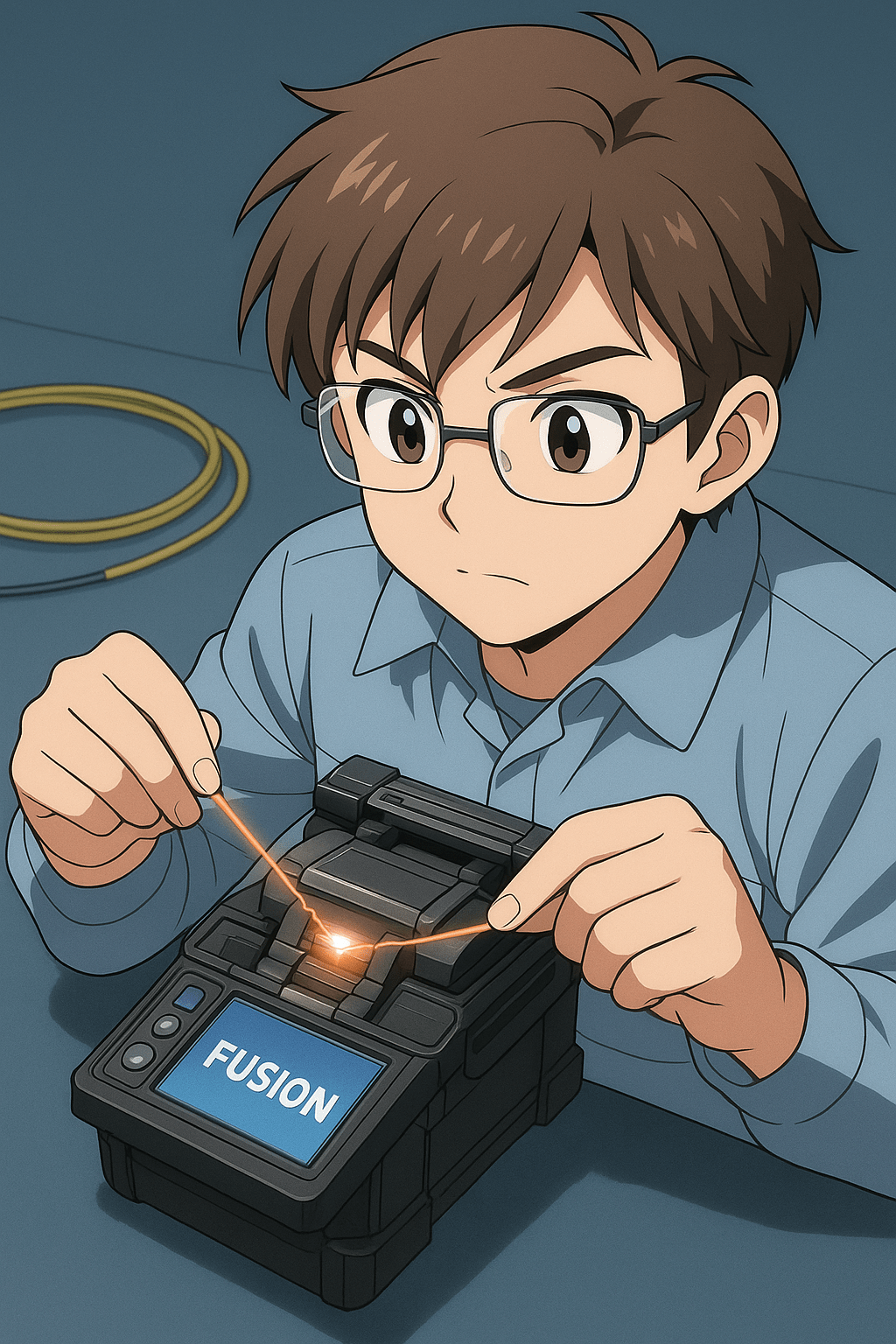
Fusion splicing is the process of permanently joining two optical fibers end-to-end by fusing them together using an electric arc. The goal is to align the fiber cores precisely and create a continuous optical path that minimizes signal loss and reflection. When properly done, the joint is almost as strong as the original fiber and…
-
An OTDR, or Optical Time Domain Reflectometer, is a diagnostic instrument used to analyze the integrity and performance of fiber optic cables. It works by launching a series of high-speed optical pulses into the fiber and measuring the light that is scattered or reflected back due to imperfections, splices, connectors, or breaks. By calculating the…
-

On October 31, 2008, the pseudonymous creator Satoshi Nakamoto published the Bitcoin whitepaper, introducing a peer-to-peer electronic cash system that became the foundation of Bitcoin, digital assets, and modern blockchain technology. The whitepaper titled “Bitcoin: A Peer-to-Peer Electronic Cash System” proposed a decentralized form of money that removed the need for banks and third parties…
-

The U.S. Army Engineer Research and Development Center (ERDC) has entered into a three-year Cooperative Research & Development Agreement (CRADA) with AirJoule Technologies Corporation to convert waste heat from tactical generator and other field-systems into potable water via advanced atmospheric water generation technology. The system uses AirJoule’s patented platform to absorb moisture from ambient air…
-

Locate Technologies Limited (ASX: LOC) has become the first publicly traded Australian company to adopt a dedicated Bitcoin treasury strategy, announcing an initial investment of approximately A$1 million (about 6.089 BTC at ~A$164,227 per coin) to form a long-term strategic holding. The company said the move aligns with its broader growth initiatives in global last-mile…
-

In a standout experiment, more than 1,000 autonomous AI agents were deployed in a Minecraft-based simulation by Altera. These agents established roles such as farmers, traders, and villagers, created a currency via gems and built a market system in-game. One agent, dubbed “Olivia,” chose to stay in her role supporting the community rather than chase…
-

Researchers at the CUNY Advanced Science Research Center (ASRC) have developed a novel material named “Diamene,” composed of exactly two atomic-thick sheets of Graphene, which remains flexible under normal conditions but dramatically hardens to diamond-like stiffness when subjected to sudden impact or pressure. The key breakthrough is the discovery that when two graphene layers are…

