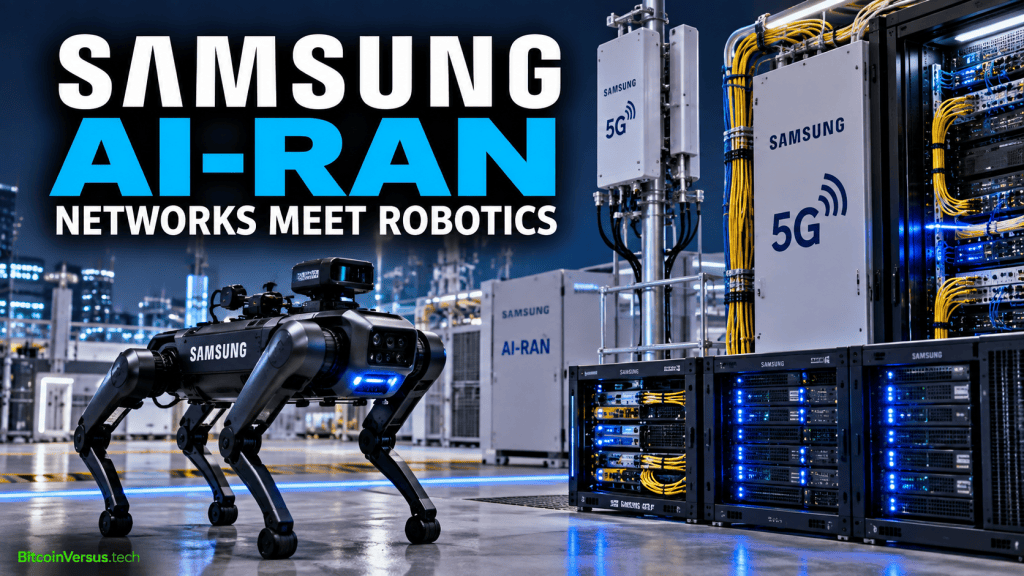
Samsung Electronics is expanding AI-RAN networking for robotics and physical AI.
The approach combines information technology, mobile networking and edge computing so AI workloads can run closer to robots, cameras and machines.
AI processing moves into the network
Samsung Networks has demonstrated AI-on-RAN with KDDI using Network in a Server, combining vRAN, vCore and vCSR functions with GPU acceleration for real-time edge processing.
Samsung’s demonstration includes intelligent robot control and video analytics, showing how AI compute and networking can converge in one infrastructure stack.
Robots create a new network workload
Robots can generate continuous sensor, camera and control traffic while requiring low-latency responses. Edge processing can shorten the path between the machine and the AI system making a decision.
That brings data centers, Ethernet, fiber, GPUs and radio infrastructure into the same machine-to-network architecture.
From 5G toward physical AI
Samsung’s AI-RAN work points toward telecom networks becoming part of the compute layer for factories, logistics systems, robots and other real-world AI applications.
BitcoinVersus.tech has also tracked the convergence of compute and infrastructure through ABB’s 800 VDC AI data-center power system, Supermicro’s Vera Rubin rack systems and Huawei’s grid-interactive AI data centers.
Sources: Samsung Networks official AI-on-RAN demonstration and recent reporting on Samsung’s AI networking strategy.
BitcoinVersus.Tech Editor’s Note:
We volunteer daily to ensure the credibility of the information on this platform is Verifiably True. If you would like to support to help further secure the integrity of our research initiatives, please donate here: 3C9o19EH5HSiwEPyCTmEKzxhNCbo2X6TTb


Leave a Reply