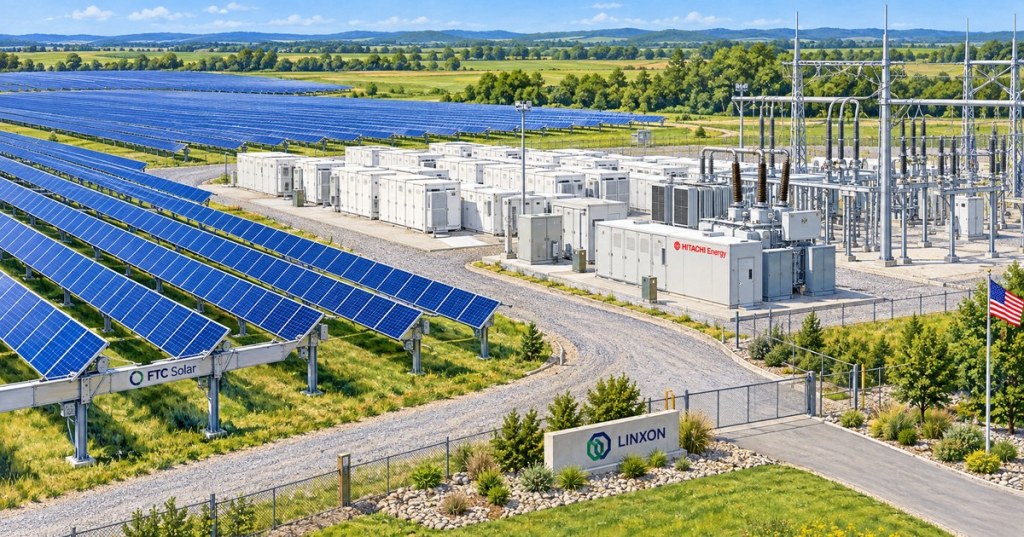
Linxon, Hitachi Energy, and FTC Solar signed a memorandum of understanding announced September 29 to jointly pursue utility-scale solar and battery-storage projects in North America and other agreed markets. The partnership aims to coordinate equipment selection and construction earlier, addressing the handoffs between generation, storage, controls, and grid infrastructure.
According to the companies, Linxon will lead engineering, procurement, construction, commissioning, and customer-facing project delivery. Hitachi Energy will supply solar inverters, battery power-conversion systems, and plant automation. FTC Solar will provide trackers, racking, and associated balance-of-system equipment.
A framework rather than a completed power plant
The partners want a repeatable delivery model with better manufacturing visibility and fewer integration risks. Their release identifies solar and battery-storage opportunities but does not announce a contracted megawatt total, named project pipeline, financing amount, or commissioning date. Faster delivery and improved predictability remain objectives to be demonstrated.
Why the interfaces matter
Editorial analysis: a solar field, battery system, and substation must operate as one electrical installation. Assigning responsibility early can make it easier to resolve mismatches in protection, controls, equipment interfaces, and construction schedules. A coordinated supplier group still needs to prove that its design can be commissioned, supported, and repeated across sites.
The practical challenge complements the financing pressure covered in European grid-equipment guarantees. Funding and equipment availability solve different parts of the delivery process. Neither establishes an operational grid connection on its own.
What miners and data centers should watch
The site’s earlier reporting on solar-powered Bitcoin mining illustrates why generation and computing can be considered together. For developers evaluating future energy supply, the next useful evidence from the new partnership would be named customers, executed contracts, storage duration, interconnection milestones, and completed commissioning.
AI-generated editorial illustration: solar trackers, battery enclosures, and a substation represent the proposed collaboration; the cover does not depict a completed project.
BitcoinVersus.tech promotion
The site’s published offer below promotes mining products and is separate from the renewable-infrastructure reporting.
Disclaimer: Editorial and educational content only, not investment advice. Partnership objectives do not guarantee project awards, operating capacity, or financial returns. The cover is an AI-generated illustration.


Leave a Reply