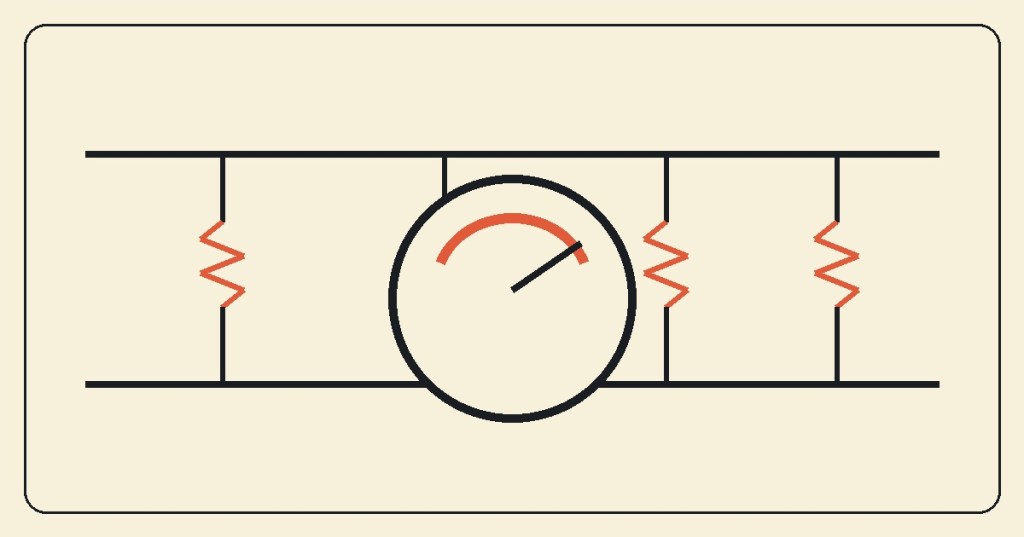
OSET.004 moves from voltage, resistance, and continuity into electrical current. Current describes the flow of electric charge and is measured in amperes (A). Measuring current helps technicians understand circuit loading and troubleshoot equipment.
Current means flow
Current exists when a complete circuit allows charge to move. Loads such as motors, heaters, power supplies, and computing equipment draw current while operating. Fluke’s current reference explains amperes and the relationship between current, loads, and complete circuits.
Why clamp meters are useful
A clamp meter can measure current by sensing the magnetic field around a conductor. This can avoid opening the circuit and placing a conventional multimeter directly in series. The instrument, its rating, the conductor, and the work procedure still must be appropriate for the measurement.
Clamp one conductor
For ordinary load-current measurement, place the clamp around one conductor. Clamping around both outgoing and returning conductors together can cause their magnetic fields to cancel and produce an incorrect or near-zero reading. Fluke’s clamp-meter measurement guide describes the correct setup and safety precautions.
AC and DC current
Current may be alternating current (AC) or direct current (DC). Use an instrument designed for the type and magnitude of current expected. For DC-capable clamp meters, the manufacturer may require the instrument to be zeroed before the conductor is placed inside the jaws.
Compare readings with expected load
A current reading becomes more useful when compared with equipment nameplate data, breaker ratings, normal operating baselines, or measurements on other phases. Unexpected current can help identify overloads, underloading, imbalance, or abnormal equipment behavior.
Technician exercise
- Identify the current rating and CAT rating of a clamp meter.
- Locate the AC-current and, if available, DC-current functions.
- With an appropriate safe training setup, identify the single conductor that should pass through the jaws.
- Close the jaws completely and observe the reading.
- Compare the measured current with the expected load value.
OSET takeaway
Voltage describes electrical potential, resistance describes opposition to current, and current describes charge flow. A clamp meter lets technicians measure that flow without inserting the meter directly into the circuit when the instrument and procedure are appropriate.


Leave a Reply