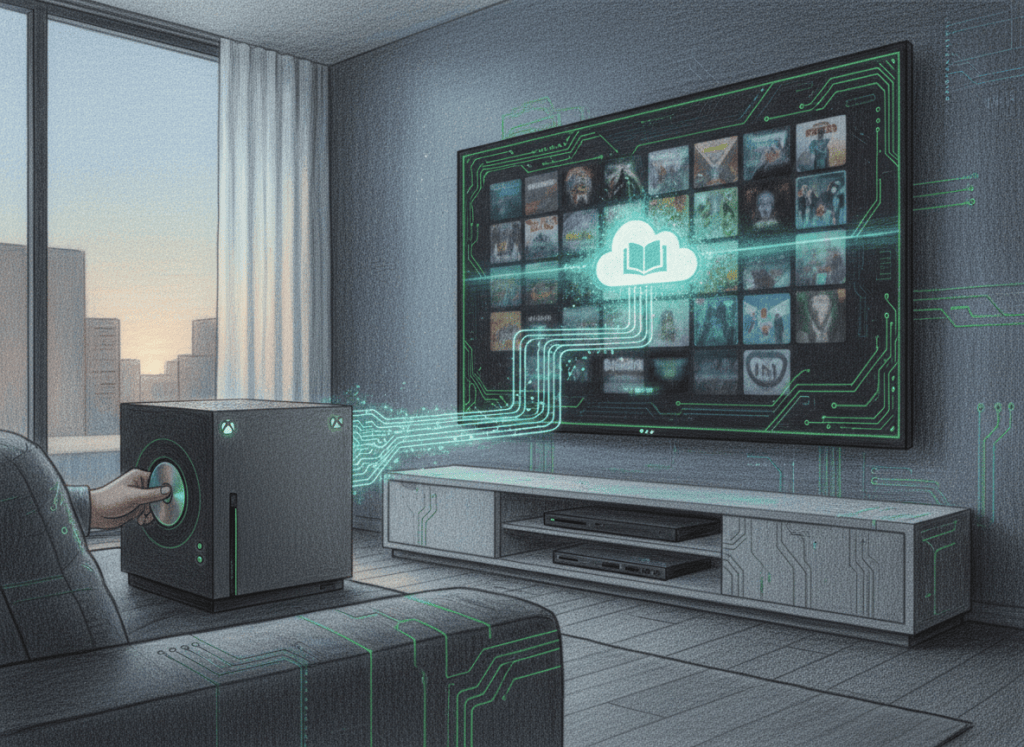
Xbox’s Disc to Digital feature is now broadly available, giving players a way to unlock digital access to supported physical Xbox One and Xbox Series X games while keeping the disc itself as the ownership anchor.
Microsoft introduced the system in an official Xbox Wire announcement, describing it as a game-preservation feature designed to let physical libraries move forward into a more digital console ecosystem. Players insert a supported disc, launch the game, and receive a digital entitlement tied to that physical copy.
The practical benefit is that supported games can then behave more like digital purchases. Where available, that can include Xbox Play Anywhere and cloud access without requiring the disc to remain inserted every time the game is launched.
The disc still matters
The important detail is that Disc to Digital does not simply convert a physical game into a permanently detached digital copy. Windows Central reports that the feature has now expanded beyond the initial Insider test, while the entitlement remains connected to continued ownership of the corresponding disc.
If the disc changes hands, the digital rights can move with it. That design preserves resale and lending more effectively than a one-time redemption code would, but it also means the digital access is not an independent perpetual license.
Xbox executive Asha Sharma framed the program around preservation in an X post announcing the feature, saying physical game libraries carry years of memories and should remain usable as the platform evolves.
A hybrid answer to the physical-versus-digital fight
Console gaming has spent years moving toward digital storefronts, cloud delivery and account-based libraries. Disc to Digital offers a middle path: the physical object remains transferable while the player gains some of the convenience normally associated with digital ownership.
That shift fits the broader Xbox platform strategy BitcoinVersus.Tech recently covered in Microsoft’s release of a complete Xbox multiplayer sample for Godot, where Xbox is increasingly treating the platform as a connected ecosystem rather than only a single console box.
It also arrives while the console market is debating how long current hardware generations should last. BitcoinVersus.Tech’s coverage of Shuhei Yoshida’s argument that PS6 can wait highlighted how software libraries, backward compatibility and platform longevity are becoming more important as hardware cycles stretch.
Game libraries are becoming infrastructure
For players, the core value is continuity. A physical library accumulated over years can now participate more directly in cloud play, handheld access and other digital features without forcing the owner to repurchase the same game.
The economic importance of that continuity is visible in the size of today’s digital game platforms. BitcoinVersus.Tech recently reported that Steam reached an estimated record September as PC gaming spending continued to grow, underscoring how valuable persistent software libraries have become to both players and platform operators.
There are still limits. Not every physical title is supported, publisher participation matters, and older-generation discs are not universally included. But the architecture is notable because it treats the disc as a transferable proof of ownership rather than asking players to surrender physical rights in exchange for digital convenience.
Xbox Disc to Digital does not end the physical game. It turns the disc into a bridge between physical ownership and an increasingly account-based gaming ecosystem.
BitcoinVersus.Tech
Advertisement
BitcoinVersus.Tech Editor’s Note:
We volunteer daily to ensure the credibility of the information on this platform is Verifiably True. If you would like to support to help further secure the integrity of our research initiatives, please donate here: 3C9o19EH5HSiwEPyCTmEKzxhNCbo2X6TTb
BitcoinVersus.tech is not a financial advisor. This media platform reports on financial subjects purely for informational purposes.


Leave a Reply