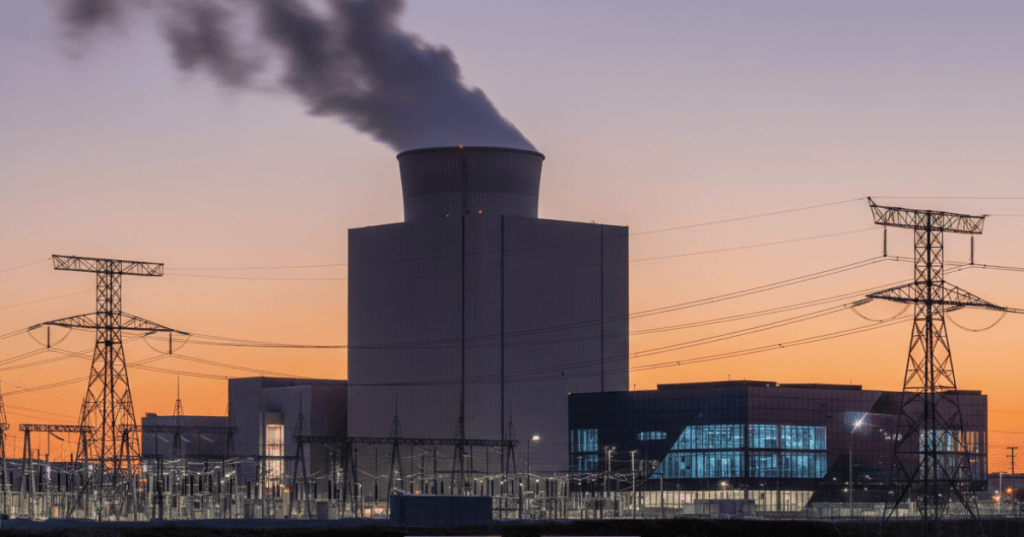
Google and Constellation Energy have signed one of the biggest technology-sector power agreements yet tied to the AI data-center buildout: a package covering 3,590 megawatts in the PJM Interconnection, including 890 MW of genuinely new nuclear capacity created by upgrading existing reactors.
Reuters reported on October 6 that the agreements combine the new nuclear output with a separate 15-year arrangement for 2,700 MW from Constellation’s existing PJM fleet. The structure matters because only the 890 MW nuclear portion represents new generating capacity; the larger 2.7 GW block helps secure existing supply for the region.
The 890 MW Comes From Nuclear Uprates, Not New Reactors
The nuclear portion is a 20-year power purchase agreement that will finance upgrades at 11 Constellation-owned nuclear units across six sites in Illinois, Pennsylvania and New Jersey. Instead of building a greenfield reactor, Constellation will improve turbines, steam generators, digital controls and other plant systems so the existing reactors can safely produce more electricity.
Constellation says the program represents more than $4.3 billion of investment, with the first uprate expected by 2028 and the full 890 MW scheduled before the end of 2032. The added output is roughly comparable to one large conventional nuclear reactor.
This follows the same basic strategy behind Google’s backing of the Duane Arnold nuclear restart in Iowa: use long-term demand from data centers to make large nuclear investments financeable.
PJM Gets New Supply While Google Gets Long-Term Power Coverage
The agreement is especially important because PJM, the regional transmission organization spanning 13 states and the District of Columbia, is under pressure to add dependable capacity as data centers, manufacturing and electrification push demand higher.
BitcoinVersus.Tech recently covered the fight over PJM’s proposed 6.8 GW backstop and who should pay for new capacity. The Google-Constellation structure points toward a different model: a large power user helps finance new supply directly instead of relying only on broad ratepayer-funded expansion.
The 2,700 MW portion is different from the uprate agreement. It is a 15-year energy supply arrangement covering existing Constellation generation in PJM. Together, the 890 MW and 2,700 MW contracts produce the 3.59 GW headline figure, but they should not be confused as 3.59 GW of newly built capacity.
Google Is Also Bringing AI Into Nuclear Operations
The deal is not only about purchasing electricity. Constellation also expanded its technology relationship with Google Cloud for five years and plans to use Gemini Enterprise agentic workflows in site selection, power-flow modeling, permitting, interconnection planning, asset-health monitoring, outage management and operational-technology security.
In the official announcement, Constellation said the nuclear investment will sustain roughly 4,400 existing jobs and support about 7,200 construction jobs during the build period. Google and Constellation also established a framework to explore additional generation, storage and demand-response projects.
Why Nuclear Uprates Are Attractive for AI Data Centers
AI facilities need enormous amounts of electricity around the clock. Nuclear plants already have grid connections, trained operating workforces and existing sites, so increasing output from an operating reactor can avoid some of the delays associated with building an entirely new plant and waiting for a new interconnection.
That does not make uprates unlimited. Each reactor has engineering, licensing, cooling and equipment constraints, and the upgrades still require years of capital work. But for large customers that want firm power sooner, uprates sit between simply buying existing electricity and waiting for entirely new reactors or small modular reactors to reach commercial scale.
The Bigger Point
The AI power race is increasingly becoming an infrastructure-finance story. Google is not merely asking the grid for more electricity; it is putting long-term contracts behind physical plant upgrades that add capacity to the regional system.
The distinction between the 890 MW of new nuclear output and the 2.7 GW of contracted existing supply is the key number to remember. Together they give Google substantial long-term power coverage in PJM, but the lasting grid expansion comes from squeezing more reliable generation out of reactors that are already operating.
BitcoinVersus.Tech
Advertisement
Editor’s Note
The 3.59 GW headline combines two different arrangements: 890 MW of new nuclear capacity enabled by uprates and 2,700 MW of existing PJM supply under a separate long-term agreement.
We volunteer daily to help ensure the credibility of the information on this platform is Verifiably True. If you would like to support our research initiatives, please donate here: 3C9o19EH5HSiwEPyCTmEKzxhNCbo2X6TTb
BitcoinVersus.tech is not a financial advisor. Content is provided for informational purposes.


Leave a comment