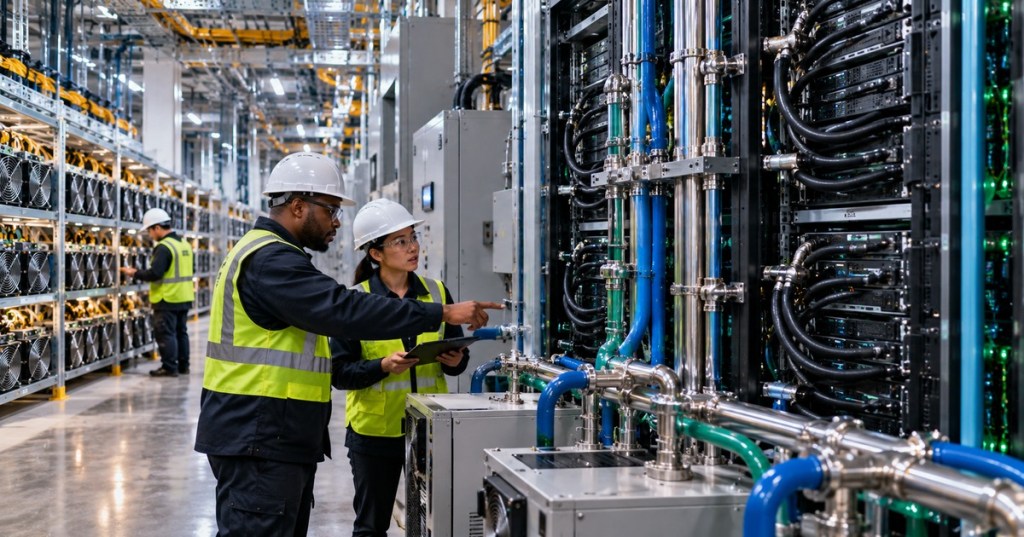
Bitdeer is pushing further beyond pure Bitcoin mining infrastructure. On October 8, the company’s Bitdeer AI unit announced a 10-year data-center services agreement for A901, a new 67 MW AI Cloud campus in Malaysia, bringing its secured AI Cloud capacity to about 273.5 MW across Malaysia, Norway, and the United States.
The important detail for miners is not just the 67 MW number. A901 is being engineered for liquid-cooled NVIDIA GB300 NVL72 rack-scale systems, showing how a company that built its operating base around Bitcoin mining hardware, high-density electrical loads, cooling, and fleet operations is now applying those infrastructure skills to AI compute.
A901 Adds 67 MW of Critical IT Load
Bitdeer says every megawatt in the A901 announcement refers to critical IT load, not total building power or a generic utility-service number. Initial A901 capacity is targeted for delivery in the first quarter of 2027, with the full 67 MW targeted for the second quarter.
The primary company release says the new campus is Bitdeer AI’s third Malaysian hub alongside Cyberjaya and Johor. Data Center Dynamics separately reported that the exact A901 location and data-center operator were not disclosed in the announcement.
The expansion follows several other Malaysia moves. BitcoinVersus previously covered Bitdeer’s 65.1 MW Johor expansion and the company’s A201 capacity commitments. A901 extends the same strategy at a substantially larger single-site scale.
Liquid Cooling Is the Infrastructure Story
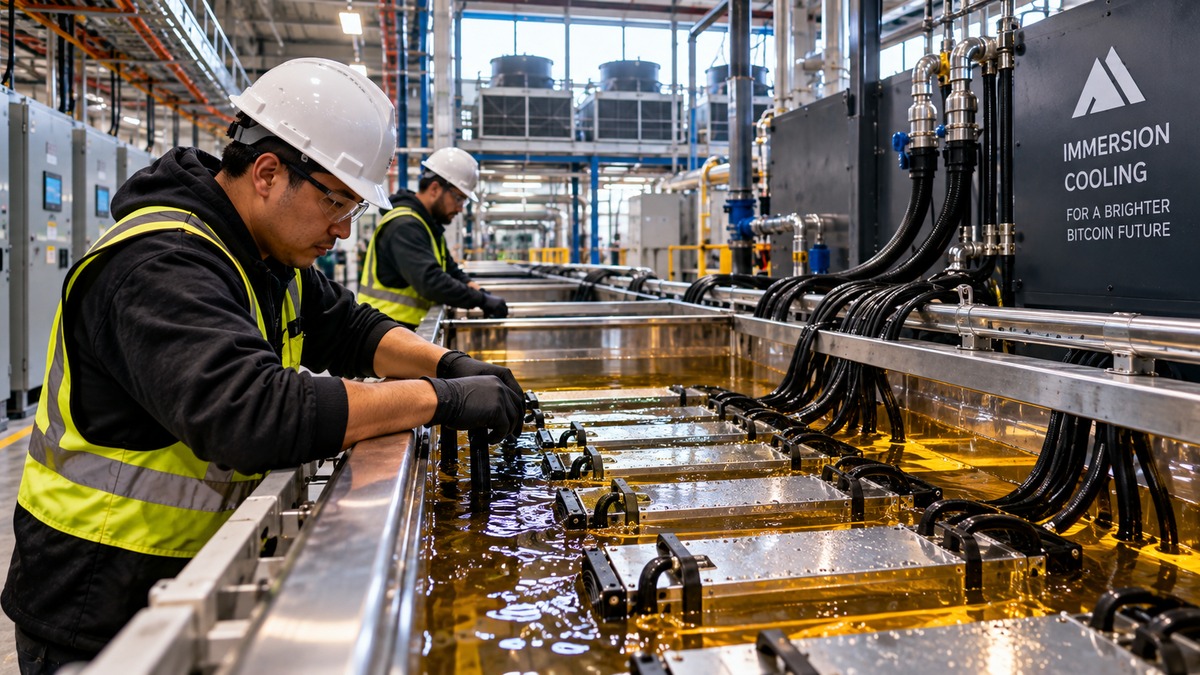
For Bitcoin miners, the most interesting technical crossover is cooling. Modern ASIC fleets already operate across air, hydro, and immersion-cooling architectures. AI racks push that thermal-management problem further because rack-level power density can be dramatically higher than traditional server deployments.
A901 is planned around liquid-cooled GB300 NVL72 systems. That means the useful transferable knowledge is not that an ASIC container can simply be filled with GPUs. It is the operating discipline around high-density power distribution, coolant loops, pumps, heat exchangers, leak monitoring, facility controls, maintenance access, and uptime.
That distinction matters. Bitcoin mining infrastructure can provide a strong starting point—especially when a site already has substations, transformers, switchgear, fiber, and experienced operations staff—but AI infrastructure still requires different network, cooling, redundancy, and server-support assumptions.
Bitdeer Is Still a Large Bitcoin Miner
The AI expansion does not mean Bitdeer has stopped mining Bitcoin. In its August operating update, the company reported about 79.9 EH/s of self-mining hashrate, 21.6 EH/s of co-mining hashrate, and 1,310 BTC mined during August. BitcoinVersus covered that growth when Bitdeer’s self-mining fleet reached 79.9 EH/s.
That makes Bitdeer a useful case study in what the mining industry is becoming. The company is simultaneously designing its own SEALMINER ASICs, operating large SHA-256 fleets, developing power-rich data centers, and building GPU infrastructure. The common asset underneath those businesses is access to electricity and the ability to turn megawatts into reliable compute.
The AI Pipeline Has Grown Faster Than the Delivered Capacity
Bitdeer says its active AI Cloud pipeline now exceeds $10 billion. That figure should not be confused with booked revenue or already energized capacity. The company defines secured capacity as capacity it owns or covers through an executed data-center services agreement, while the pipeline represents prospective demand across uncontracted capacity.
With A901 included, secured AI Cloud capacity is about 273.5 MW, or roughly 78% of Bitdeer AI’s stated target of up to 350 MW by the first quarter of 2028. The company has moved quickly from single-digit-megawatt deployments toward multi-site, tens-of-megawatts blocks.
That scale is one reason mining companies with established power portfolios remain relevant to the AI buildout. BitcoinVersus has tracked the broader transition as miners shift portions of their megawatt portfolios from ASICs toward AI. The underlying constraint in both industries is increasingly the same: usable power delivered on a timeline that makes the economics work.
Watch Bitdeer’s Mining and AI Strategy Together
The video below is a Bitdeer-focused 2026 discussion with company executives covering mining fleet growth, SEALMINER deployment, data-center strategy, and the company’s expansion into AI infrastructure.
What Comes Next
The next test is execution. A901 is an executed 10-year services agreement, but the 67 MW is not yet operating. Initial delivery is targeted for Q1 2027 and full delivery for Q2 2027, so the important milestones are construction progress, power availability, liquid-cooling commissioning, GPU deployment, and customer contracting.
For Bitcoin miners, the larger message is becoming harder to ignore: the infrastructure built for SHA-256 mining created a generation of companies that know how to source power, build high-density compute sites, and operate equipment at industrial scale. Bitdeer’s new Malaysian campus shows that those capabilities are becoming valuable far beyond Bitcoin mining itself.


Leave a Reply