
Cango deliberately shrank its Bitcoin mining footprint in the second quarter of 2026, and the tradeoff shows up clearly in the numbers. Operating hashrate fell from 37.01 EH/s in Q1 to 27.58 EH/s in Q2, while average cash cost per Bitcoin dropped from $76,928 to $73,313.
That is roughly a 25.5% reduction in operating hashrate paired with another 4.7% reduction in cash cost per BTC. Cango says the strategy was intentional: dispose of lower-efficiency mining machines, continue phasing out older S19-series hardware, and shift some capacity into leasing structures that reduce direct exposure to site-level power and operating costs.
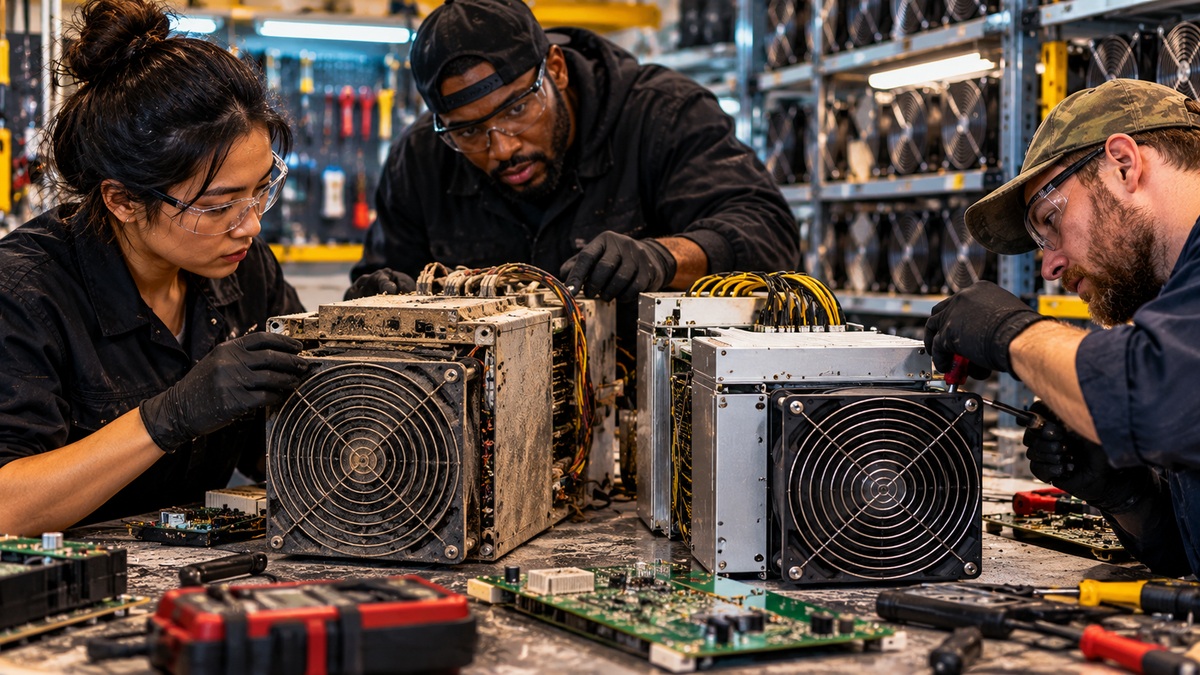
Cango Chose Margin Over Maximum Hashrate
In its Q2 2026 results, Cango said it was actively right-sizing mining operations by disposing of machines with lower marginal efficiency and partially moving to a leasing model. Total operating hashrate ended the quarter at 27.58 EH/s, consisting of 19.84 EH/s of self-mining and 7.74 EH/s of leased hashrate.
Three months earlier, Cango reported 37.01 EH/s of operating hashrate, including 27.98 EH/s of self-mining and 9.02 EH/s of leased capacity. The quarter-to-quarter changes therefore work out to approximately -29.1% for self-mining and -14.2% for leased hashrate.
The self-mining fleet took the larger cut. That is consistent with Cango’s earlier disclosure that it had begun phasing out older, less-efficient ASIC hardware rather than defending hashrate at any cost.
Cash Cost Fell Another 4.7%
Cango’s average cash cost to mine one Bitcoin fell from $76,928 in Q1 to $73,313 in Q2. That is a decline of about 4.7%.
The Q1 figure itself had already fallen about 9% from the fourth quarter of 2025. Taken together, the sequential disclosures imply Cango’s average mining cash cost was roughly 13% lower than its Q4 2025 level by the end of Q2.
That does not mean every cost line improved by 13%, and it does not prove that retiring miners alone caused the entire decline. Power prices, hosting structures, fleet uptime and accounting periods all affect mining cost. But the direction matches management’s stated strategy: reduce exposure to machines whose marginal economics no longer justify keeping them online.
Revenue Fell Faster Than the Cost Per Coin
The downside of shrinking the fleet is visible in production and revenue. Cango mined about 1,266 BTC in Q1 and 656 BTC in Q2, a drop of roughly 48%. Bitcoin-mining revenue fell from $98.4 million to $47.4 million, about 52%.
At the same time, cost of revenue excluding depreciation fell from about $99.6 million to $50.7 million, a reduction of roughly 49%. That is the central tradeoff in Cango’s strategy: accept materially lower output in exchange for a fleet and operating structure that needs less cash to produce each remaining Bitcoin.
The Leasing Share Increased
Leased hashrate made up about 24.4% of Cango’s operating hashrate in Q1. By Q2, it represented about 28.1%. The absolute amount of leased hashrate still declined, but it fell more slowly than self-mining, so its share of the remaining fleet increased by roughly 3.7 percentage points.
Cango has explained that some revenue-sharing hosting structures move direct power, maintenance and operating expenses to counterparties while allowing Cango to participate in the revenue stream. That can reduce direct site-level cash exposure even when the accounting treatment still includes depreciation or other charges.
This is a different operating philosophy from simply maximizing installed EH/s. BitcoinVersus recently showed how a five-joule efficiency gap can decide which ASIC stays online. Cango is applying the same basic logic at fleet scale.
Older S19 Hardware Is the Pressure Point
Cango’s Q1 disclosure said the company had begun phasing out older, less-efficient S19-series mining machines. Newer S21-family hardware can deliver materially more hashrate per watt, which becomes increasingly important when hashprice is compressed.
The comparison is not simply “old machine bad, new machine good.” Hardware purchase price, remaining useful life, repair history, power rate and resale value all matter. But once an older unit’s electricity cost approaches its gross mining revenue, removing it can improve the average economics of the fleet even though headline hashrate falls.
Watch the S19-to-S21 Efficiency Gap
The video below shows a practical S21 test and compares its power draw and output with older S19-generation hardware, illustrating why operators increasingly evaluate fleets by joules per terahash rather than machine count alone.
Cango Is Still a Large Miner
Cutting hashrate does not mean Cango is exiting Bitcoin mining. The company still produced 656 BTC during Q2, and its broader strategy continues to use mining as the foundation for energy and compute infrastructure. BitcoinVersus has also covered Cango’s 50 MW Georgia site beginning commercial GPU compute.
The mining lesson is more immediate: the biggest fleet is not automatically the best fleet. Cango deliberately gave up roughly one-quarter of its operating hashrate while lowering the cash cost of the Bitcoin it continued to produce. In a low-hashprice environment, fewer efficient hashes can be more valuable than more expensive ones.


Leave a Reply