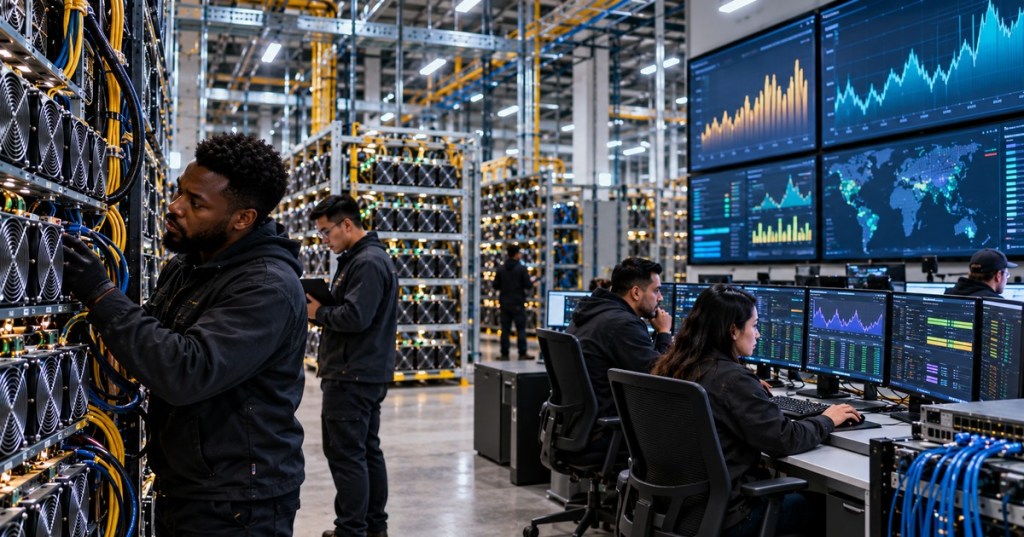
Foundry founding CEO Mike Colyer is stepping down after seven years, handing the world’s largest Bitcoin mining pool into a leadership transition while Foundry USA’s share of recent blocks sits below the 30%-plus levels it reached earlier in 2026.
In his October 8 announcement, Colyer said he will remain with Foundry for the next six months as a strategic adviser while the company searches for its next CEO. He did not name a successor and did not tie the decision to mining economics, saying he plans to take a break and spend time with family.
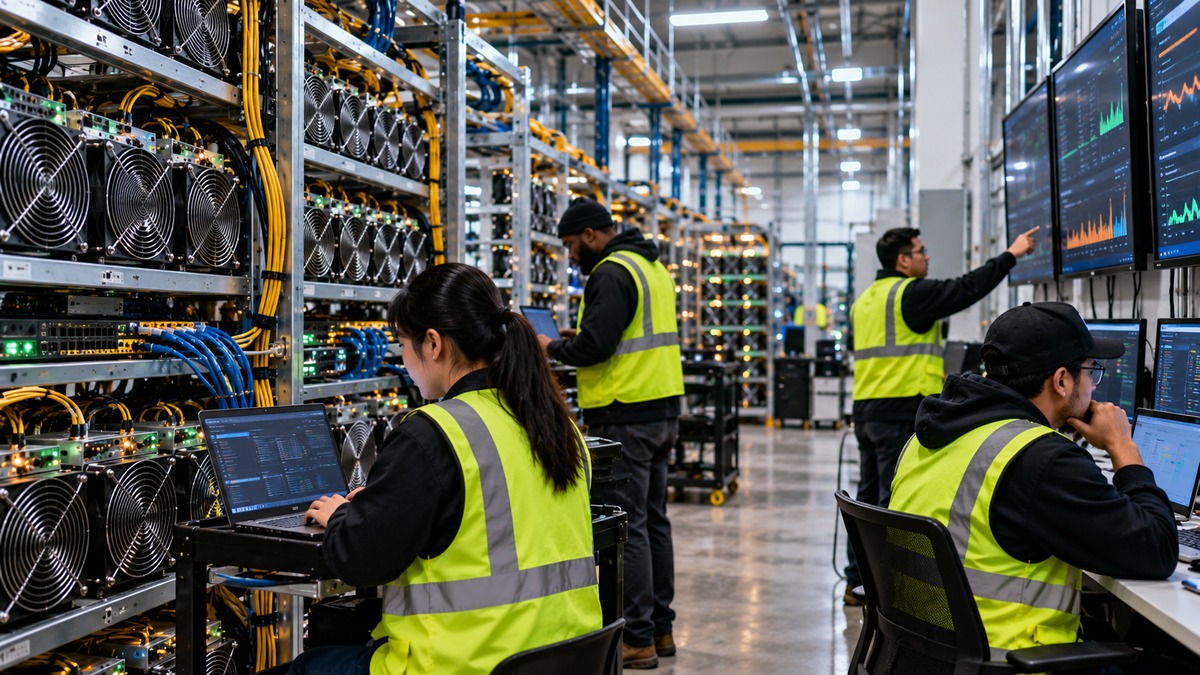
Colyer Built Foundry Into the Largest Bitcoin Mining Pool
Colyer became Foundry’s founding CEO in 2019. Under his leadership, the Digital Currency Group business grew from a Rochester-based startup into an institutional mining infrastructure company whose Foundry USA Pool became the largest Bitcoin pool by recent block production.
Foundry’s own company profile still describes the pool as the largest in the world, while mempool.space currently shows Foundry USA with roughly 205 EH/s of 24-hour hashrate and about 26.7% of blocks over the past week. Those short windows move constantly, but they confirm Foundry remains the largest pool today.
For miners, the pool layer matters because individual pool shares are aggregated into coordinated attempts to find blocks. A pool’s market share therefore reflects how much miner hashrate is currently pointed at its infrastructure rather than how many physical ASICs the pool itself owns.
Foundry’s Share Has Retreated From Its March Peak
TheEnergyMag reports that Foundry USA produced about 32.7% of Bitcoin blocks in March 2026 before falling to 26.5% in July. The publication counted 1,422 of 4,349 March blocks and 1,152 of 4,341 July blocks for Foundry.
The latest mempool.space mining dashboard puts Foundry around 26.9% over the trailing week, ahead of AntPool at roughly 20.4% and F2Pool near 17.3%. That means the pool has stabilized near the high-20% range recently rather than continuing a straight-line collapse.
BitcoinVersus recently examined the broader concentration question when the top three pools produced 60.8% of blocks in a 24-hour window. Pool rankings can swing with block luck over short periods, so longer windows are more useful when judging structural concentration.
Pool Share Is Not the Same as ASIC Ownership
A large pool does not necessarily own the machines behind its hashrate. Industrial miners connect their ASICs to pools over protocols such as Stratum, submit lower-difficulty shares as proof of work, and receive payouts according to the pool’s accounting model.
That distinction is important for decentralization analysis. A miner can redirect hashrate from one pool to another without moving a single machine or changing the facility’s electrical load. Pool concentration can therefore change faster than physical mining geography.
It is also one reason Stratum V2 has become important. Seven major pools, including Foundry, joined the Stratum V2 working group in 2026, supporting a protocol that can return more block-template construction authority to individual miners instead of concentrating transaction selection entirely at the pool operator.
The Leadership Change Arrives During a Wider Mining Transition
Foundry’s transition is happening while its mining customers face a different industry than the one Colyer entered in 2019. Hashprice remains compressed, network hashrate is back near the one-zettahash range, and public miners are increasingly deciding whether each megawatt belongs behind an ASIC fleet or an AI server rack.
Foundry itself already separated its self-mining business from the pool operation when Digital Currency Group spun out Fortitude Mining in 2025. That left Foundry more focused on pool infrastructure, institutional services and software rather than directly operating the same kind of self-mining fleet as many of its customers.
Watch How Mining Pools Shape the Network
The video below looks specifically at Foundry’s role in Bitcoin mining and why the behavior of a large pool matters beyond simple hashrate percentages.
What Comes Next
The immediate question is succession. Colyer says he will remain for six months to support the CEO search, giving Foundry time to hand off customer relationships, pool operations and strategic direction without an abrupt break.
The more technical question is whether Foundry’s share settles near the current high-20% range, climbs back above 30%, or continues to redistribute toward AntPool, F2Pool, ViaBTC and smaller competitors. For Bitcoin miners, changing pools is one of the few network-level decisions that can be made almost instantly. That makes the next several months a leadership story, but also a live test of how fluid Bitcoin’s pool market really is.


Leave a Reply