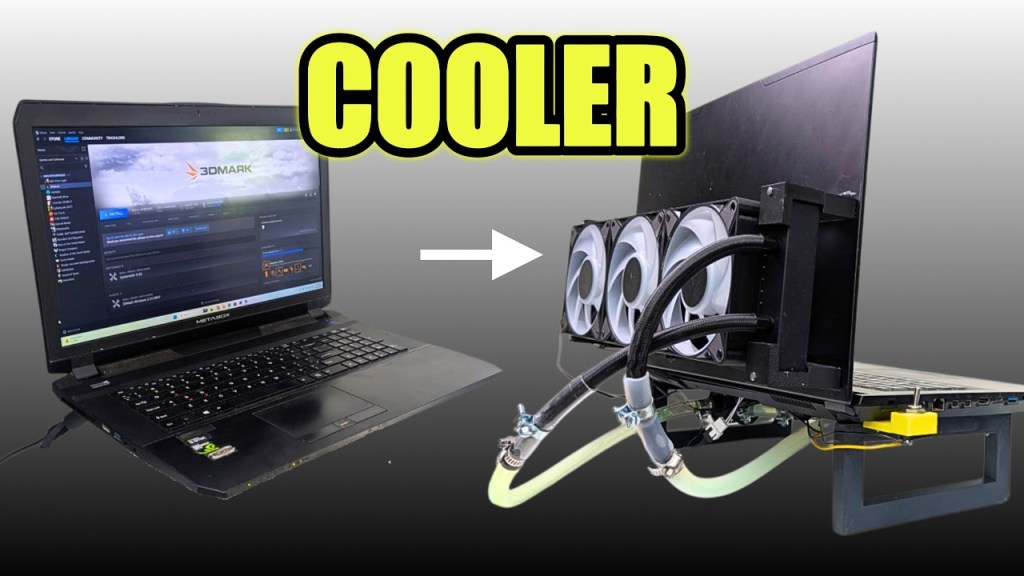
Someone finally solved laptop cooling by making the laptop barely a laptop.
YouTube hardware modder TrashBench attached waterblocks, a pump, tubing, and a full 360 mm radiator to an older Metabox P950EP gaming notebook with an Intel Core i7-8750H and NVIDIA GTX 1060.
Tom’s Hardware reports that the finished machine ran its CPU and GPU roughly 60°C cooler than the stock setup in the creator’s testing, with both chips staying below 40°C under full load.
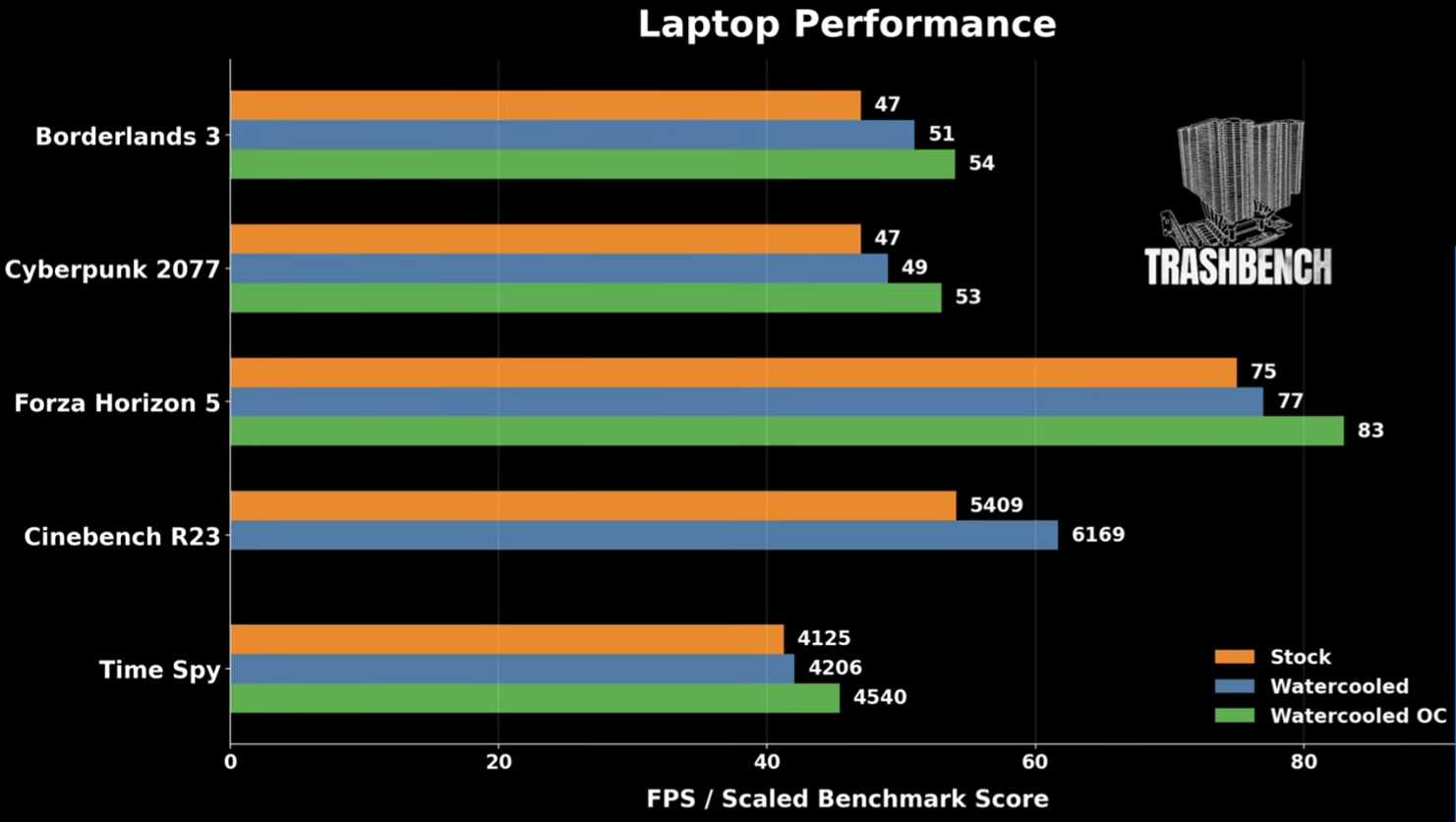
Cooling alone helped. Overclocking used the extra headroom.
This is a useful example of why thermal throttling matters. A processor that is constantly fighting its temperature limit cannot hold its fastest clocks for long. Remove enough heat and the system gets more room to sustain—or deliberately raise—frequency.
But the numbers need context. In Forza Horizon 5, the laptop reportedly moved from about 75 FPS stock to 77 FPS with the liquid cooling alone. After TrashBench overclocked the now much cooler hardware, it reached about 83 FPS. So the huge temperature drop did not magically produce a 14% frame-rate jump by itself; the cooler made the higher-overclock configuration possible.
The build is wonderfully impractical
The stock laptop heatpipe assembly came out. Custom waterblocks went in. A stronger pump replaced the original AIO pump, a DC-DC converter stepped the laptop’s 19 V supply down for 12 V cooling hardware, and a manual toggle switch controls the pump and fans.
Several mounts were 3D printed, including brackets for the waterblocks and radiator. When the space behind the display was too tight for normal fasteners, epoxy entered the chat.
The engineering lesson is bigger than the joke
Laptops trade cooling capacity for size, weight, battery life, and portability. TrashBench removed most of those compromises and got desktop-like thermal headroom in return.
That same relationship between heat removal and sustained performance shows up everywhere from gaming PCs to servers and even Bitcoin mining. BitcoinVersus covered that cooling tradeoff years ago when an industry panel compared air, hydro, and immersion cooling for mining hardware.
SmartNews takeaway
A 360 mm radiator can make an old gaming laptop run dramatically cooler. It can also make that laptop approximately as portable as a small aquarium.
The serious point: better cooling creates performance headroom—but you still need the clocks, power limits, and workload to use it.
BitcoinVersus.Tech Editor’s Note: The temperature and performance numbers come from TrashBench’s own testing and have not been independently reproduced by BitcoinVersus.Tech.
Support independent BitcoinVersus.Tech reporting with Bitcoin: 3C9o19EH5HSiwEPyCTmEKzxhNCbo2X6TTb
BitcoinVersus.Tech is not a financial advisor. This article is for informational and educational purposes.


Leave a Reply