By Jules Porter | October 10, 2026
Ledger has confirmed an unauthorized hardware implant in at least one device linked to an investigation of stolen cryptocurrency. The company asked Southeast Asian reseller CryptoBilis to suspend sales and shipments while investigators examine reports of wallet drains. Independent blockchain researchers have estimated suspected losses above $86 million, but that amount and the number of victims have not been verified by Ledger.
Unlike a routine phishing attack, this case raises a more unsettling question: what happens if a supposedly secure wallet has been physically modified before it reaches the buyer?
Ledger’s Original Warning
In its original October 9 X statement, Ledger Support said it was investigating reported losses involving CryptoBilis purchases. Customers who bought from the reseller within 90 days were advised not to initialize unused devices. Those who had already set one up were told to consider moving their funds to a new signer with a new recovery phrase.
Watch: How Ledger’s Genuine Check Works
This explainer is useful context for why the CryptoBilis incident is so unusual: the reported tampering appears to have bypassed the normal assumptions buyers make after a device passes authenticity checks.
The Suspected Hardware Implant
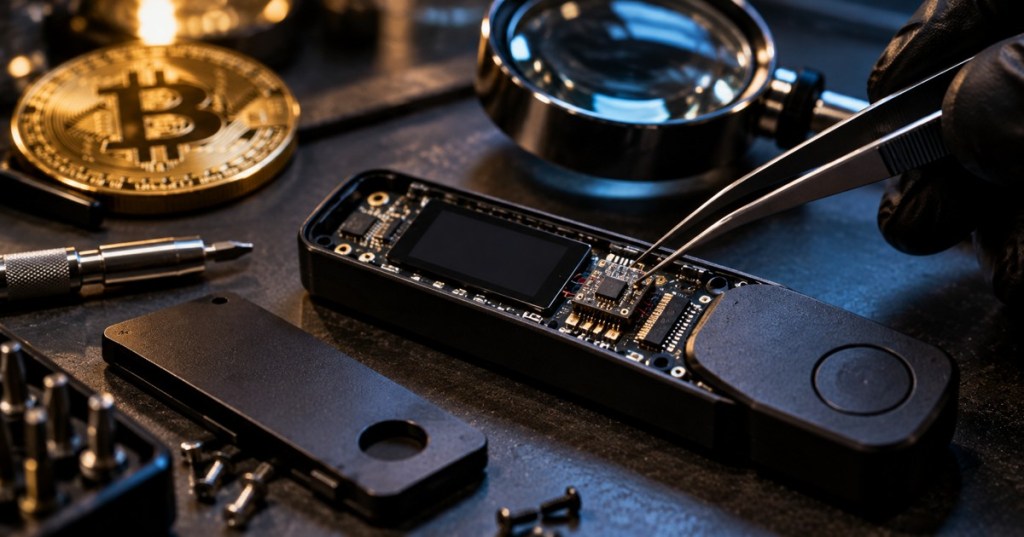
The Verge reported on October 10 that Ledger confirmed one impacted user’s device contained an unauthorized implant. Separate photographs and technical accounts describe a tiny board hidden beneath a device screen that could intercept displayed recovery words and transmit them through cellular hardware. Investigators have not established that every reported loss came from this mechanism.
Related live discussion: Reddit users examine the reported hardware modification.
That distinction matters. The recovery phrase is effectively the master secret controlling a wallet. A malicious device that captures it during initial setup can expose assets even if the owner never types the phrase into a website or connects the wallet to a suspicious computer.
Hardware Integrity Check in Practice
How Much Cryptocurrency Was Taken?
Initial on-chain researchers reported more than $72 million and later more than $86 million in suspected thefts. The Block noted that these are overlapping, unconfirmed estimates rather than two losses that should be added together. A later Bitquery investigation reported $92.9 million across 311 wallets on five chains, using its own transaction-tracing methodology.
Victim perspective: a CryptoBilis buyer describes why the reseller’s authorized status mattered.
That higher figure is an independent analytical claim, not an official confirmed loss. Wallet count also does not equal person count: one person can control multiple addresses across several chains.
| Source | Reported amount | Status |
|---|---|---|
| Early on-chain tracing | Over $72M | Unconfirmed estimate |
| Subsequent on-chain tracing | Over $86M | Unconfirmed estimate |
| Bitquery investigation | $92.9M | Independent estimate; 311 wallets |
| Ledger | No confirmed total | Investigation ongoing |
What Hardware Wallet Owners Should Do
- If you bought a Ledger from CryptoBilis in the past 90 days and have not initialized it, do not set it up pending official guidance.
- If already initialized, follow Ledger’s recommendation to consider moving funds to a trusted new signer using a newly generated recovery phrase.
- Never reuse a potentially exposed seed phrase, and never enter it into a website or unsolicited support form.
- Use Ledger’s official support channels, not direct messages from accounts claiming they can recover stolen funds.
Ledger has said its own infrastructure, systems and services were not compromised and that it has not received reports of the same issue involving devices purchased directly from the company. The suspected exposure is concentrated around a reseller channel, not proof that every Ledger device is unsafe.
Why This Is Bigger Than One Reseller
Cryptocurrency security has long emphasized keeping private keys offline. This investigation demonstrates why physical supply-chain integrity is just as important as encryption: the strongest cryptographic signature cannot protect a secret already copied by compromised hardware.
For Bitcoin holders, the lesson is to distinguish device authenticity, firmware integrity and secure seed generation. All three matter. Our recent Bitcoin market-liquidity investigation covered trading risk; this story concerns a different threat entirely—custody and key compromise.
Editor’s Note: The investigation is active. Figures attributed to researchers are not confirmed theft totals. The featured image is an original editorial illustration, not a photograph of an affected device.
BitcoinVersus.Tech independently covers Bitcoin, hardware, data centers and cybersecurity. Donations: 3C9o19EH5HSiwEPyCTmEKzxhNCbo2X6TTb. This article is informational and not financial advice.


Leave a Reply