Key Takeaways
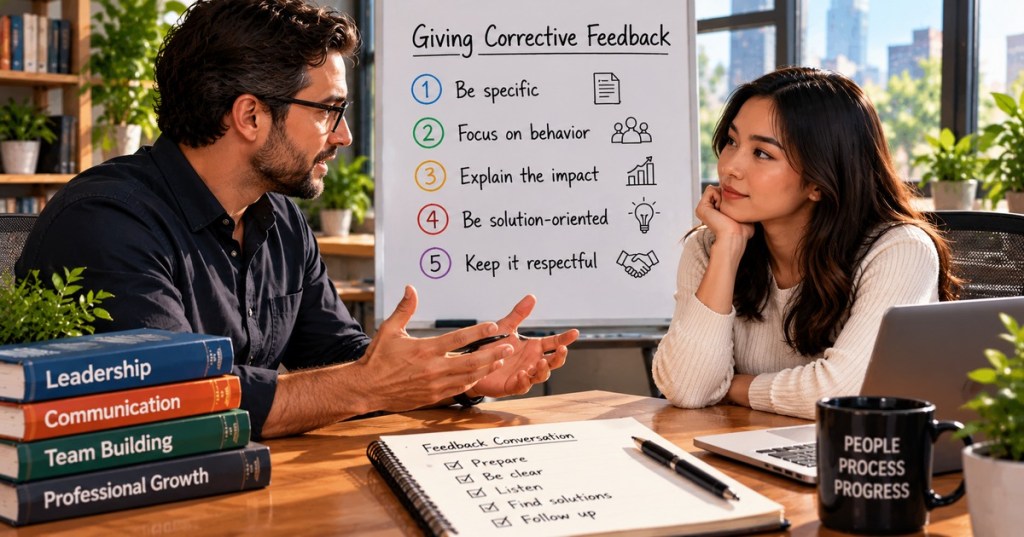
- Correct the behavior, not the person. Describe what happened in observable terms instead of attaching a character label.
- Use a specific situation. “In yesterday’s handoff” is actionable; “you always do this” is usually not.
- Explain the impact. Connect the behavior to safety, quality, schedule, customers, team workload, or another real consequence.
- Restate the standard and the next action. A person should leave knowing exactly what better performance looks like.
- Listen after you speak. Corrective feedback is a leadership conversation, not a personal verdict.
Corrective feedback is one of the moments when leadership becomes visible. Anyone can praise work that went well. A leader also has to address missed standards, unsafe choices, weak communication, repeated errors, or behavior that is hurting the team.
The goal is not to make the conversation painless. The goal is to make it clear, fair, specific, and useful. The employee should understand what happened, why it matters, what must change, and what support or follow-up comes next.
Start With the Standard, Not Your Frustration
Corrective feedback becomes personal when the leader starts from emotion instead of from an agreed expectation. “I’m sick of this” may be an honest feeling, but it does not tell the employee what standard was missed.
This is why OSLTC.002 — How to Set Clear Expectations comes before this lesson. If the desired outcome, quality level, timing, ownership, or safety rule was never made clear, corrective feedback can turn into punishment for a requirement that existed only in the leader’s head.
Weak:  "You need to be more professional."
Better: "The handoff checklist requires the maintenance notes to be completed before shift change."
The second statement gives the conversation an external reference point. The issue is no longer whether the leader “likes” the employee’s style. The issue is whether the agreed work standard was met.
Describe What a Camera Could Have Recorded
A useful test is: could a camera or system log have captured what I am describing? Observable behavior is easier to discuss than a judgment about someone’s personality.
Personal label: "You're careless."
Observable behavior: "The last two work orders were closed without the required voltage readings."

Personal label: "You're disrespectful."
Observable behavior: "During this morning's review, you interrupted Maya three times while she was explaining the failure analysis."

Personal label: "You're unreliable."
Observable behavior: "The Tuesday and Thursday reports were submitted after the 4 p.m. deadline without an advance notice."
The Center for Creative Leadership’s Situation-Behavior-Impact model formalizes this discipline: identify the specific situation, describe the observable behavior, and explain the impact. Keeping the description factual reduces the temptation to turn a performance issue into an argument about identity or intent.
Explain the Impact Without Exaggerating It
The employee needs to know why the behavior matters. Good impact statements connect the action to real consequences.
- Safety: “That bypass removed the verification step designed to prevent energizing the wrong circuit.”
- Quality: “Without the measurement, the next technician cannot confirm whether the repair actually returned the system to specification.”
- Schedule: “The missing handoff notes caused the night shift to repeat troubleshooting we had already completed.”
- Customer: “The late response meant the customer did not receive an update before their maintenance window closed.”
- Team: “When the meeting was interrupted repeatedly, we lost the sequence of the root-cause review and had to revisit the same material.”
Avoid inflated language such as “you ruined everything” when the actual impact was a 20-minute delay. Accuracy matters in corrective feedback because exaggeration gives the recipient something easy to dispute and distracts from the real problem.
Separate Intent From Impact
You usually know what someone did. You do not automatically know why they did it. “You ignored the procedure because you don’t care” combines an observable event with a guess about intent.
A stronger sequence is:
- Describe the situation.
- Describe the behavior.
- Explain the impact.
- Ask what happened from their perspective.
- Listen for missing context, misunderstanding, skill gaps, workload constraints, or a deliberate choice.
This is where OSLTC.003 — Leadership Through Listening becomes operational. Listening does not mean withdrawing the standard. It means understanding the full problem before deciding what correction, coaching, training, or accountability is appropriate.
Use a Clear Corrective Feedback Structure
A practical corrective-feedback conversation can follow this sequence:
- Situation: name the specific time, task, meeting, ticket, shift, or incident.
- Behavior: describe what the person actually did or did not do.
- Impact: explain the consequence for safety, quality, schedule, customer, team, or outcome.
- Perspective: ask the employee what happened and listen.
- Standard: restate the expected behavior.
- Next action: agree on what changes now.
- Follow-up: decide when and how progress will be checked.
"During yesterday's 4 p.m. handoff, the maintenance ticket was closed without the required current readings. The night shift had to reopen the ticket and repeat part of the diagnostic work. Walk me through what happened. Going forward, the readings must be entered before closure. What do you need to make that consistent on the next handoff? I'll review the next three tickets with you at the end of the week."Notice what the script does not contain. It does not call the employee lazy, careless, difficult, unprofessional, or incompetent. The leader can be direct without turning a correctable action into a statement about the person’s worth.
Do Not Hide the Correction Inside a Feedback Sandwich
Leaders sometimes place criticism between two unrelated compliments because they hope the message will feel nicer. The result can be confusing: the employee may leave unsure whether there was a serious performance problem or merely a suggestion.
A more respectful approach is to be kind and clear. Harvard Business Review’s guidance on making feedback lead to learning emphasizes focusing attention on the work and the specific action rather than triggering self-protection around the person’s identity. That approach keeps correction tied to learning rather than humiliation.
Correct in Private Whenever Practical
If a safety hazard or active incident requires immediate intervention, stop the unsafe behavior immediately. But the full corrective conversation usually belongs in a private setting whenever practical.
Public correction can create a second problem: now the employee is processing embarrassment and social threat while also trying to understand the technical or behavioral issue. Private feedback gives both people a better chance to stay focused on facts and solutions.
Do Not Confuse Positive Reinforcement With Avoiding Correction
OSLTC.001 — How to Lead With Positive Reinforcement established that leaders should reinforce useful behavior specifically. That principle does not mean ignoring poor performance. Strong leadership needs both: reinforce the behavior you want repeated and correct the behavior that must change.
The consistency matters. If a leader praises precision on Monday but ignores repeated shortcuts on Tuesday, the real standard becomes ambiguous.
Match the Response to the Problem
Not every problem needs the same response. Before escalating, identify what kind of gap you are dealing with.
- Knowledge gap: the employee does not know the procedure.
- Skill gap: the employee understands the requirement but cannot yet perform it reliably.
- Expectation gap: the standard was vague or inconsistent.
- Resource gap: the person lacks time, tools, access, staffing, or information required to succeed.
- Judgment gap: the employee understood the standard and resources but made a poor decision.
- Conduct problem: the behavior violates workplace rules or professional expectations and may require formal escalation.
Training solves some problems. Clarification solves others. Coaching may solve judgment problems. Repeated or serious conduct issues can require documented performance management under the organization’s policies. Good leaders diagnose before prescribing.
Follow Up on the Behavior You Asked to Change
Corrective feedback without follow-up teaches the team that the conversation was optional. The follow-up does not need to feel punitive. It simply closes the loop.
"We agreed that the next three handoffs would include the measurement record before closure. I checked all three. They're complete and clear. Keep that standard."When the behavior improves, acknowledge the improvement. That turns corrective feedback into a complete learning cycle rather than an endless record of mistakes.
Common Leadership Mistakes
- Using labels: “lazy,” “careless,” “negative,” and “unprofessional” invite debates about identity instead of behavior.
- Using always and never: broad claims are easier to dispute than specific incidents.
- Correcting without a known standard: expectations should be clear before accountability is applied.
- Assuming intent: describe impact first, then ask what happened.
- Giving feedback while visibly angry: urgency may be necessary, but emotional venting is not coaching.
- Correcting publicly when privacy is available: embarrassment can become the dominant issue.
- Being so soft that the employee cannot identify the problem: kindness and clarity are compatible.
- Failing to follow up: improvement should be checked and reinforced.
Practice
- Rewrite “You’re careless” as one observable behavior statement.
- Choose a recent work mistake and identify the exact situation, behavior, and impact.
- Write the standard that should have been met.
- Add one open question that asks for the employee’s perspective without assuming intent.
- Write one clear next action and one follow-up date or trigger.
- Practice saying the full feedback statement without the words “always,” “never,” “lazy,” “careless,” or “unprofessional.”
- After practicing, shorten the message until every sentence contributes to clarity.
Knowledge Check + Answers
- What should corrective feedback focus on? Specific observable behavior and its impact, not a personal label.
- What does SBI stand for? Situation, Behavior, Impact.
- Why should you avoid assuming intent? You can observe behavior and impact, but intent may require asking and listening.
- Why restate the standard? So the employee knows what acceptable performance looks like going forward.
- When should correction happen publicly? Immediate intervention may be necessary for safety or an active incident, but the full conversation should usually be private when practical.
- Is positive reinforcement a substitute for corrective feedback? No. Leaders need both reinforcement and correction.
- What should happen after the corrective conversation? Follow up on the agreed behavior and acknowledge improvement when it occurs.
Elementary Review
Corrective feedback should make the work problem clearer, not make the person smaller. Name the situation, describe the behavior, explain the impact, listen to the employee’s perspective, restate the standard, agree on the next action, and follow up.
Next Leadership Lesson
The next leadership lesson will continue building practical supervisor communication skills after corrective feedback.
Editor’s Note
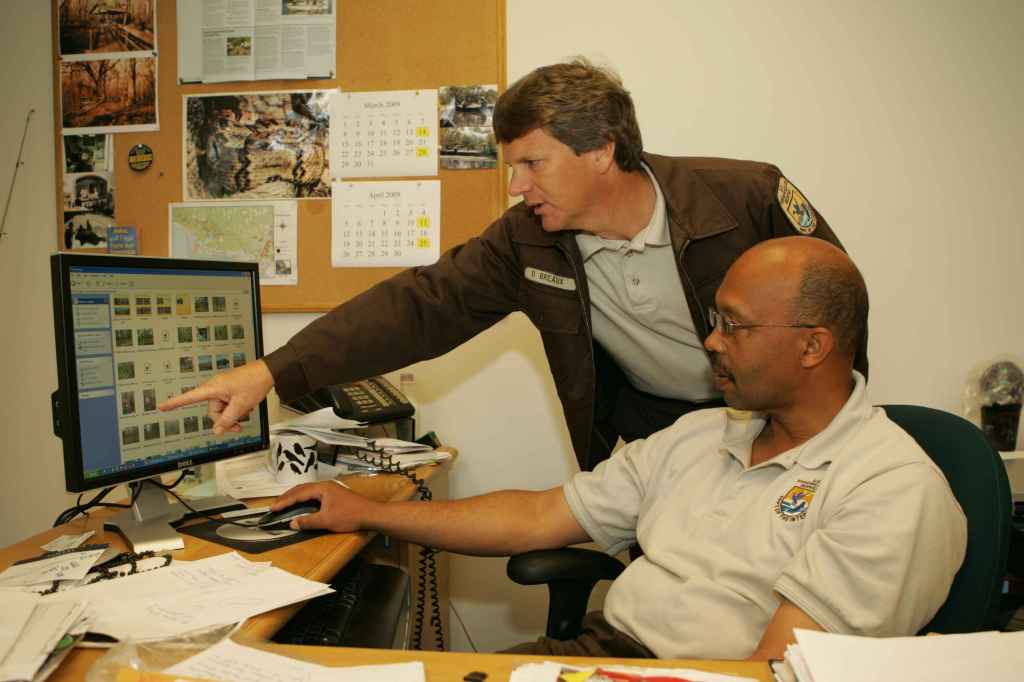
The featured image is a unique 1200×630 photorealistic leadership-coaching scene created specifically for OSLTC.004 and is not reused in the body. The separate body image is a real public-domain office discussion photograph from Wikimedia Commons.
BitcoinVersus.Tech content is provided for informational and educational purposes.


Leave a Reply