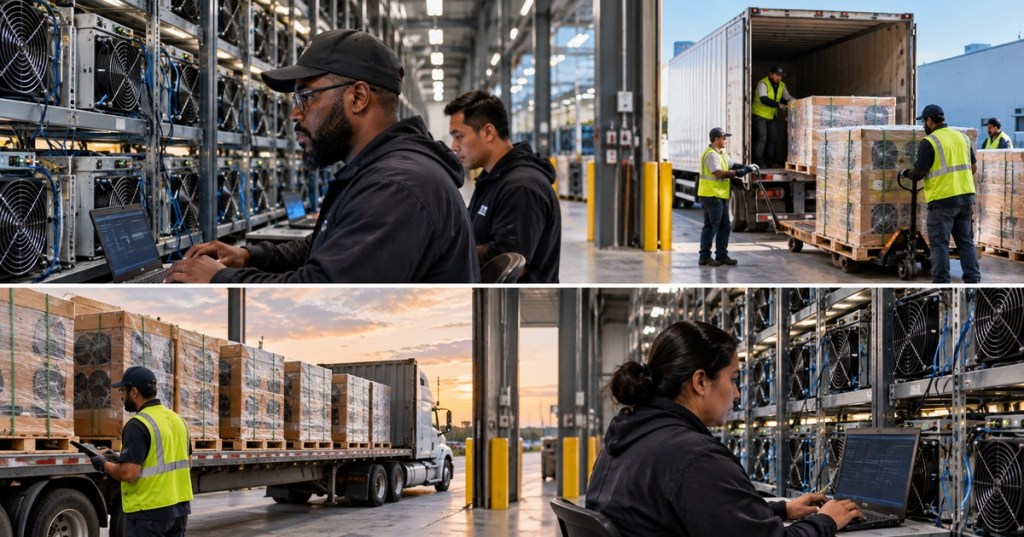
A Bitcoin miner no longer has to be physically delivered before a hosting customer can begin hashing. In a recent Braiins case study, hosted-mining provider Sazmining describes using rented SHA-256 hashrate as a temporary “virtual rig” while a customer’s real ASIC is still being shipped, installed and commissioned.
The model turns hashrate itself into temporary inventory. Instead of asking a customer to wait through freight, customs, rack installation, cabling and final setup, Sazmining buys a Braiins Hashpower Contract sized to roughly match the miner the customer purchased. The rented hashrate points to the customer’s mining destination until the physical machine comes online.
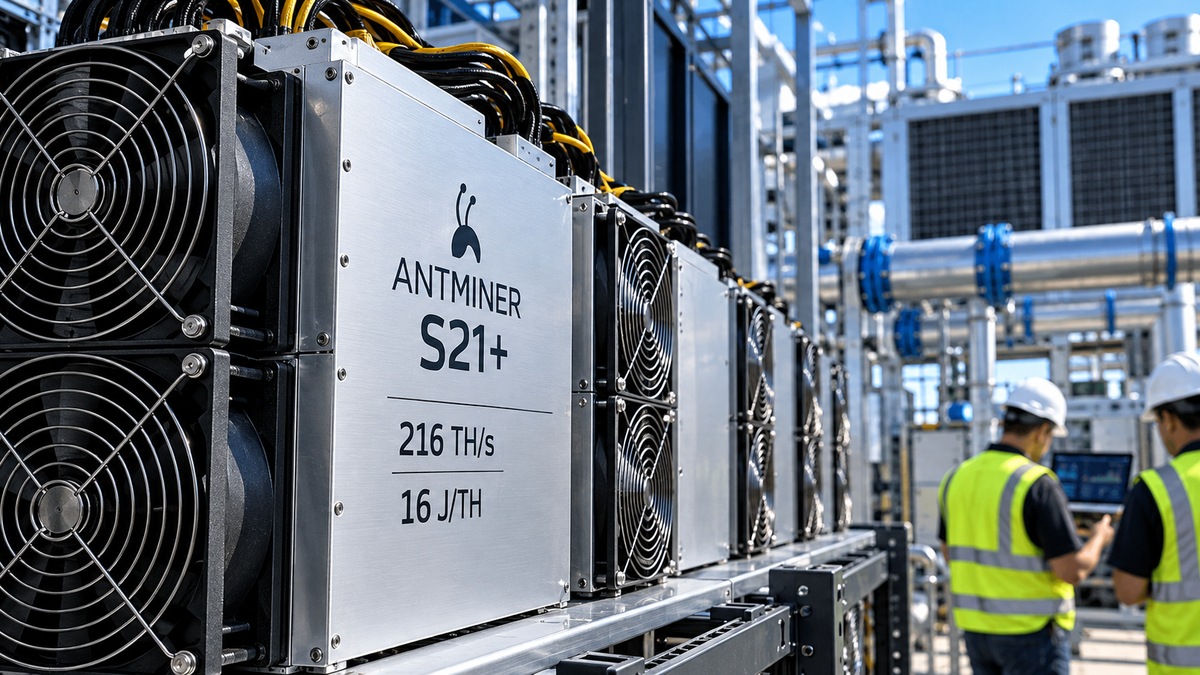
Sazmining Is Bridging the Shipping Gap With 20–50 PH/s
Braiins says Sazmining began using the system in early June 2026 and is now running roughly three to seven contracts per week, representing about 20 to 50 PH/s of temporary capacity. Sazmining’s customer promise is to begin hashing within seven days of purchase even when the underlying hardware takes longer to arrive and deploy.
That does not mean a miner is being teleported across the network. The temporary hashrate comes from other real SHA-256 mining infrastructure supplying Braiins’ marketplace. The customer is effectively receiving mining production from one set of ASICs until ownership and operations transition to the hardware they actually bought.
The Contract Can Range From 1 PH/s to 2 EH/s
Braiins’ current Hashpower Contracts page offers self-service contract sizes from 1 PH/s to 2 EH/s and terms from one week to two months. A buyer chooses the speed, pool and term, and the marketplace fills that order at a fixed premium over the daily FPPS rate.
This differs from a spot hashrate order. Spot buyers can be outbid as the market moves, which can interrupt delivery. Contracts are designed around predictable delivery: the premium is fixed while the FPPS base rate continues to move with mining economics.
That makes the product closer to temporary compute capacity than a conventional ASIC purchase. The buyer is acquiring a defined stream of SHA-256 work for a defined period without buying another power supply, hashboard, rack position, network port or transformer capacity.
This Is Service Continuity, Not Free Mining Profit
The economics need to be understood correctly. Braiins states that contract pricing follows the daily FPPS rate plus a premium. It also explicitly says a contract guarantees hashrate delivery—not a particular level of mining rewards or a favorable mining return.
That distinction matters because hashprice already expresses the revenue value of mining power. Paying a premium to temporarily rent that mining power generally creates a service cost. For a hosting company, the economic benefit can instead come from reducing customer waiting time, smoothing onboarding and delivering an earlier first payout.
In other words, the business case is similar to renting replacement equipment during downtime. The temporary asset may cost more than owning the permanent asset over a long horizon, but it can preserve continuity while the permanent asset is unavailable.
Hashrate Is Becoming a More Modular Commodity
Bitcoin mining has traditionally tied hashrate tightly to a physical machine, a site and a power contract. Hashpower markets separate those layers. A buyer can temporarily control mining output without controlling the ASIC that generates it.
That creates several operational uses beyond shipping delays: covering a failed fleet, testing a pool, maintaining a production target during repairs, temporarily expanding a mine, or replacing curtailed capacity somewhere else. It complements the same trend toward software-defined mining operations seen in automated ASIC power targeting and self-healing fleet telemetry.
The Physical ASIC Still Matters
The virtual-rig model does not eliminate hardware economics. Once the customer’s miner arrives, its J/TH efficiency, power price, uptime, cooling, pool fees and repair history determine long-term profitability. The rented bridge simply decouples the beginning of the customer experience from the date a particular serial-numbered machine reaches the rack.
That is the larger shift: Bitcoin hashrate is increasingly becoming something operators can buy, route, hedge, automate and temporarily substitute—not only something produced by hardware they directly possess. For hosting companies, that turns weeks of logistics delay into another variable that software and markets can partially absorb.
BitcoinVersus.Tech Editor’s Note: Hashpower contracts involve market, counterparty, pool and Bitcoin-mining economics. Guaranteed hashrate delivery is not a guarantee of profit.
Support independent BitcoinVersus.Tech reporting with Bitcoin: 3C9o19EH5HSiwEPyCTmEKzxhNCbo2X6TTb
BitcoinVersus.Tech is not a financial advisor. This article is for informational and educational purposes.


Leave a Reply