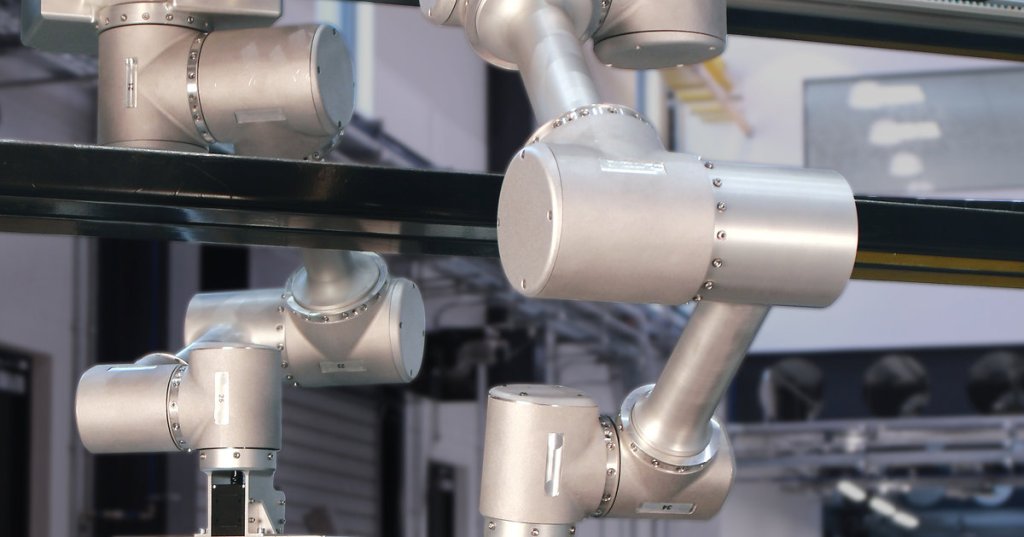
- Danu Robotics has raised $5 million in late-seed funding to commercialize its H.E.R.O. waste-sorting robot.
- The Edinburgh company says it already has about $500,000 in signed contracts and more than 200 prospective customers in its pipeline.
- Unlike many recycling robots that use suction, H.E.R.O. uses a pincer-style gripper designed for mixed recyclable material.
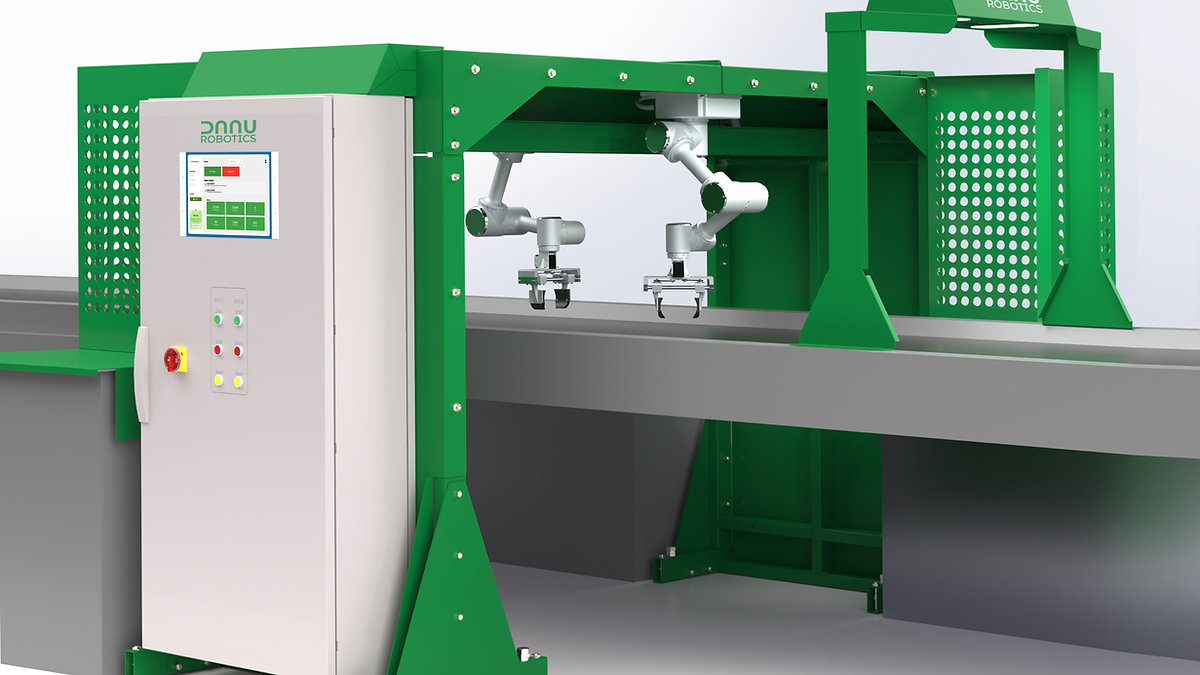
- Danu says its dual-arm system can retrofit into existing sorting lines while using less than one meter of conveyor space.
- The company’s real bet is not just robotics hardware: its vision system and AI software are designed to improve continuously as more waste data is collected.
A Scottish robotics startup is betting that one of AI’s most practical industrial jobs is also one of the dirtiest: sorting mixed recycling on a conveyor belt.
Edinburgh-based Danu Robotics has raised $5 million in late-seed funding as it moves its H.E.R.O. recycling robot from development toward broader commercial deployment. TechCrunch reported that the company has roughly $500,000 in signed contracts, letters of interest from two large customers and more than 200 prospective buyers in its sales pipeline.
The machine combines industrial robotic arms, computer vision and AI classification to identify material moving down a recycling line and physically separate targeted objects into the correct stream.
Waste Sorting Is a Harder Robotics Problem Than It Looks
A recycling belt is an unpredictable environment. Objects overlap. Packaging deforms. Labels are dirty. Plastic, paper, metal and contaminants arrive in different orientations at different speeds. A successful robot therefore has to combine perception, classification, motion planning and reliable gripping in a few seconds.
Danu’s own system uses computer vision to outline target objects, while its software only records a successful pick after the item actually reaches the destination bin. That matters because a robot can look fast in a demo while still failing economically if its picks are inaccurate or if material falls from the gripper before sorting is complete.
That distinction mirrors a broader shift in robotics from impressive one-off motions toward measurable industrial throughput. BitcoinVersus.Tech has recently covered the same idea from other directions, including tactile robot fingertips from Carnegie Mellon and a tongue-controlled robotic exoskeleton designed around useful real-world interaction rather than a lab-only benchmark.
Danu Is Betting on a Pincer Instead of Suction
One of Danu’s most visible design choices is its gripper. Many competing recycling robots rely on suction cups or vacuum systems. H.E.R.O. instead uses a pincer-style mechanism to grab items mechanically.
That approach can be useful when objects are porous, irregular, dirty or difficult to seal against a vacuum head. The tradeoff is that a mechanical gripper needs robust motion control and must avoid damaging itself when the belt delivers awkward objects.
The Retrofit Strategy May Matter More Than Robot Speed
Danu says its two-arm system needs less than one meter of conveyor space before safety guarding and can be installed into existing material-recovery facilities with relatively little disruption. That is important because most recycling plants were designed around human sorters, not around large purpose-built robotic cells.
The easiest industrial robot to sell is often the one that does not require an operator to rebuild the entire production line around it. A compact retrofit design lowers installation risk and lets recycling operators test automation beside existing manual workflows before committing to a larger deployment.
Danu Says the Economics Work at the Plant Level
According to figures founder Amy Ma gave TechCrunch, a working Danu installation could generate about $485,000 in additional annual revenue from recovered material compared with an initial system investment of about $160,000 and roughly $24,000 per year in maintenance.
Those are company estimates rather than independently audited plant economics, so the real test will be performance across different waste streams. Still, recycling automation has a straightforward business case when a machine can recover more saleable material than the labor, maintenance and capital it consumes.
The Software Is the Part That Can Keep Improving
Danu describes its hardware and software as two different economic products. The mechanical system is intended to be durable and repairable, while the AI software is licensed and updated as the company adds new datasets and vision sensors.
That model makes sense for robotics because the steel frame and servo hardware may remain useful for years while object recognition can improve much faster. New packaging types, contamination patterns and customer-specific material streams can be added to the vision model without replacing the whole robot.
BitcoinVersus.Tech recently covered Mecka’s $60 million physical-AI data round, another example of why data is becoming a separate competitive layer in robotics. Better real-world data can improve robot performance even when the actuator hardware itself changes slowly.
The Next Version Could Leave the Recycling Plant
Danu’s longer-term goal is to make the system smaller, tougher and portable enough to operate outside a dedicated material-recovery facility. Ma has discussed potential standalone deployments at events, shopping centers, hospitals and airports, where waste could be sorted closer to the point where it is generated.
That would change the economics again. Instead of transporting mixed waste to a centralized sorting plant and separating it later, smaller robotic systems could recover useful material before contamination and transport costs increase.
What to Watch Next
- Commercial installs: whether Danu converts its 200-plus sales pipeline into repeat deployments.
- True picks per day: plant-scale successful picks will matter more than short demonstration speeds.
- Gripper reliability: the pincer design has to survive dirty, abrasive and unpredictable waste streams.
- Vision accuracy: contaminated packaging and overlapping objects remain difficult computer-vision cases.
- Maintenance cost: downtime can quickly erase the economics of automation in a continuously operating facility.
- Portable systems: smaller versions could expand the addressable market beyond conventional recycling plants.
Bottom Line
Danu Robotics is not trying to build a humanoid or a general-purpose machine. It is applying AI, computer vision and industrial robotics to one repetitive job with clear economics: identifying valuable material and physically pulling it from a waste stream.
The $5 million round gives Danu more room to prove whether its pincer-based design can turn that focused engineering approach into reliable plant-scale performance. If the company can convert signed contracts and its customer pipeline into repeatable deployments, recycling could become one of the less glamorous but more immediately useful markets for physical AI.
Editor’s Note: Funding, contract and revenue figures attributed to Danu Robotics come from company statements and TechCrunch reporting. Actual customer economics will vary by facility, waste stream, labor cost and recovered-material pricing.
BitcoinVersus.Tech is not a financial advisor. This media platform reports on technology and financial subjects for informational purposes.


Leave a Reply