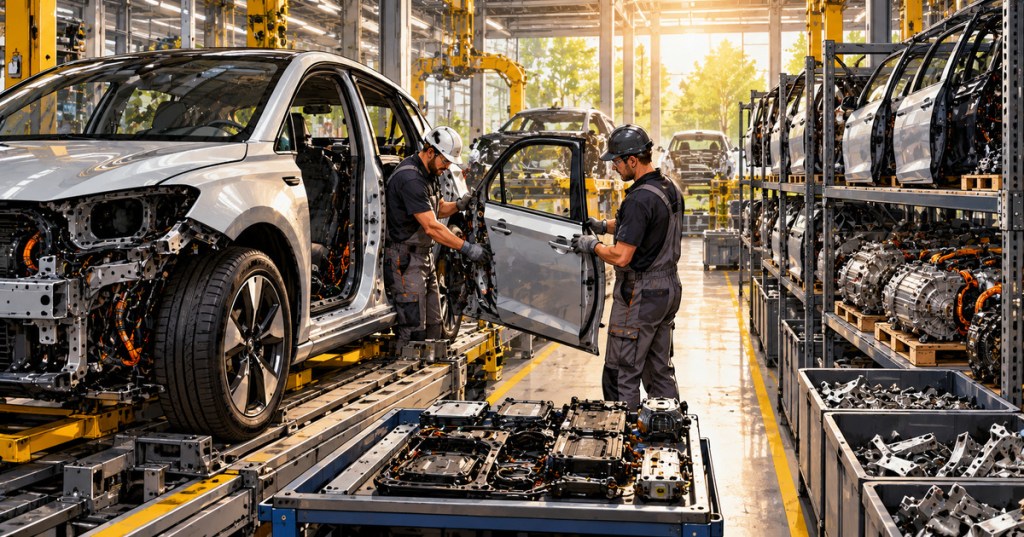
Volkswagen opened its first industrial vehicle-dismantling line at its electric-car plant in Zwickau, Germany, on October 28, turning part of the factory into a center for recovering reusable parts and raw materials. The eight-station line is designed to process 4,100 vehicles a year from 2027, with 100 workers already retrained for the operation.
According to Volkswagen’s opening announcement, the site will first disassemble pre-production vehicles, later expanding to end-of-life cars. Recovered doors, transmissions, bumpers and other usable components can be inspected and resold as original used parts, while metals and plastics are separated for recycling.
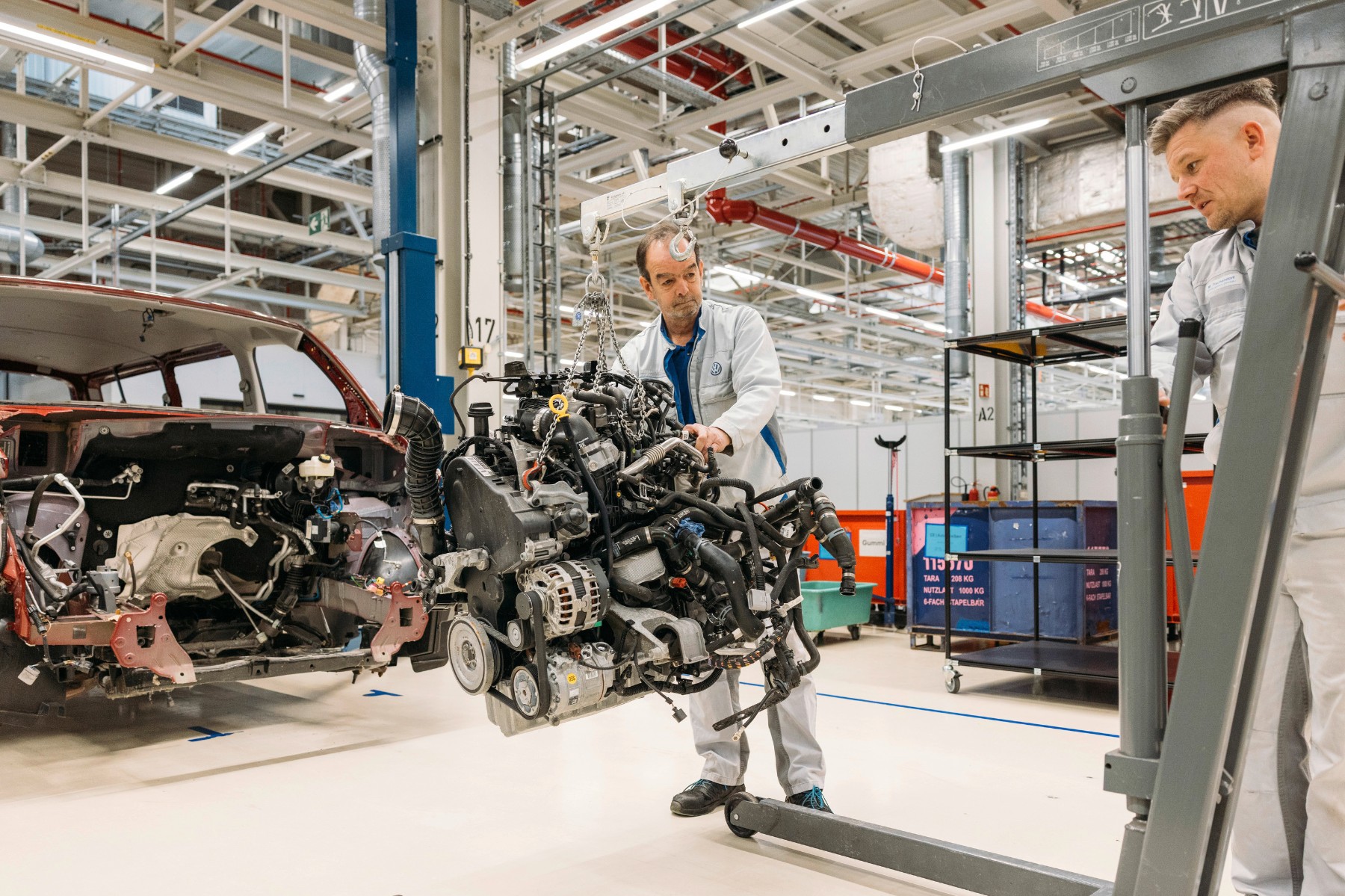
Automotive recycling moves toward assembly-line scale
The conversion took nine months, Volkswagen said, including permitting and equipment installation. Some existing production machinery was adapted for dismantling. The company says 94 metric tons of steel were installed and 1,200 square meters of flooring were prepared for handling recovered materials.
Volkswagen expects the approach to help build a European network for vehicle reuse and material recovery. Its earlier plans envision scaling to as many as 15,000 vehicles annually by 2030, although that is a target rather than operating capacity. The group plans up to €90 million in investment across the Zwickau circular-economy project, with Saxony offering up to €10.7 million in support.
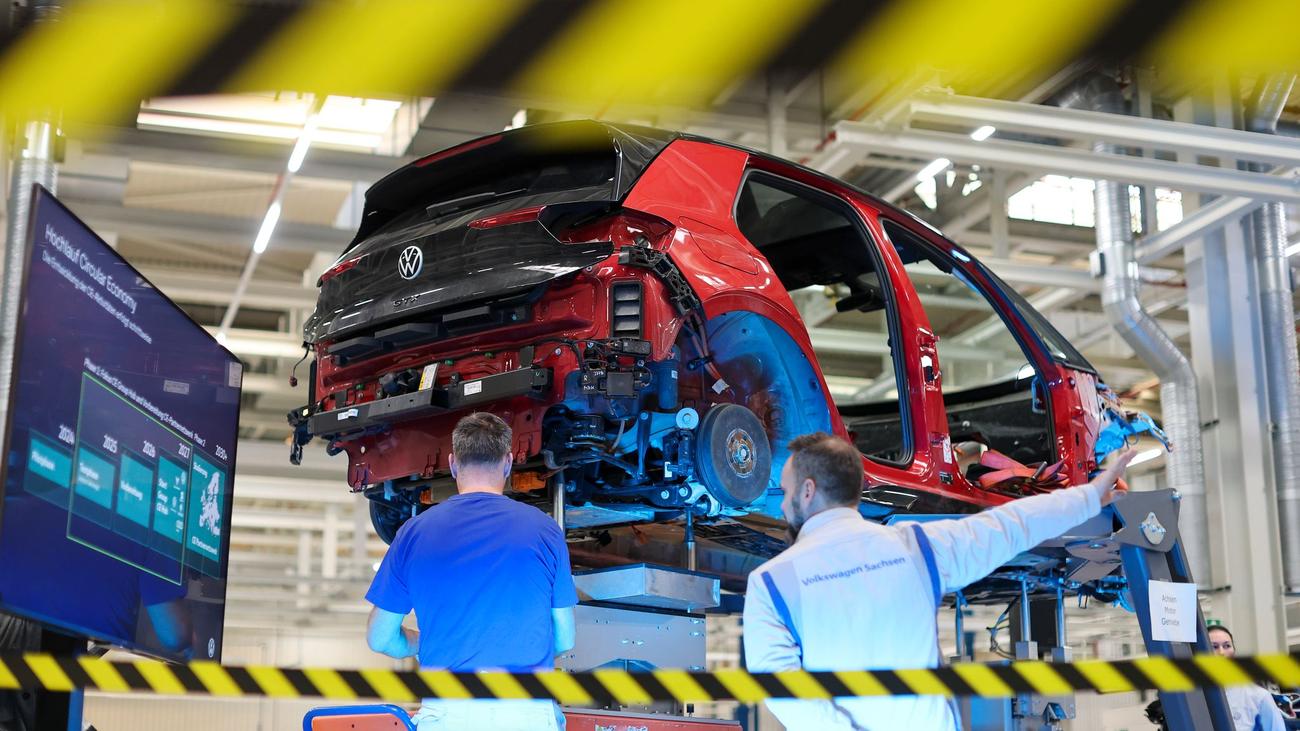
Volkswagen says recovered plastic from one end-of-life car could eventually provide enough recycled content for parts used across three new cars, depending on the blend of recycled and virgin material. That company projection, rather than a measured yield, connects vehicle production with the broader push to automate industrial waste sorting and the challenges of vehicle electrification.
A new business, but not a guarantee for the factory
The dismantling line brings opportunities for skills and parts recovery, but the long-term employment picture remains uncertain. Reuters reported that Zwickau has no vehicle production scheduled beyond 2031 and around 8,000 jobs face uncertainty under Volkswagen’s restructuring. The hub could eventually support up to 1,000 jobs, but that ambition does not replace the plant’s existing car-production workforce.
Researchers caution that the business must still prove profitable, depending on material values, labor and logistics. That question is especially relevant as European automakers confront fierce competition from Chinese manufacturers, a trend examined in BitcoinVersus.Tech’s coverage of China’s expansion into Europe’s car market.
The first test will come in 2027, when two-shift operations are expected to begin.
Editor’s Note: We volunteer daily to ensure the credibility of the information on this platform is Verifiably True. If you would like to support our work and help further secure the integrity of our research initiatives, please scan the QR code below to donate 5,000 sats.

Scan the QR code using a compatible Bitcoin wallet while viewing the article on a laptop or larger screen. Donation address: 3C9o19EH5HSiwEPyCTmEKzxhNCbo2X6TTb.
BitcoinVersus.tech is not a financial advisor. This media platform reports on financial subjects purely for informational purposes.


Leave a Reply