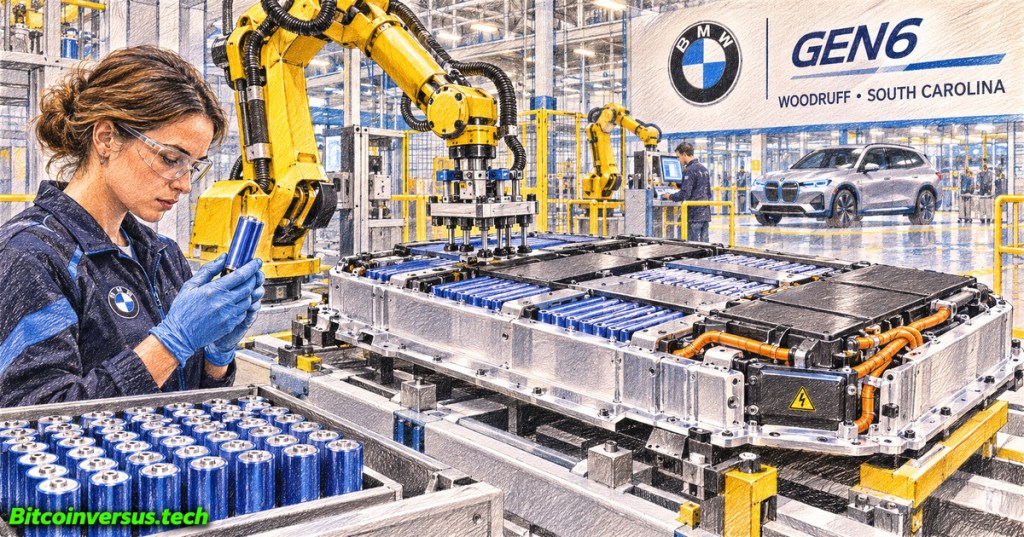
BMW has opened a factory in Woodruff, South Carolina, to assemble sixth-generation (Gen6) high-voltage batteries for electric vehicles built nearby. The November 13, 2026, inauguration marks the beginning of series battery-pack assembly at Plant Woodruff, 15 miles from BMW’s Spartanburg vehicle plant. Packs from Woodruff will power the new BMW iX5, the company’s first fully electric model assembled in the United States.
Video explaining BMW Gen6 cell-to-pack assembly, uploaded August 4, 2026, by automotive channel motornewsitaly using BMW production footage. It predates the Woodruff opening and is not footage of the November 13 inauguration. Credit: motornewsitaly / YouTube; factory technology: BMW Group. BMW’s original factory video is also available from its PressClub.
A battery-pack factory, not a cell factory
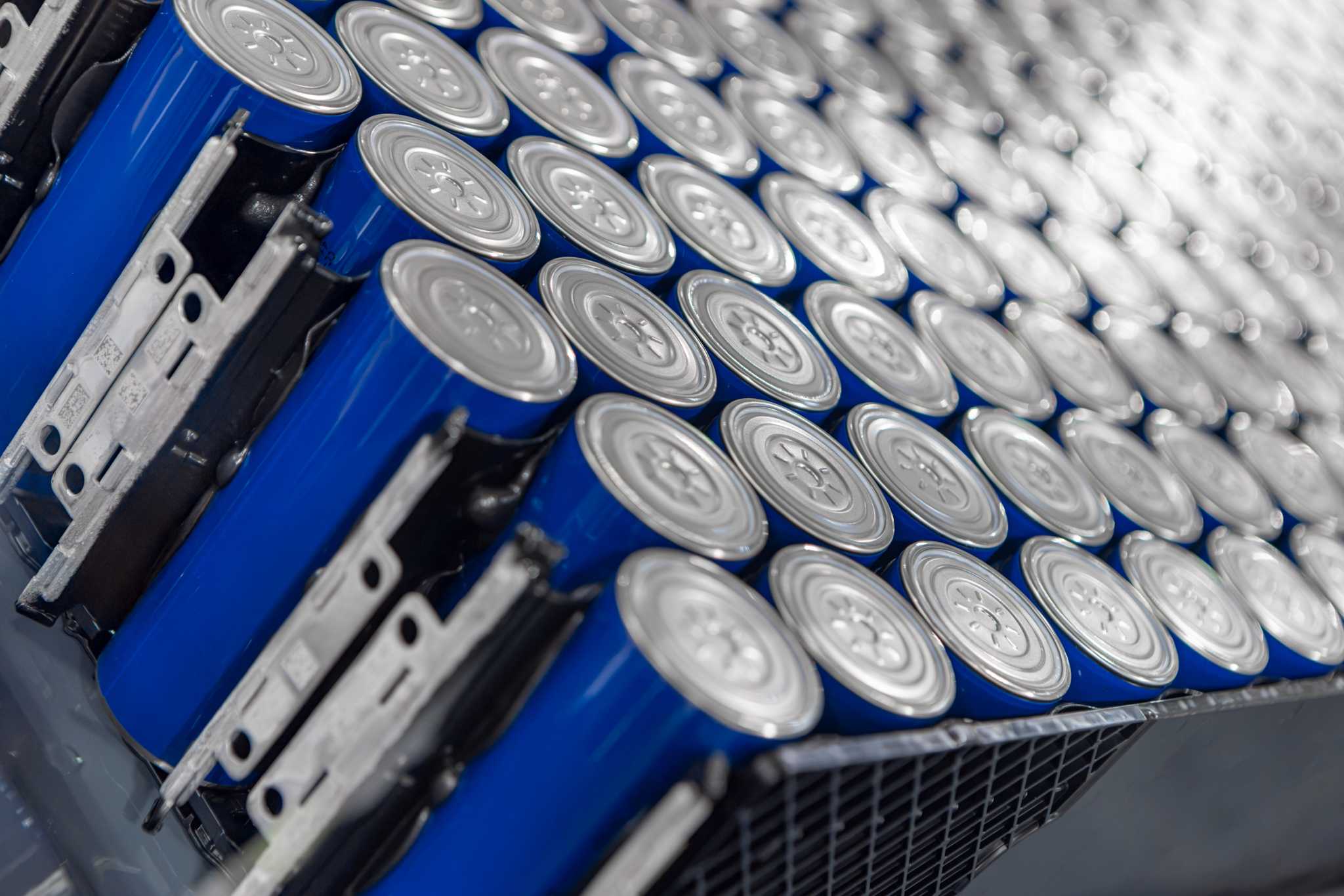
The distinction matters. BMW purchases individual lithium-ion cells from specialist suppliers, then checks their electrical properties before integrating them into complete high-voltage packs. Woodruff does not manufacture the cylindrical cells themselves. Under BMW’s cell-to-pack architecture, cells connect directly into the battery structure without conventional intermediate cell modules.
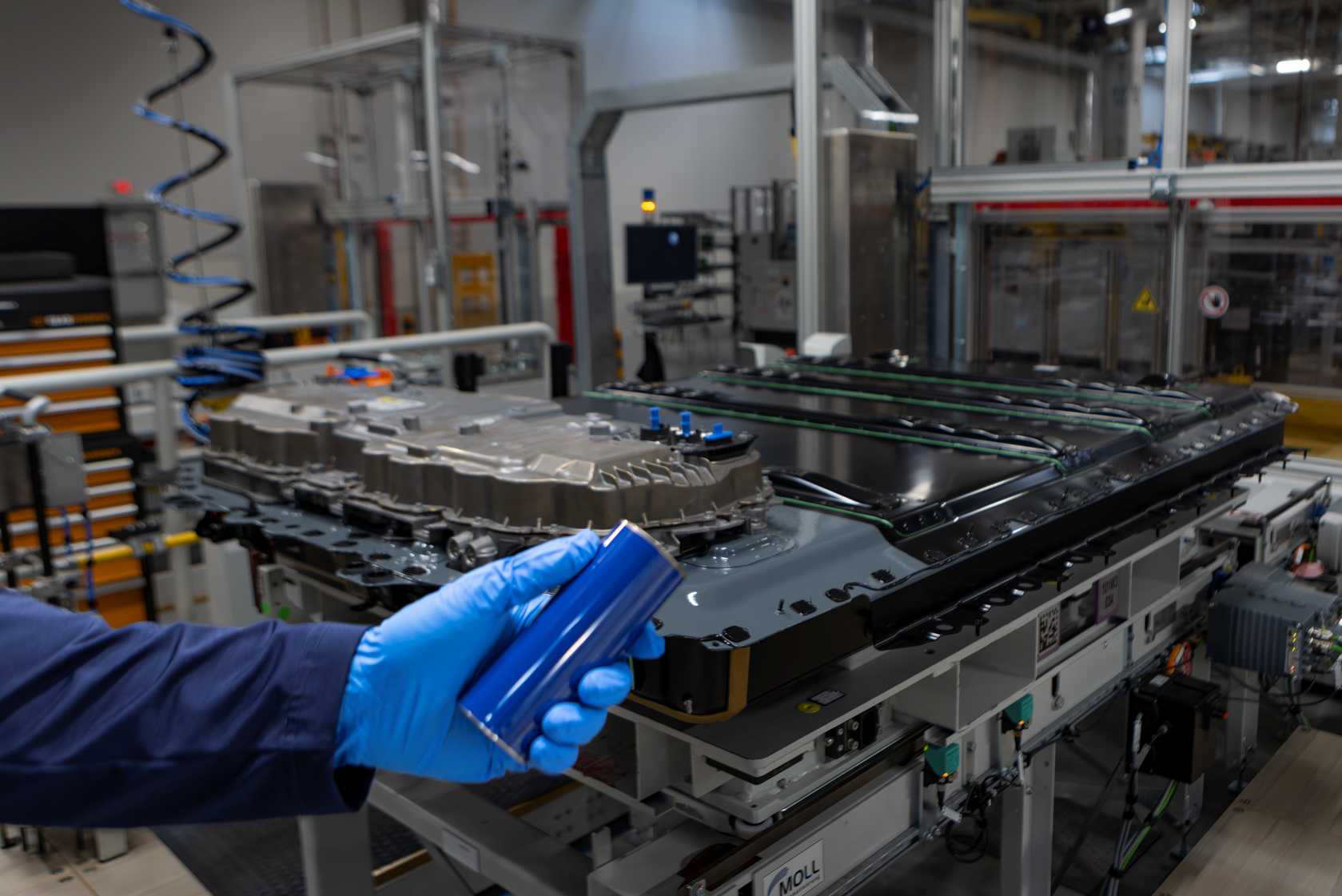
Assembly uses cell clustering with cooling systems, laser cleaning and precision welding, followed by insulating foam, enclosure sealing and installation of an Energy Master controller. BMW says every completed pack receives a final end-of-line inspection. In-line measurements also check weld quality and record production data. Such traceability can support earlier defect detection, although the company has not published independent field-failure rates for Woodruff’s new output.
The plant has more than 300 employees and about 250 robots. BMW says its in-house AI tools analyse factory data to support quality and equipment effectiveness, while digital twins and virtual-reality training help workers practise operations before entering live production. Neither the robot count nor use of AI independently proves that manufacturing is defect-free.
Gen6 cells promise higher density and faster charging
BMW reports more than 20% higher cell energy density than its preceding generation and says the Gen6 platform can enable up to 30% faster charging and up to 30% more range, depending on vehicle configuration. Such figures describe company-reported technology comparisons, not certified outcomes for every iX5 trim, climate or charging station.
Production in Woodruff also connects a broader manufacturing shift. BMW has already discussed Neue Klasse investment and restructuring while U.S. market data show hybrid growth alongside weaker new battery-EV sales. Battery-pack manufacturing capacity therefore represents a long-term industrial commitment rather than proof of immediate consumer demand.
Battery controls and power electronics remain central to that shift. Automotive semiconductor platforms illustrate the surrounding chip ecosystem, while Honda’s reported Ohio manufacturing expansion and Volkswagen’s plant reconfiguration show how automakers are adapting factories around changing products and economics.
Local supply, global dependencies
Woodruff is the fourth BMW Gen6 pack-assembly site to enter series production, after Debrecen, Irlbach-Straßkirchen and Shenyang. A fifth site, San Luis Potosí, is scheduled for 2027. BMW’s November 9 supplier announcement describes plans to source cells through CATL, EVE Energy, Samsung SDI and LG Energy Solution across different markets. Regional pack assembly can reduce transport distances without eliminating upstream dependence on minerals, cell production or global component suppliers.
BMW also reports roughly 28% lower CO₂-equivalent emissions per watt-hour for the new iX5 cells against its previous Gen5 comparison, based on its specified materials and production assumptions. A cell-level manufacturing comparison must not be presented as a measured whole-vehicle life-cycle reduction.
Bottom line: BMW has started assembling Gen6 battery packs in South Carolina, strengthening the supply chain for planned U.S.-built electric SUVs. Vehicle production volumes, real-world charging improvements and long-term battery reliability remain questions for independent evaluation.
Primary sources: BMW Group’s November 13 plant-opening announcement; BMW Group’s November 9 supply-chain update; Gen6 factory and process overview; BMW iX5 technical overview. The accompanying photographs are BMW Group media; the featured illustration is original conceptual artwork.
Editor’s Note: BMW’s November 13 announcement confirms the opening of Woodruff’s battery-pack assembly operation; it does not establish local lithium-ion cell manufacture or quantify delivered iX5 volumes. The reported energy-density, charging, range and carbon metrics are BMW comparisons, not independent vehicle tests. The original 1200 × 630 featured cover depicts a conceptual Gen6 assembly scene and is not documentary photography. The two in-story factory images are authentic BMW media released before opening day. The YouTube assembly explainer is a third-party upload of BMW factory footage dated August 4; it does not show the plant inauguration. Video player appearance and playback should be independently rechecked across devices.

BitcoinVersus.Tech is volunteer-run and publishes independent educational technology reporting. An optional 5,000-satoshi donation supports ongoing research. Scan the original QR from a second screen with a compatible Bitcoin wallet; on mobile, use a wallet that supports scanning a saved image. Independently verify the recipient address 3C9o19EH5HSiwEPyCTmEKzxhNCbo2X6TTb and the payment amount before sending. Bitcoin transfers are generally irreversible.
We volunteer daily to ensure information on the BitcoinVersus.Tech platform is Verifiably True. Coverage is educational and informational and does not constitute financial or investment advice.


Leave a Reply