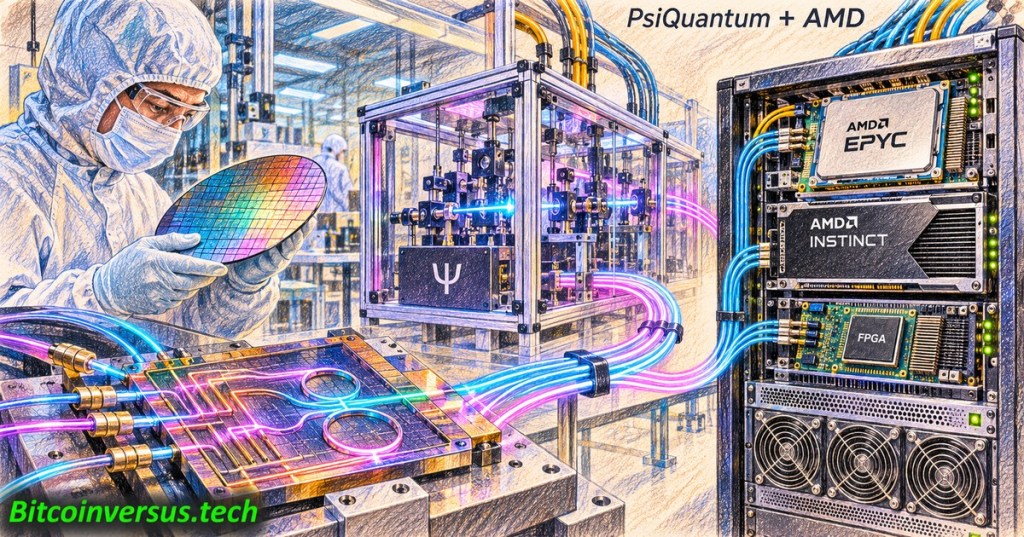
AMD and PsiQuantum expanded their quantum-computing partnership on November 12, 2026, adding server CPUs, AI accelerators and software to an existing programmable-hardware relationship. The companies plan to co-design classical infrastructure for future fault-tolerant photonic quantum computers. The agreement also includes a planned, undisclosed AMD equity investment in PsiQuantum, according to their joint announcement. A separately published technical paper offers a more concrete early benchmark: 6.59 microseconds of FPGA decoding latency for a specific error-correction workload.
Independent February 2026 tour of PsiQuantum’s photonic technology, filmed and published by Dr Ben Miles. The documentary provides authentic laboratory context, not footage of the November 12 AMD agreement. Credit: Dr Ben Miles / YouTube.
Why a quantum computer needs AMD’s conventional processors
Photonic quantum computing encodes information in light and relies on optical components, detectors and fast feedback. Error correction must interpret imperfect measurement outcomes quickly enough to keep computation reliable. PsiQuantum previously selected AMD Versal field-programmable gate arrays (FPGAs) for control-system development. The expanded collaboration adds AMD EPYC server CPUs, Instinct GPUs and the ROCm software stack to the planned platform. Those products serve different roles from photonic qubits: scheduling, control, accelerated numerical simulation and classical processing.
The 6.59-microsecond result is an FPGA benchmark
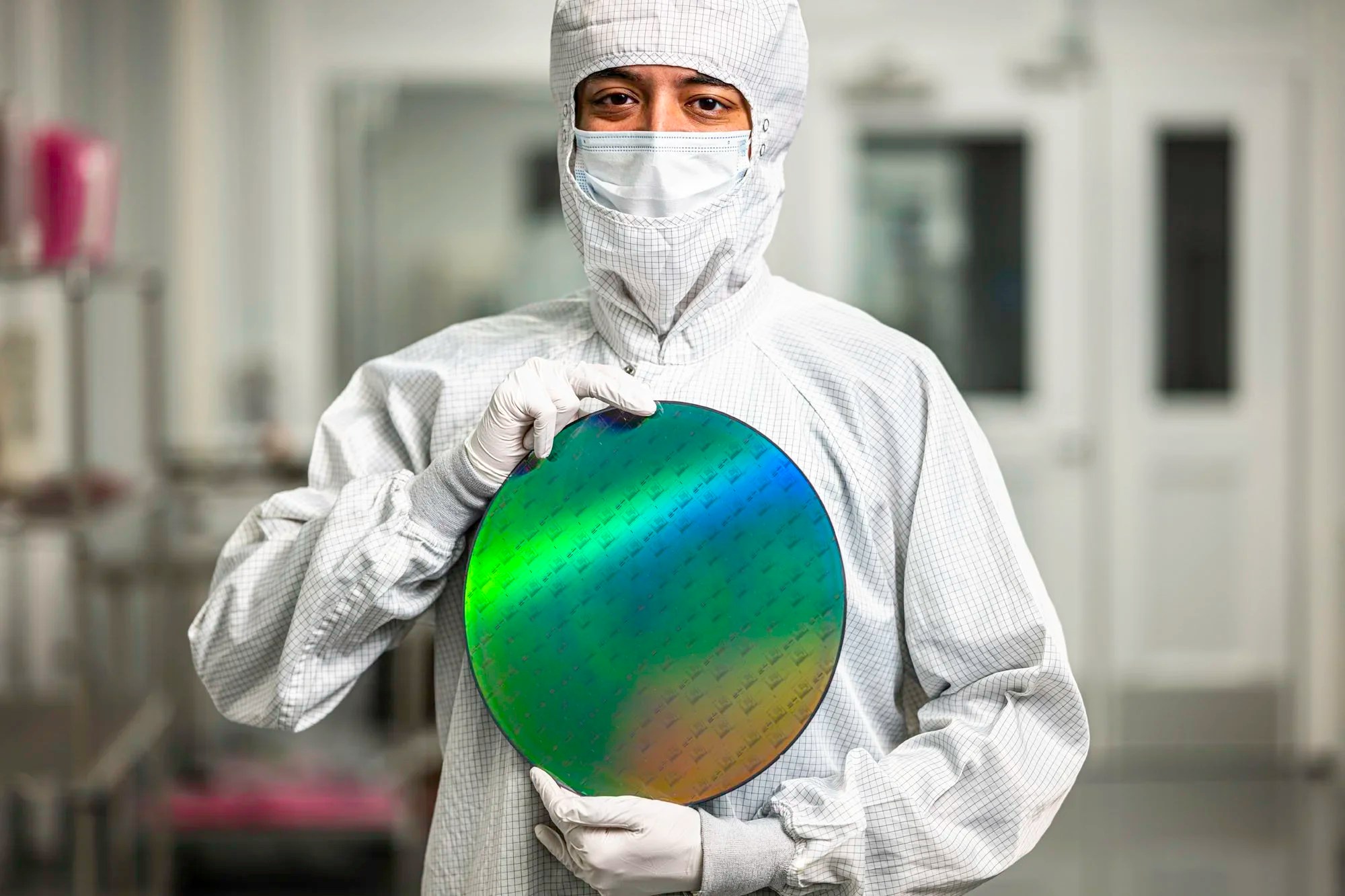
The research is stronger evidence of implementation progress than an equipment roadmap alone. In a preprint submitted November 10, researchers introduced PRISM, a transformer-based machine-learning decoder for fusion-based quantum computing. Its design uses known photon-loss locations to distinguish erasures from other errors and infer corrective information. Across reported benchmark families, the authors found logical-error performance competitive with slower integer-programming approaches.
On an AMD VP1902 FPGA, an optimized test decoded distance-eight logical blocks in space and time with 6.59 µs latency and 1.56 µs amortized decoding time per logical block. Latency measures the response time for a tested block; amortized time expresses average processing cost under the benchmarked arrangement. Neither number measures full-machine quantum gate speed, commercial throughput or a deployed error-corrected quantum computer. The paper was publicly posted as a preprint, not established as an independently replicated production result.
Drug modeling is real work on GPUs, not quantum proof
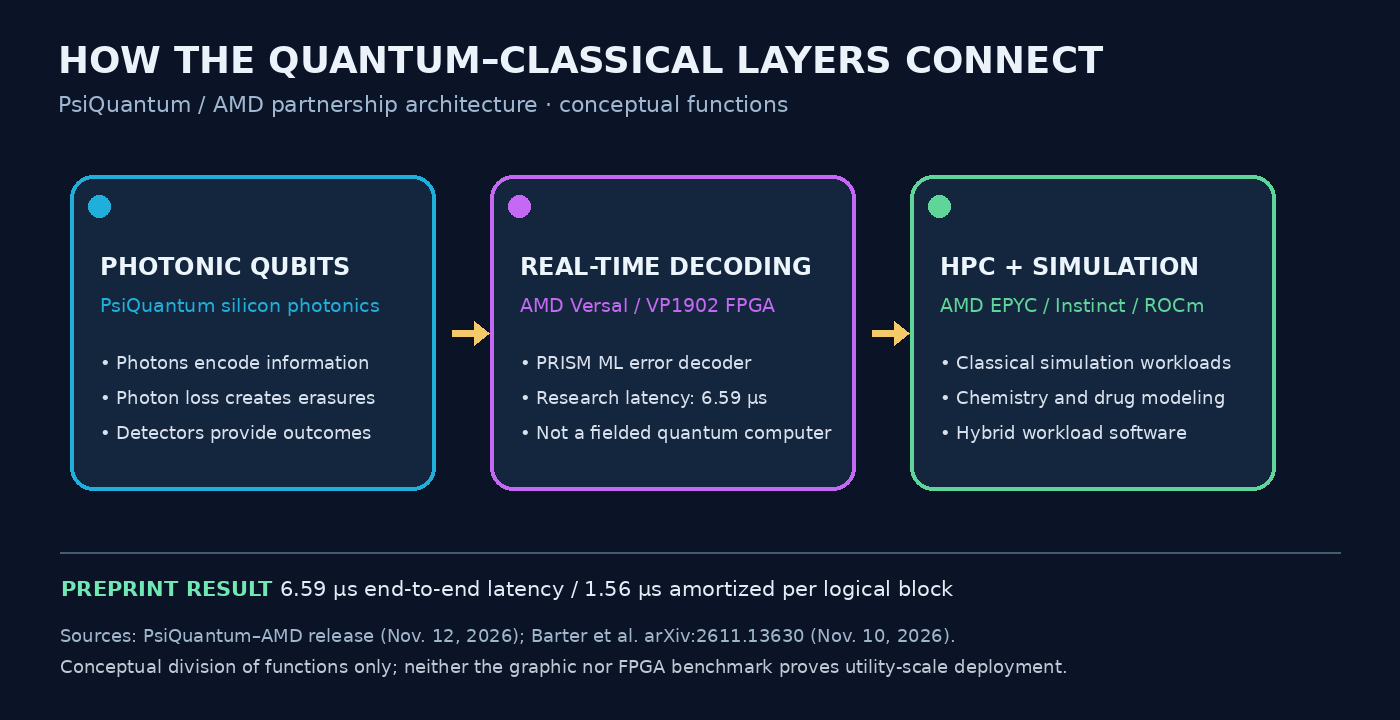
The partners also reported early results simulating covalent inhibitors, a drug-compound class relevant to oncology. Their present computational-chemistry approach runs on AMD hardware today, according to the announcement. No comparable public performance table, independent clinical validation or commercial drug-discovery outcome accompanied the release. GPU-accelerated chemistry should not be conflated with a future quantum advantage. The initial commercial focus is pharmaceutical research; broader applications remain exploratory.
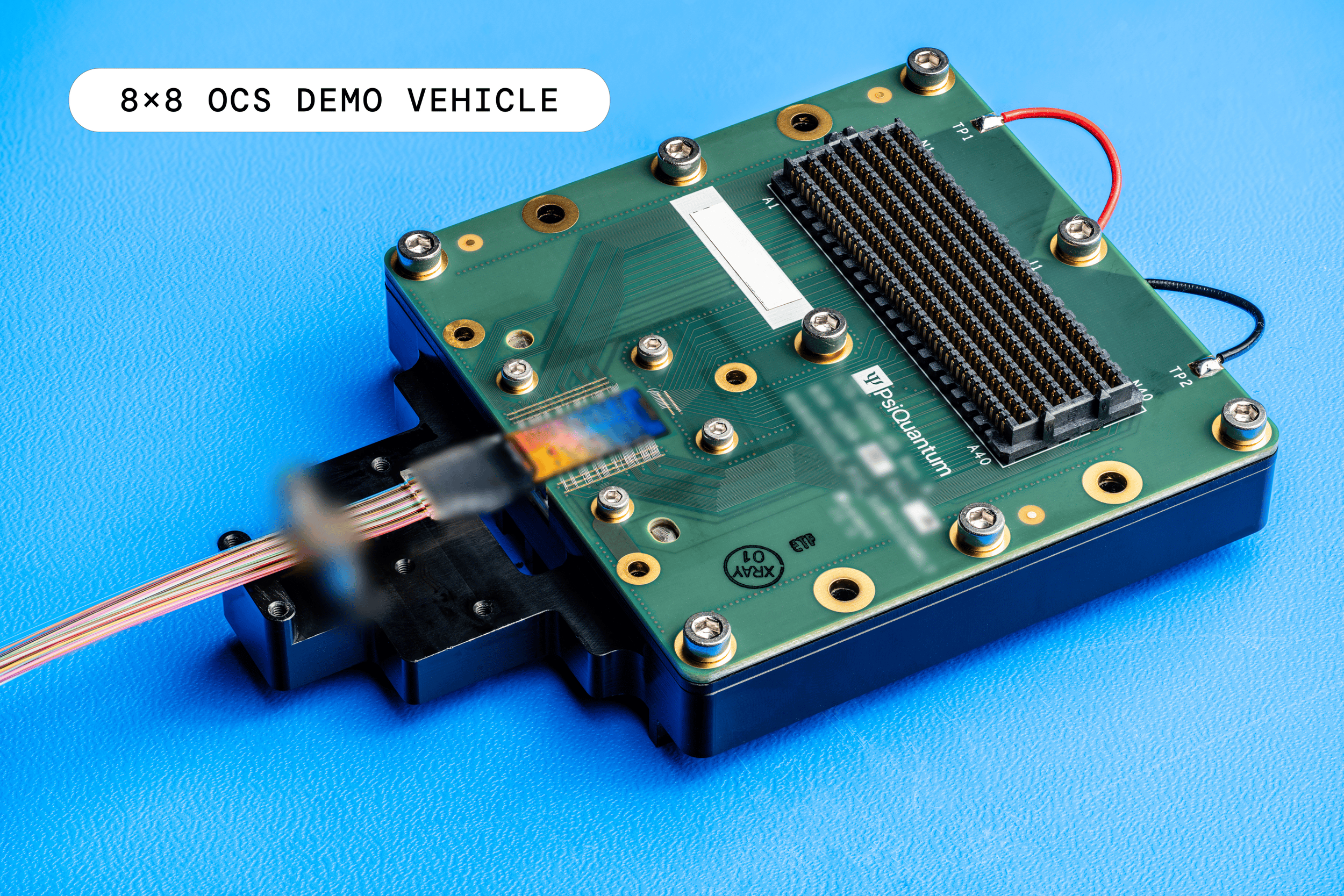
PsiQuantum’s earlier 8×8 silicon-photonics optical-switch demonstration highlights another potentially reusable technology. Optical networking for large quantum installations may share manufacturing techniques with AI interconnects, although an optical switch demonstrated for data-center networking is not itself a fault-tolerant quantum processor.
Investment amount and utility-scale delivery remain open
AMD said it plans an equity investment but released no amount, ownership percentage or closing date. The companies will examine a larger collaboration footprint at Chicago’s Illinois Quantum and Microelectronics Park, where PsiQuantum is an anchor tenant. They plan to provide further details at SC26, scheduled for November 15–20. No completed utility-scale quantum machine, guaranteed availability date or system-level performance result was announced.
Infrastructure financing is also separate from engineering evidence: PsiQuantum previously disclosed a conditional $150 million government loan commitment. Competing photonic-switch research by Xanadu and HyperLight demonstrates progress elsewhere in the field, while DARPA’s staged quantum-hardware validation reflects the unresolved challenge of proving scalable systems rather than isolated components.
Bottom line: AMD gains a prospective role in quantum-system control and simulation, while PsiQuantum gains access to a wider classical-computing stack. The measured FPGA decoder is meaningful technical progress within a defined benchmark. Turning the partnership into a fault-tolerant, commercially useful quantum computer remains a longer and unverified step.
Primary sources and reporting notes: PsiQuantum–AMD announcement, November 12, 2026; Barter et al., “Machine-learning decoders for fusion-based quantum computing in real time,” arXiv:2611.13630, submitted November 10, 2026; Reuters deal coverage; PsiQuantum Omega platform. Claimed drug-modeling improvements were not independently benchmarked for the report. Video identity and published title were checked; actual embedded playback and mobile rendering may vary by client.
Editor’s Note: The research-paper latency and throughput measures describe a particular programmed FPGA decoder benchmark, not the performance of a utility-scale quantum computer. AMD’s investment remains a plan without disclosed terms. The featured 1200 × 630 colored-pencil cover is original conceptual art rather than a photograph of an installed system. The two archival company technology photographs, original analytical diagram and independently produced documentary are credited at their placements; no future deployment is presented as already completed.

BitcoinVersus.Tech is volunteer-run. To support independent reporting, scan the original QR code from another screen using a compatible Bitcoin wallet. On a phone displaying the QR, use a wallet’s saved-image scanning feature if supported. Independently confirm recipient address 3C9o19EH5HSiwEPyCTmEKzxhNCbo2X6TTb and the optional donation of 5,000 satoshis before sending. Bitcoin transfers are generally irreversible.
We volunteer daily to ensure information on the BitcoinVersus.Tech platform is Verifiably True. Reporting is educational and informational; it is not individualized financial, investment or technical advice.


Leave a Reply