
PsiQuantum unveiled an 8×8 optical circuit switch on October 28, 2026, applying technology originally developed for quantum computing to the networks connecting AI data centers. The company reports 1.2 decibels of typical insertion loss, 40 dB of crosstalk isolation and reconfiguration in less than three milliseconds in its laboratory demonstration. Commercial products have not yet been announced.
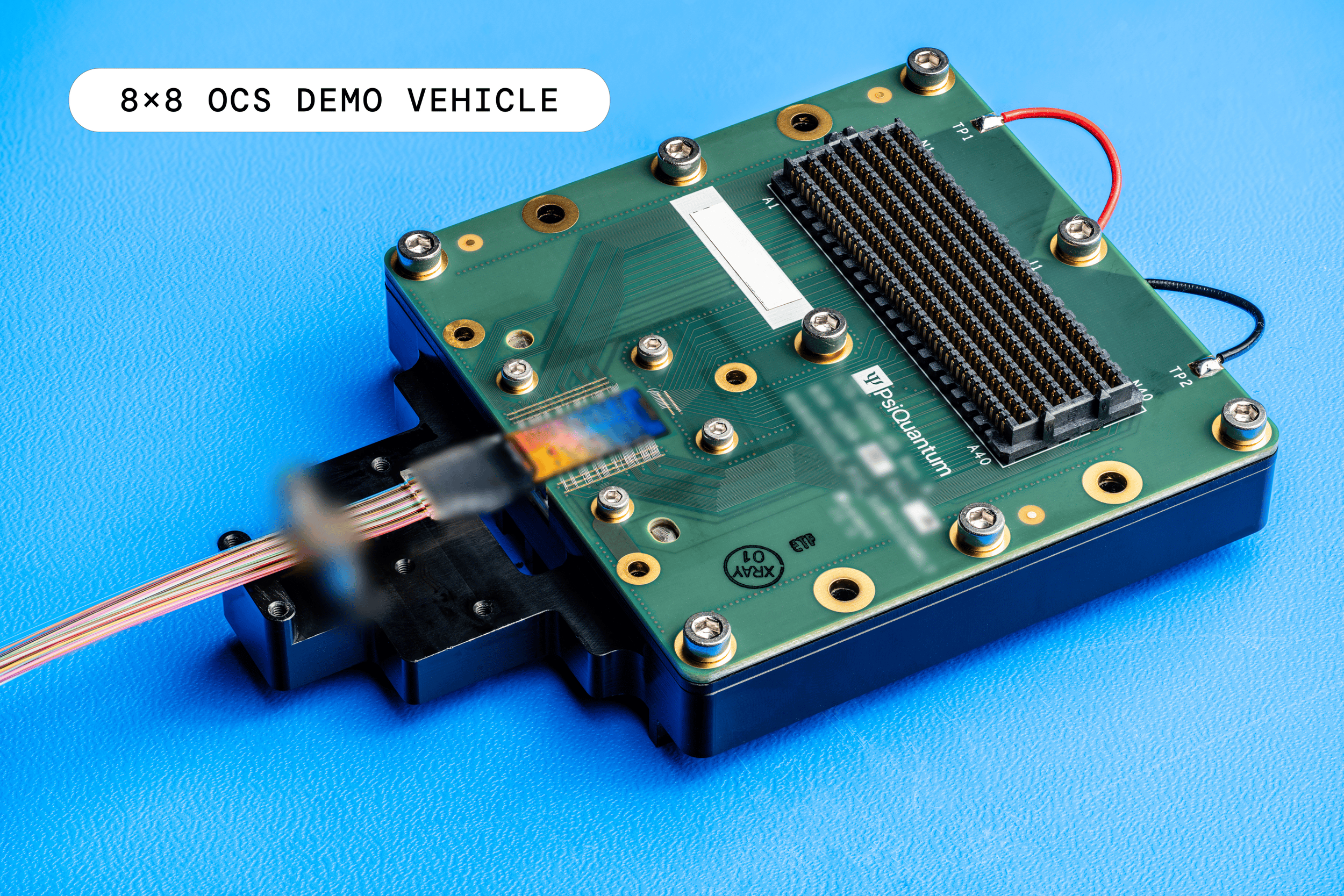
An optical circuit switch creates connections between fiber ports so light can pass through without conversion into electrical signals inside the switching device. That may reduce some networking overhead between tightly connected AI processors. It is not a drop-in replacement for conventional Ethernet packet switches, which still handle flexible traffic routing and congestion management.
PsiQuantum calls its demonstration strictly nonblocking: each of eight inputs can reach any of eight outputs. The board has no moving mirrors, and the company says its testing required no optical amplification. Its October 28 announcement describes typical rather than independently verified production results; the headline’s “as low as 1 dB” represents a best-case figure.
How quantum photonics enters AI networking
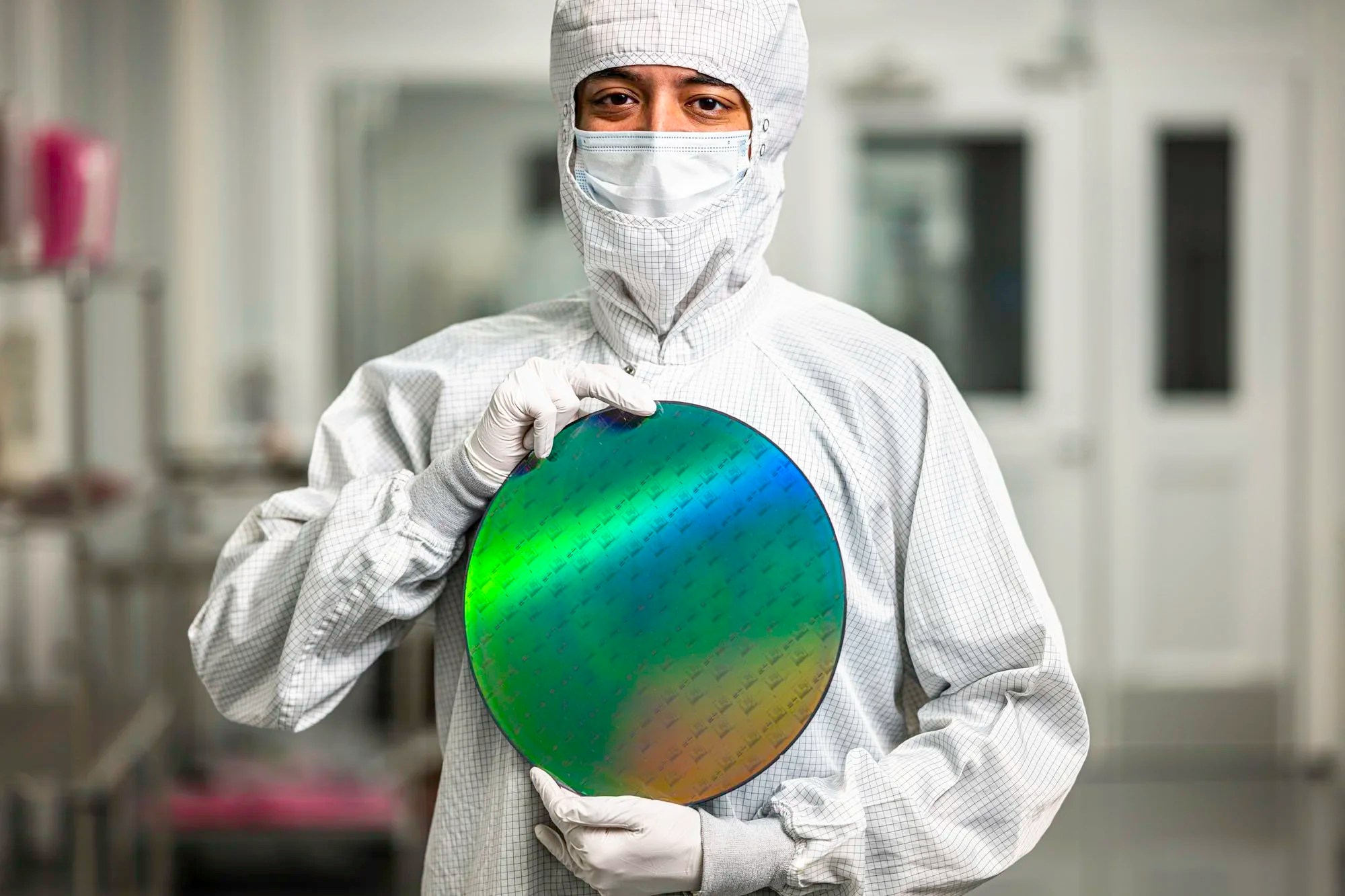
The company’s low-loss silicon photonics platform was built to preserve individual photons in fault-tolerant quantum computers. Its fabrication approach uses standard 300-millimeter semiconductor wafers and commercial foundry infrastructure. PsiQuantum has also developed barium titanate switching, but says that material is not required for this 8×8 demonstration.
For AI operators, the potential benefit is improved accelerator utilization: moving data between chips more efficiently could reduce the time processors spend waiting. That makes the work relevant to Oracle’s recent networking upgrades and the broader optical-switching investment race. However, the new device has not demonstrated a verified facility-wide power reduction or a full-scale deployment.
PsiQuantum is sharing evaluation samples with selected prospective customers and says larger devices are under development. The key questions now are how insertion loss changes as port counts increase, how reliably the hardware integrates with existing data-center network fabrics, and whether the economic benefits survive real workloads.
Until the company publishes independent benchmarks, prices, and commercial shipment details, this remains a promising prototype rather than proven AI data-center infrastructure.
BitcoinVersus.Tech Editor’s Note:
We volunteer daily to ensure the credibility of the information on this platform is Verifiably True.
If you would like to support to help further secure the integrity of our research initiatives, please scan the QR code to donate (For the best results, scan the QR code on a Laptop or larger screen).



Leave a Reply