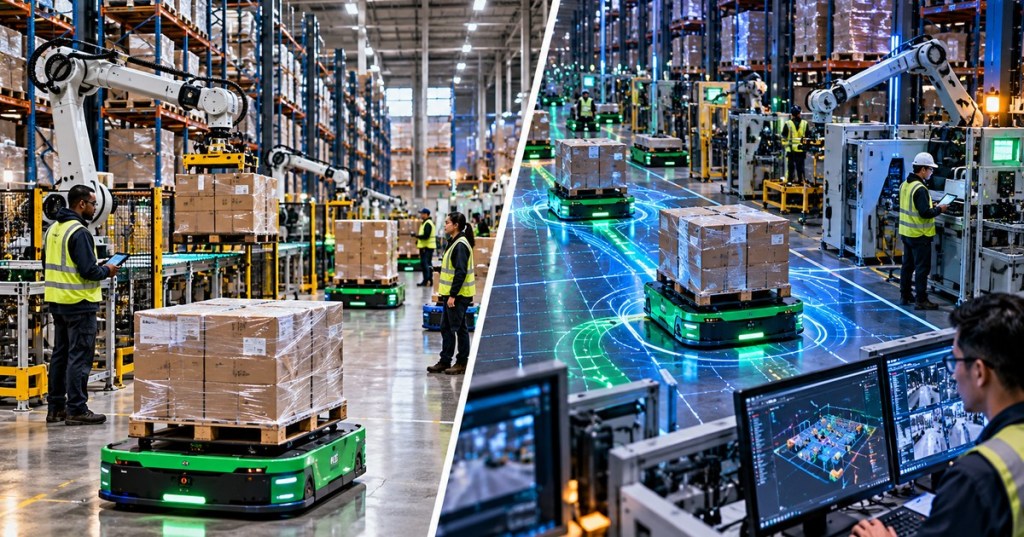
Walmart and Symbotic announced an expanded robotics agreement on October 29, 2026, with an initial commitment of approximately $6 billion in spending over several years. The deal brings additional automation to 25 U.S. regional distribution centers as Walmart expands the speed and capacity of its retail supply chain.
The announcement extends an established partnership rather than launching an entirely new warehouse network. Symbotic began working with Walmart in 2017, and the companies previously announced plans to automate regional facilities. The latest commitment concerns further capabilities at 25 centers, not the construction of 25 new buildings.
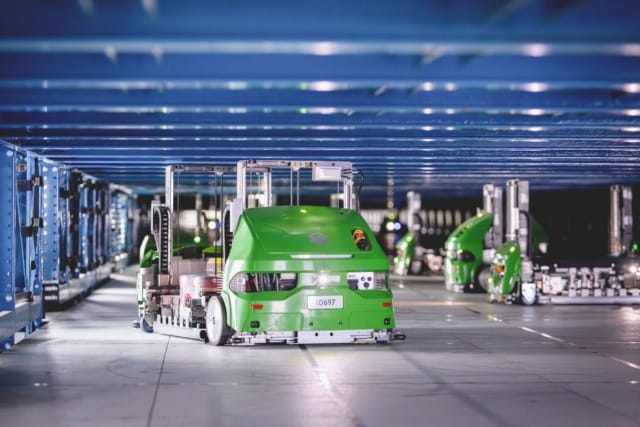
How the warehouse robots work
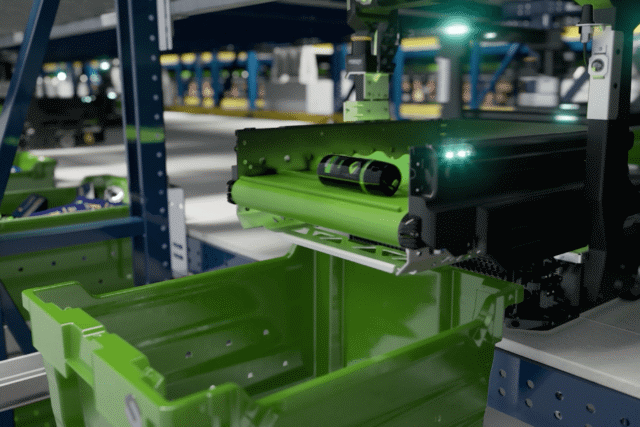
Symbotic combines autonomous mobile robots, high-density storage equipment and AI-based software to sort cases, retrieve inventory and prepare shipments. Its newer offerings include BreakPack, designed to handle individual items, and SymMicro, intended for smaller e-commerce fulfillment operations.
For Walmart, the objective is to move inventory more efficiently between suppliers, distribution centers, stores and online orders. The companies expect the upgrades to increase storage capacity, improve replenishment reliability and support more product choices without requiring equivalent expansion in warehouse floor space. Those are anticipated benefits, not independently measured results of the new agreement.
The project also shows the growing commercial importance of AI-linked factory and warehouse automation. Robot systems can perform repetitive material handling, but deployment still depends on equipment integration, software coordination, human maintenance and operational safety.
Walmart has described its automation strategy as a way to simplify demanding tasks and provide new technical roles for associates. It does not eliminate the need to evaluate workforce effects as machines take on more picking, transport and sorting work. Robotics software integration remains central to whether these installations deliver their intended gains.
Neither company disclosed a site-by-site installation timetable, expected direct job impact or independently audited cost savings for the expansion. Execution over several years, rather than the headline commitment alone, will determine the operational results.
BitcoinVersus.Tech Editor’s Note:
We volunteer daily to ensure the credibility of the information on this platform is Verifiably True.
If you would like to support to help further secure the integrity of our research initiatives, please scan the QR code to donate (For the best results, scan the QR code on a Laptop or larger screen).



Leave a Reply