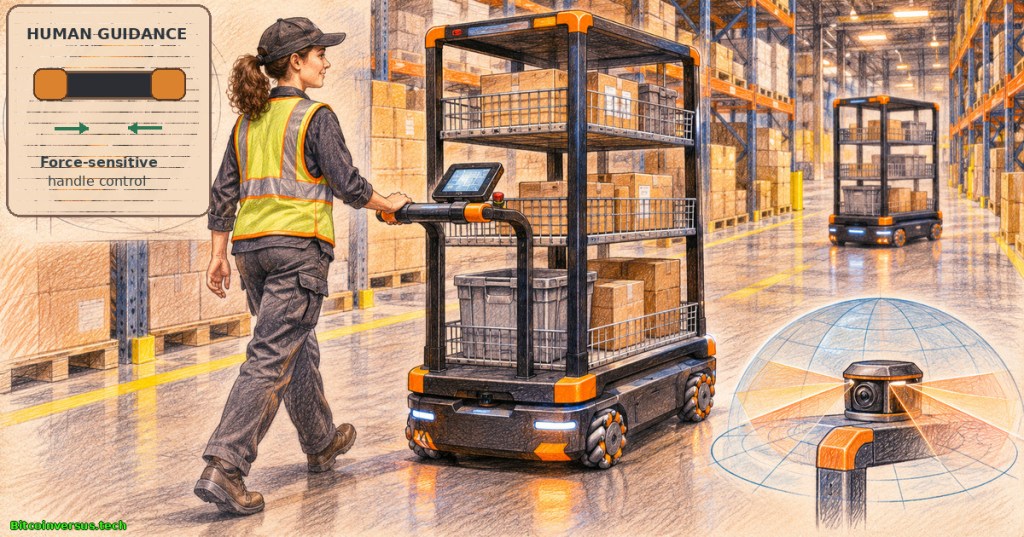
Robust AI’s Carter mobile robot is working alongside warehouse and factory employees, rather than demanding a fully rebuilt automated facility. A November 13, 2026 MIT News profile describes a shelf-equipped machine with a force-sensitive handle, vision-guided navigation and wheels that move sideways without turning the chassis. The manufacturer reports more than 100 Carter units deployed as of August; no independent fleet census accompanies that figure.
MIT News’s November 13 video shows Carter and warehouse work. Source: Massachusetts Institute of Technology / YouTube. The footage is demonstration material, not independent throughput benchmarking.
What the cart-shaped robot actually does
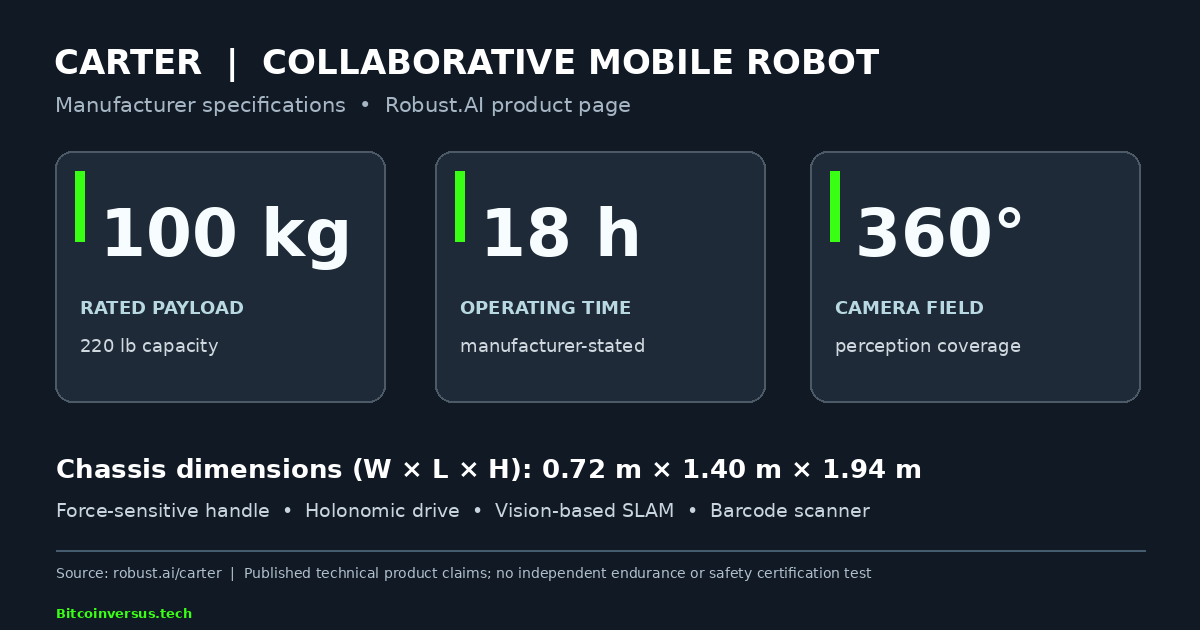
Carter combines a 360-degree camera field of view, camera-based visual simultaneous localization and mapping (vSLAM), a built-in barcode scanner and an operator touchscreen. Workers can steer the cart with one hand, direct it using gestures or send it toward a destination after loading. The company describes its wheel drive as holonomic, allowing movement in multiple directions inside crowded aisles.
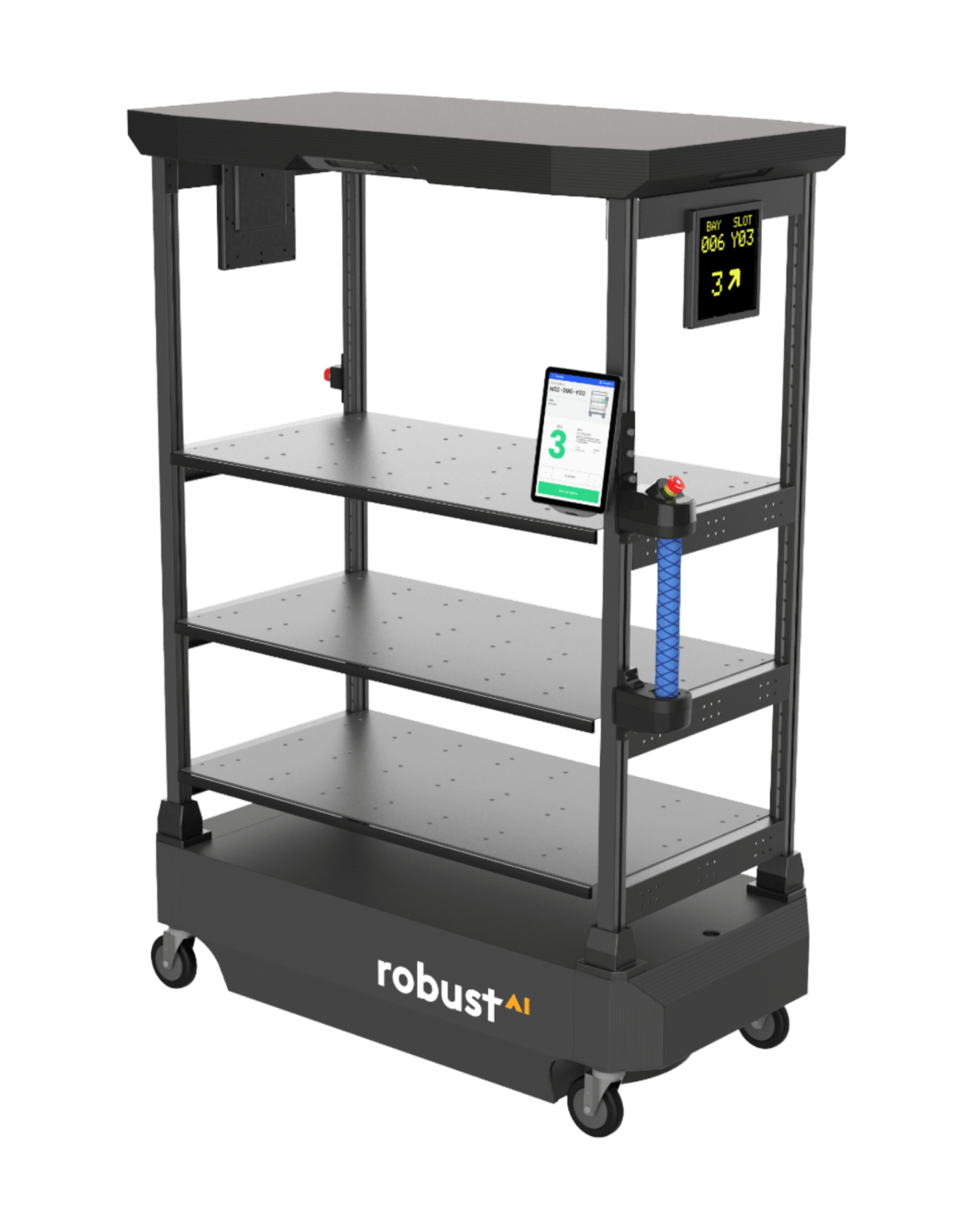
The published specifications list 100 kilograms (220 pounds) of payload, 18 hours of operating time and a chassis measuring 0.72 meters wide, 1.4 meters long and 1.94 meters high. Those are manufacturer specifications, not independently measured shift endurance. In contrast to a humanoid designed for specific packing movements, Carter centers on moving materials through existing facilities.
People handle exceptions; robots handle transport
MIT reports that operators can have Carter guide them to picking locations, follow them during loading or carry items between workstations. A worker may finish loading and dispatch a cart hundreds of feet without accompanying it. More sophisticated robot navigation depends on mapping and recovery from obstacles, issues also covered in BitcoinVersus.Tech’s pose-graph SLAM lesson.
Earlier official Robust.AI product demonstration, shared by the company’s own social account. Background footage illustrates the design philosophy, not proof of the latest customer rollout or promised productivity.
Robust AI said in August that more than 100 carts had been deployed. A July agreement called for 24 additional units at O’Neill Logistics facilities in New Jersey and Georgia, with go-live planned for the fourth quarter. An agreement and a planned rollout are not the same as independently confirmed operating robots. The distinction parallels coverage of Walmart’s warehouse automation commitments, where capital plans and working systems also require separate accounting.
Safety and the unanswered productivity question
Robust AI selected Aptiv’s PULSE perception technology for its third-generation Carter platform, with a stated aim of supporting relevant industrial safety assessments. The companies described a foundation for a Performance Level d certification pathway, not proof that every installed robot already holds certification. Vision obstruction, aisle congestion, worker overrides and battery downtime remain practical considerations.
Automatic material transport could reduce walking and preserve human decision-making at difficult picking stations. Yet a compelling demonstration does not establish sitewide return on investment: independent data on collisions, stoppages, uptime, employee workload and completed orders per labor hour would be needed. Related robotics-as-a-service experiments likewise show why deployment costs and measurable task performance deserve more scrutiny than promotional footage.
Primary sources: MIT News, November 13, 2026; Robust.AI Carter specifications; Robust.AI deployment statement, August 17, 2026; O’Neill rollout announcement, July 28, 2026; Aptiv, June 23, 2026.
Editor’s note: MIT’s article is a company profile, not a newly introduced robot model. Carter payload, operating duration, fleet total and expected customer benefits remain manufacturer-reported. The featured cover and specification diagram are original editorial illustrations; the other image is authentic company material. The embedded videos predate or accompany the profile and do not constitute independent certification tests.


Leave a Reply