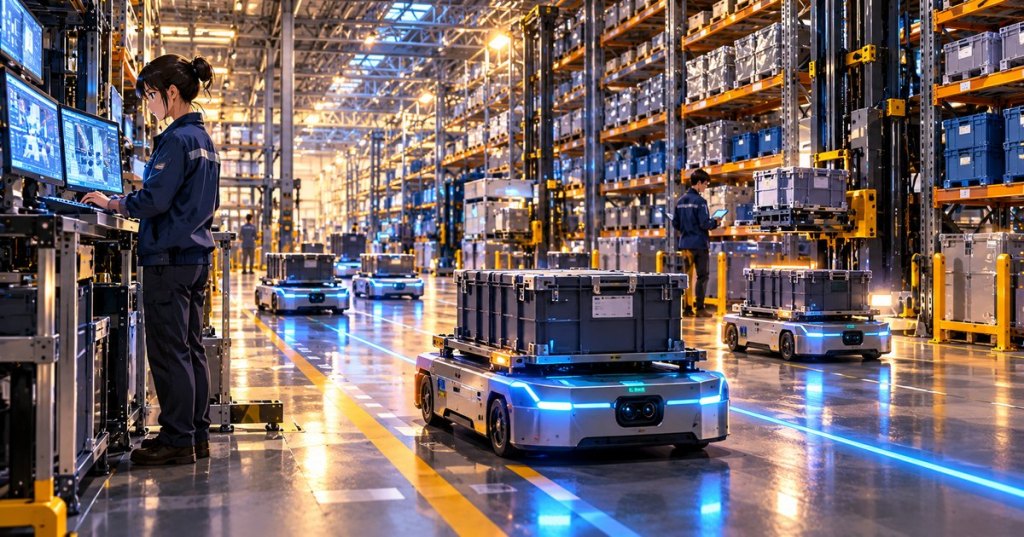
Intel and SAP unveiled a warehouse automation proof of concept on October 28, 2026, that lets business software dispatch autonomous robots and record their completed work. Demonstrated at Intel’s Chengdu, China, site and highlighted at SAP TechEd, the system links inventory decisions directly to physical movement.
SAP Extended Warehouse Management (EWM) issues transport requests to robots running on Intel-powered edge systems. The machines move materials and report task status back to SAP, completing a continuous software-to-warehouse loop. Intel says the test shortened transport routes and reduced repetitive handling, although it did not disclose a measured percentage improvement.
From business orders to robot missions
Warehouse software traditionally tracks orders, priorities and stock locations, while robotics systems manage movement separately. The Intel-SAP approach connects the two: a job starts with a business requirement, becomes a robot mission and returns a traceable record. It is an example of physical AI, which uses artificial intelligence to interpret and act within real environments.
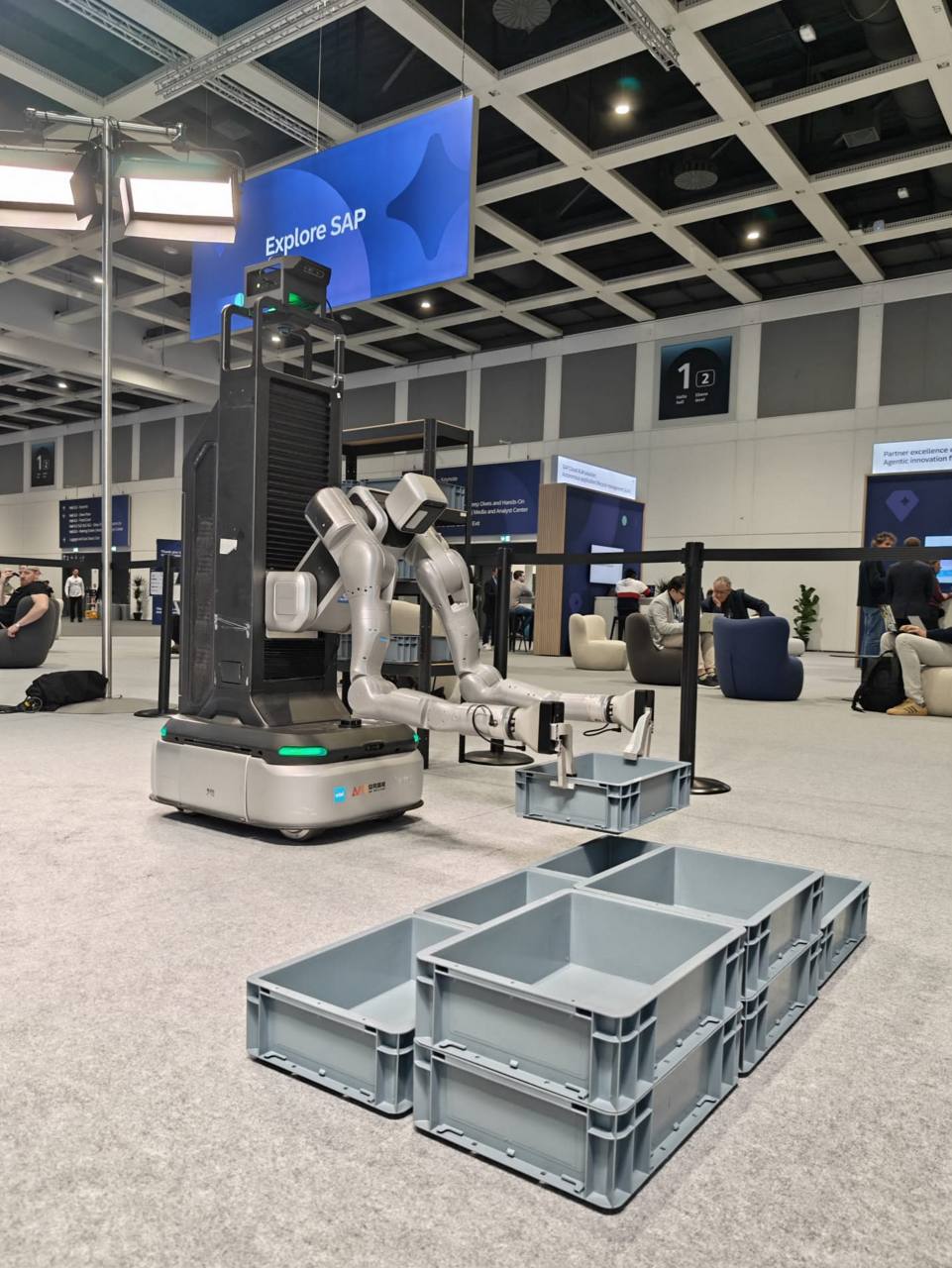
Intel supplies computing and robotics tools for perception, navigation and local decisions, including support for CPUs, GPUs and neural processing units. SAP contributes inventory context, workflow rules and governance. Both companies describe an open architecture intended to work across robot vendors, operating systems and deployment environments instead of requiring a single proprietary machine.
That is significant for warehouses with mixed equipment fleets. A robot may navigate accurately yet still create inventory errors if it receives incorrect instructions or never reports completion. The push toward coordinated machines follows growing interest in robots already working in factories and warehouses and physical-AI software platforms.
A demonstration, with deployment questions ahead
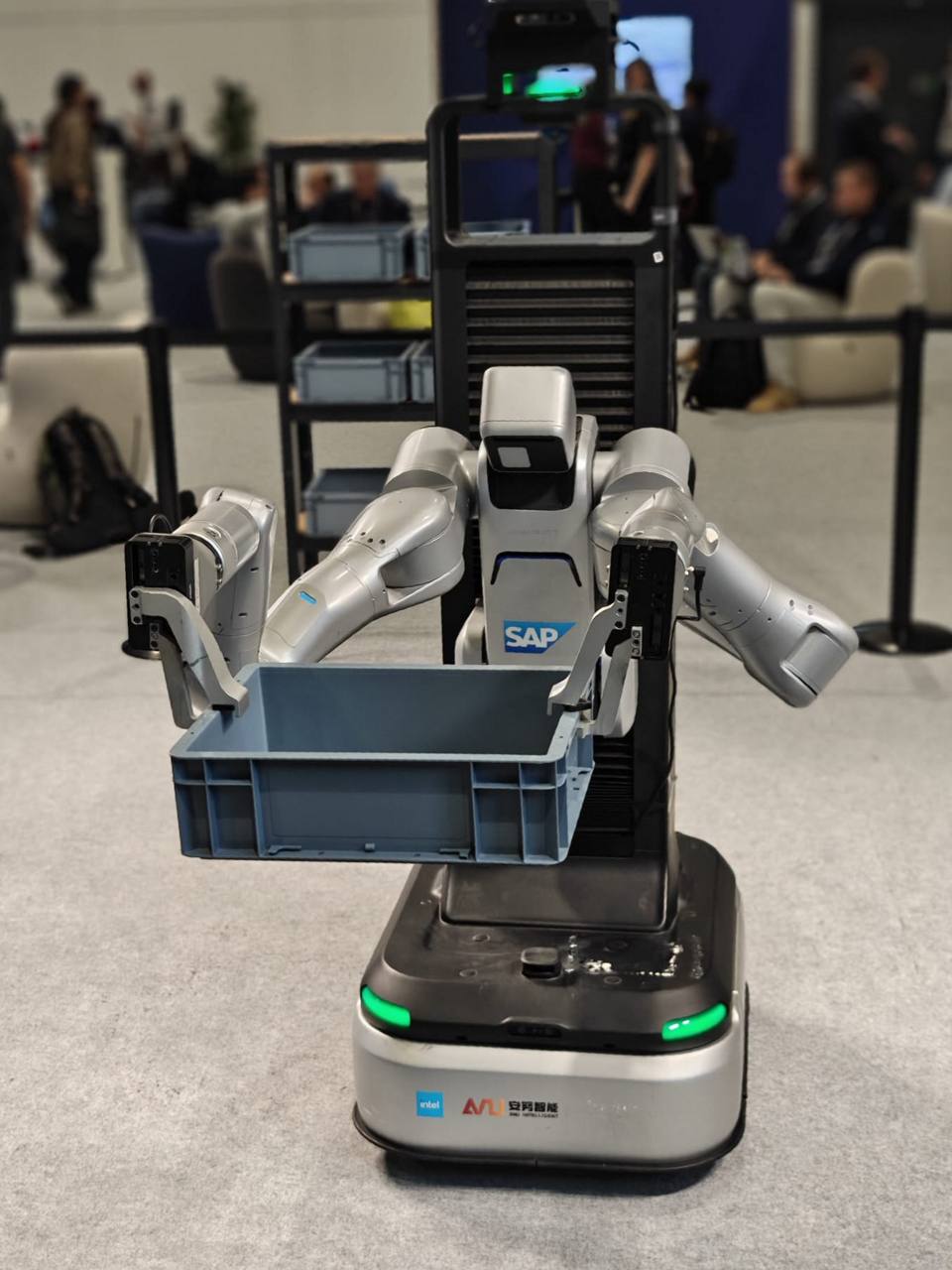
SAP also describes warehouse work involving humanoid machines and industrial inspections involving drones and quadrupeds, but those are separate use cases. The Intel Chengdu project is specifically a proof of concept; neither company announced broad commercial availability, pricing or an independently validated site-wide productivity benchmark.
The remaining challenge is scaling from a demonstration to daily operations, with reliable task handoffs, exception handling and safety controls. Robotics already involves complex motion and control engineering; the latest Intel-SAP work concentrates on telling those machines what the business needs done and checking that it actually happened.
BitcoinVersus.Tech Editor’s Note:
We volunteer daily to ensure the credibility of the information on this platform is Verifiably True.
If you would like to support to help further secure the integrity of our research initiatives, please scan the QR code to donate (For the best results, scan the QR code on a Laptop or larger screen).



Leave a Reply