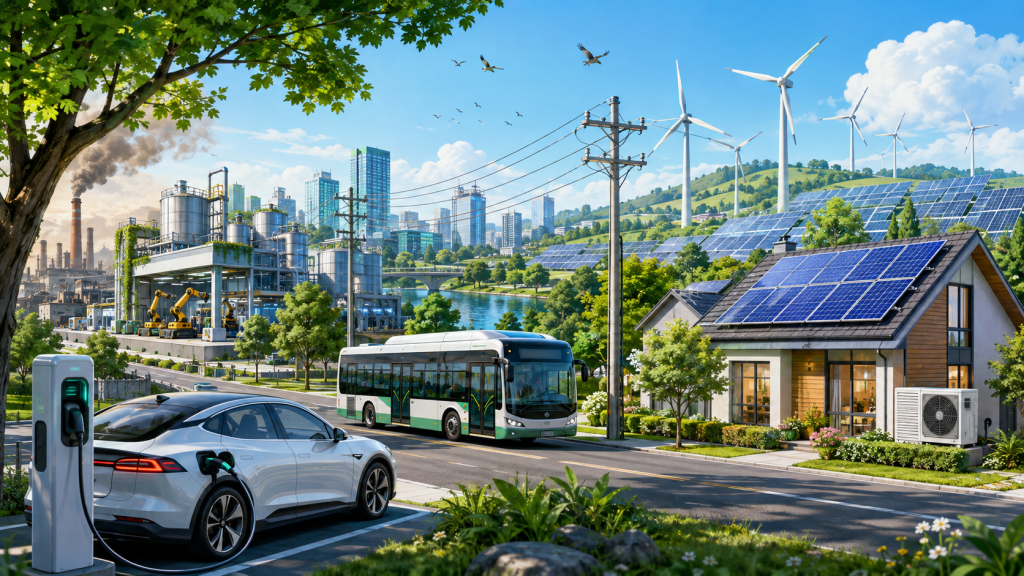
Electrification is the process of replacing technologies that directly burn gasoline, diesel, natural gas, or other fossil fuels with equipment powered by electricity.
Common examples include replacing combustion vehicles with electric vehicles, gas furnaces with heat pumps, and fuel-powered industrial machinery with electric systems.
When paired with renewable energy, nuclear power, energy storage, and a modernized electrical grid, electrification can reduce greenhouse-gas emissions across transportation, buildings, manufacturing, and agriculture.
One of the main environmental benefits of electrification is improved energy efficiency. Electric motors, heat pumps, and battery-powered vehicles generally convert a larger percentage of their energy into useful work than combustion-based alternatives.
The EPA reports that electric vehicles typically produce fewer total greenhouse-gas emissions than gasoline vehicles, even after accounting for electricity generation, while producing no direct tailpipe emissions. These benefits increase as more electricity is generated from wind, solar, geothermal, nuclear, and other low-carbon sources.
Electrification can also improve local air quality by moving combustion away from homes, roads, warehouses, ports, and densely populated communities. Electric buses, delivery fleets, cooking equipment, heating systems, forklifts, and industrial machinery can reduce direct exposure to exhaust, nitrogen oxides, particulate matter, and other pollutants. Electrified systems may also require less maintenance because electric motors contain fewer moving components than internal combustion engines.
However, electrification is not automatically environmentally neutral. Electricity generation, battery manufacturing, mineral extraction, power transmission, and new infrastructure can still affect land, water, ecosystems, and local communities.
A successful electrification strategy must therefore combine efficient electric equipment with cleaner electricity production, responsible material sourcing, battery recycling, grid expansion, and programs that prevent energy costs from disproportionately affecting lower-income consumers.
Ultimately, electrification provides a practical pathway for reducing fossil-fuel dependence while improving how efficiently energy is used. Its greatest environmental value comes from coordinating electric vehicles, heat pumps, industrial equipment, renewable generation, storage, and smart-grid technologies as one connected energy strategy.
As the electricity supply becomes cleaner, every electrified vehicle, building, and industrial process can continue reducing its emissions without needing to replace the end-use equipment again.
BitcoinVersus.Tech Editor’s Note:
We volunteer daily to ensure the credibility of the information on this platform is Verifiably True. If you would like to support to help further secure the integrity of our research initiatives, please donate here: 3C9o19EH5HSiwEPyCTmEKzxhNCbo2X6TTb
BitcoinVersus.tech is not a financial advisor. This media platform reports on financial subjects purely for informational purposes.


Leave a Reply