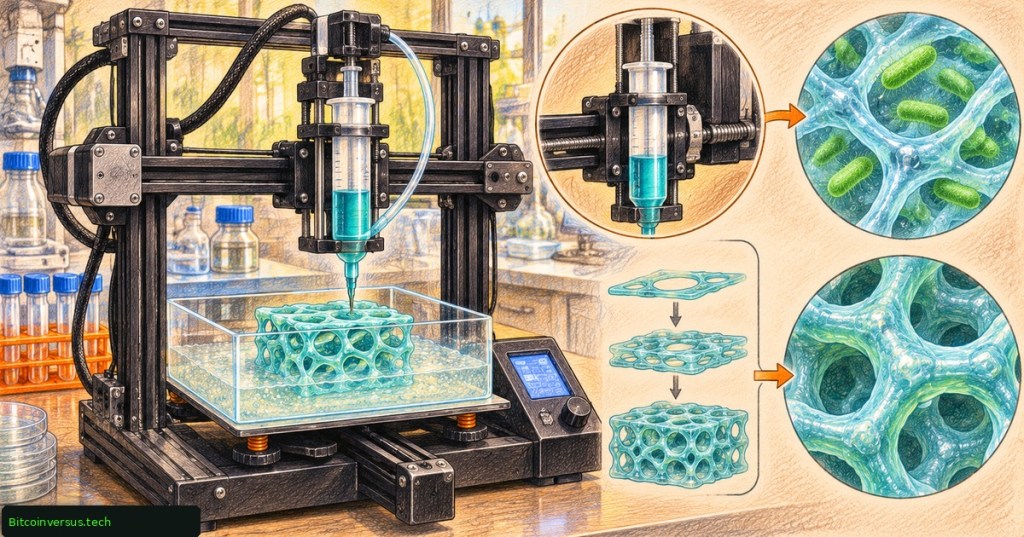
Researchers at the University of Rochester and Cornell University have converted an ordinary plastic 3D printer into a roughly $450 machine capable of printing structures containing living bacteria more than 100 layers high. The November 13, 2026 university report highlights an open-source system that substitutes a syringe pump for a heated plastic-printing head. Its materials are designed for research, not the clinical printing of transplantable organs.
From plastic filament to bacteria-filled ink
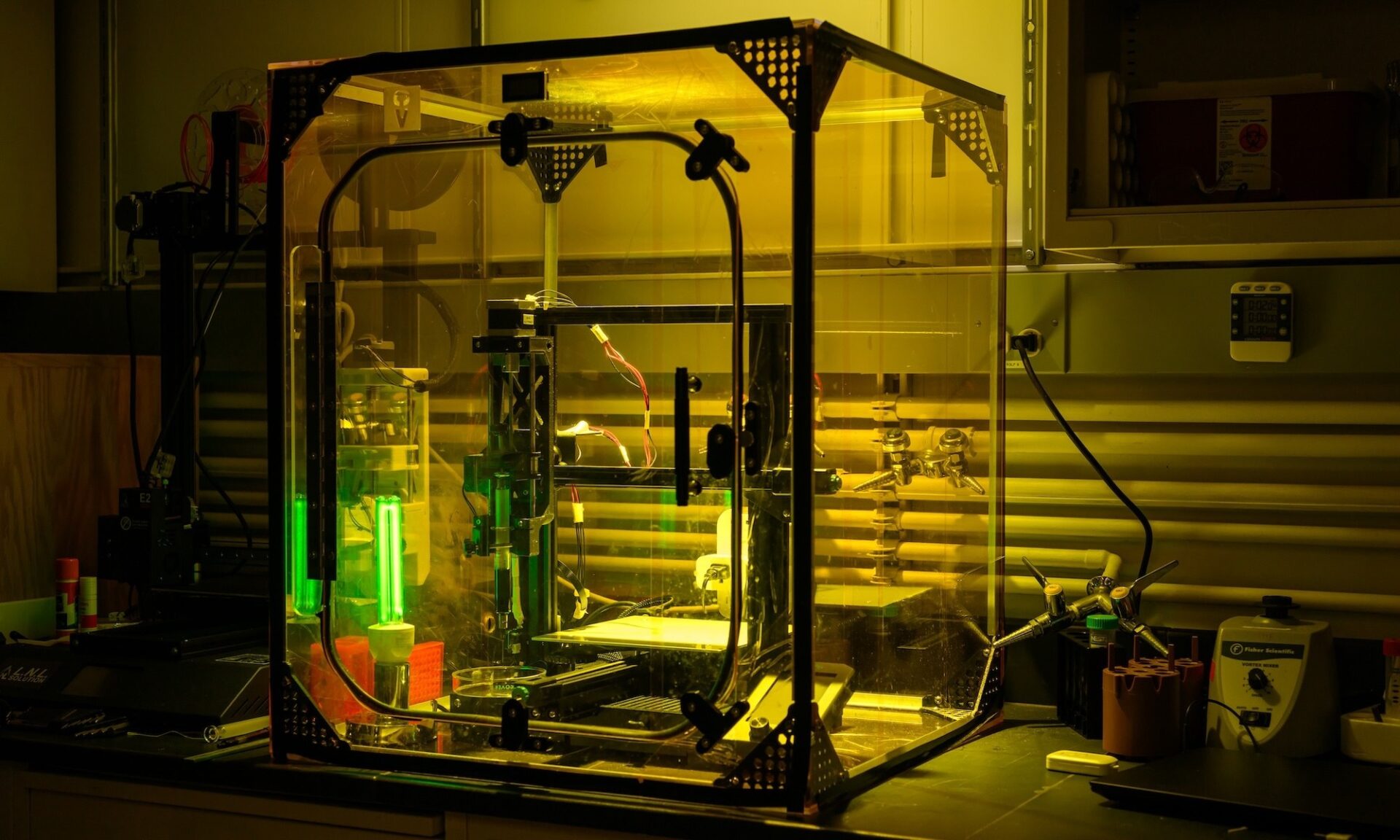
Conventional fused-filament printers melt thermoplastic and deposit it in layers. The Rochester team instead modified a Creality Ender 3 with a lightweight motor-driven syringe. A mixture of laboratory bacteria and sodium alginate polymer flows through the nozzle and becomes a soft hydrogel after interacting with calcium ions. The complete modified hardware platform cost approximately $450, according to the peer-reviewed paper published online August 27 in ACS Applied Polymer Materials. Biological supplies, sterile procedures and operator training are separate practical considerations.
The syringe can reverse its motion during travel moves, pulling back bio-ink to reduce unwanted deposits between intended features. Authors measured an almost two-orders-of-magnitude reduction in off-target bacterial placement after optimizing retraction. Microscopic features as small as 260 micrometers were reported, with printed structures reaching height-to-width ratios above 8:1. Such precision differs from the mechanical sensing approach described in MIT’s 3D-printed X-Hinges research.
The secret is printing inside a support bath
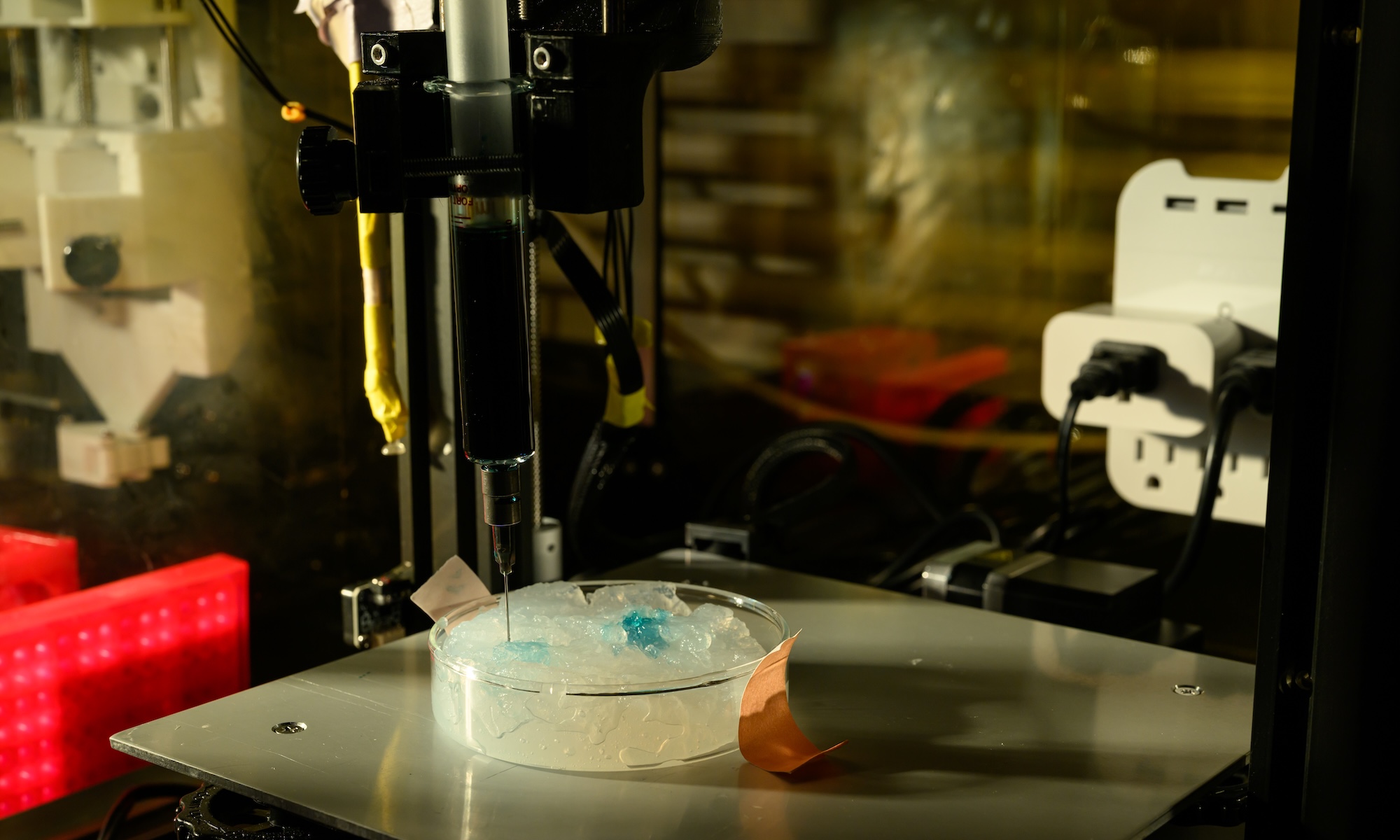
A major challenge in bioprinting is that fresh gel can sag before it hardens. Researchers deposit the material into a bath of finely divided gelatin or agarose particles. The slurry yields around a moving needle yet supports the deposited shape after the nozzle passes, allowing overhangs, internal channels and hollow sections. The team fabricated free-standing lattice structures exceeding 20 millimeters in height.
The university says the printer made more than 100 layers, compared with fewer than 20 in its earlier DIY setups. Taller, more porous forms can expose microbes to nutrients and allow products to diffuse outward. Geometry and living material properties matter for other emerging biological machines as well, including ETH Zurich’s biohybrid muscle robots.
Four weeks of living bacteria—under laboratory conditions
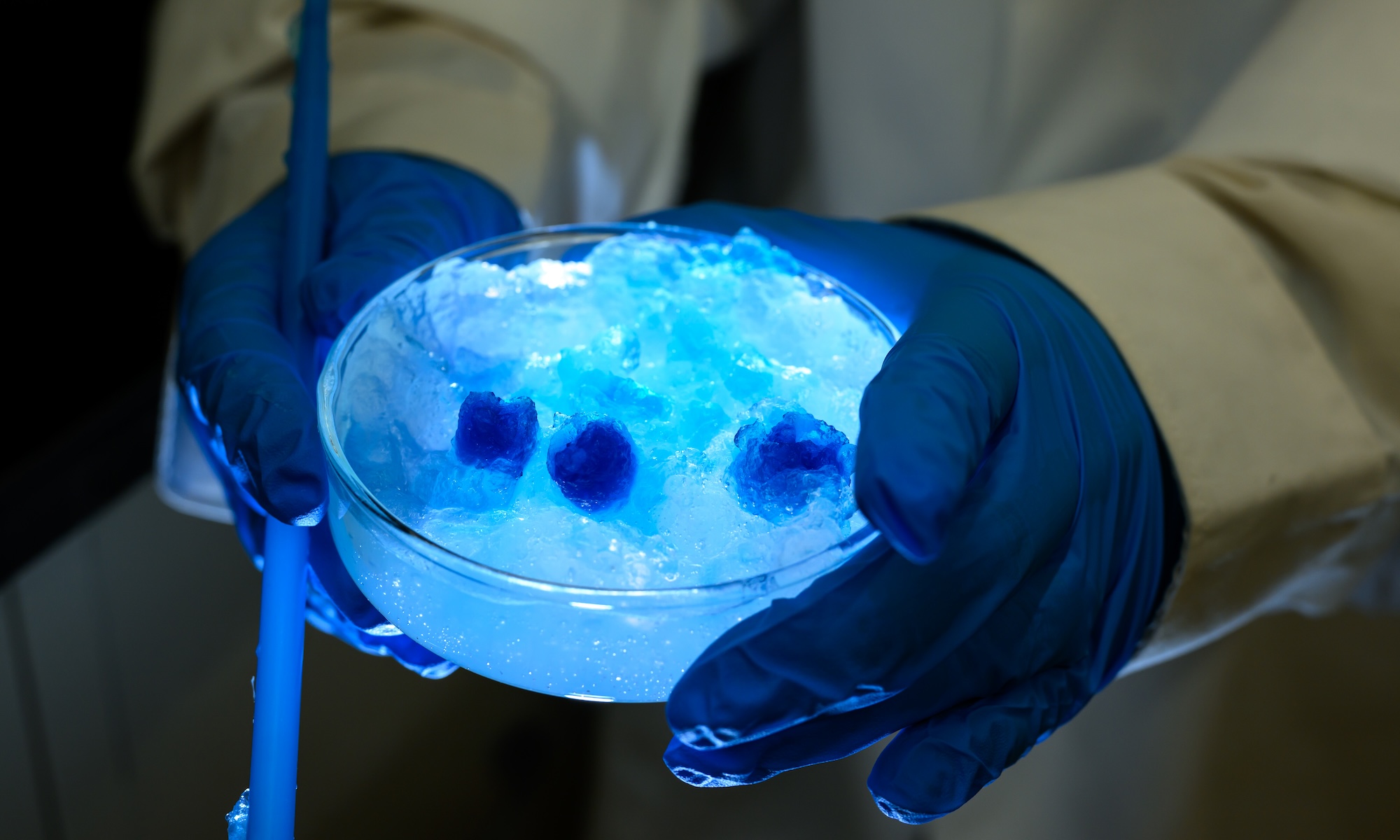
With added nutrients, microbes in the printed materials survived at least 28 days in the research experiments. Rochester compared the result with earlier methods in which bacterial survival declined after around nine days, although conditions and formulations were not necessarily identical. A four-week viability result does not guarantee industrial lifetime, sterilization compatibility or safe environmental release.
Researchers see potential applications in studying biofilms, wastewater treatments and materials that could eventually process pollution. The paper does not demonstrate a deployed water-cleaning machine or verified commercial plastic-removal rates. Biofilms are also engineering hazards in real water systems, as explained in BitcoinVersus.Tech’s water-system maintenance guide. Automated recycling machinery presents another distinct approach, including AI-assisted waste-sorting robots.
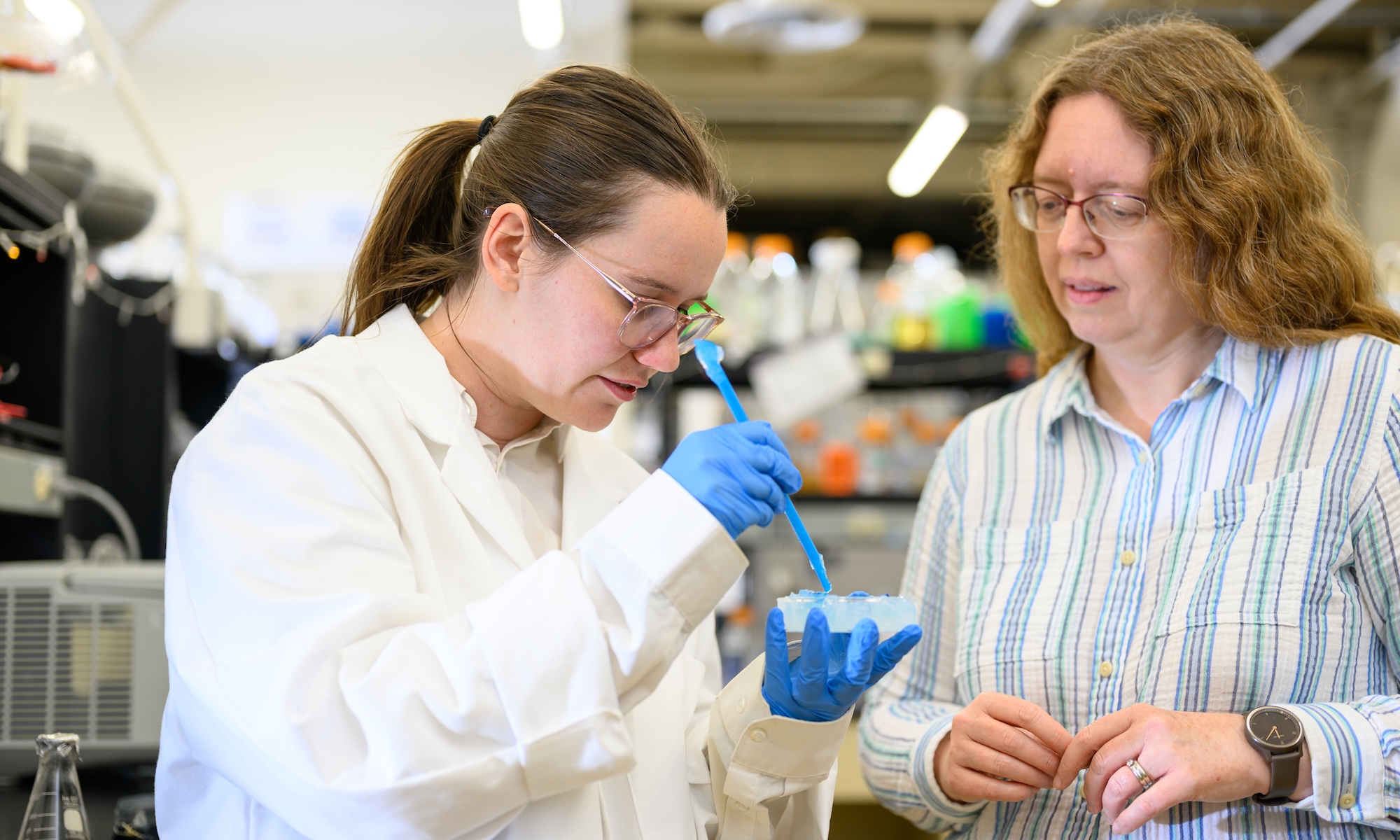
The study is compelling because accessible hardware and published build instructions could expand laboratory participation. Replication, contamination controls, repeatability, biological containment and long-term mechanical durability still require careful testing. The demonstrated advance is an inexpensive research platform for complex, living bacterial structures—not a consumer machine that prints functioning organs.
Primary evidence: University of Rochester, November 13, 2026; Gona and colleagues, ACS Applied Polymer Materials, published online August 27, 2026; research hardware repository. Cost, layer count, dimensional precision and viability describe the reported experimental platform; photographs are authentic university images.
Editor’s note: The story covers a November university report about a study originally published online in August. The original 1200 × 630 featured cover is a colored-pencil conceptual illustration, not an image of the actual lab apparatus. Four in-story photographs were published by the university and credited to J. Adam Fenster. No YouTube or social video was inserted because no directly relevant, independently verified embeddable recording was found.


Leave a Reply