
Researchers at ETH Zurich announced on October 22, 2026, that tiny robots powered by living mouse muscle cells can jump, swim, walk and grasp objects. The Swiss university’s Soft Robotics Laboratory built the machines by designing muscle tissue and flexible artificial skeletons together, rather than treating each as a separate component. The results, published in Nature Communications, reveal a promising but strictly laboratory-scale form of biohybrid robotics.
How living muscles power a robot
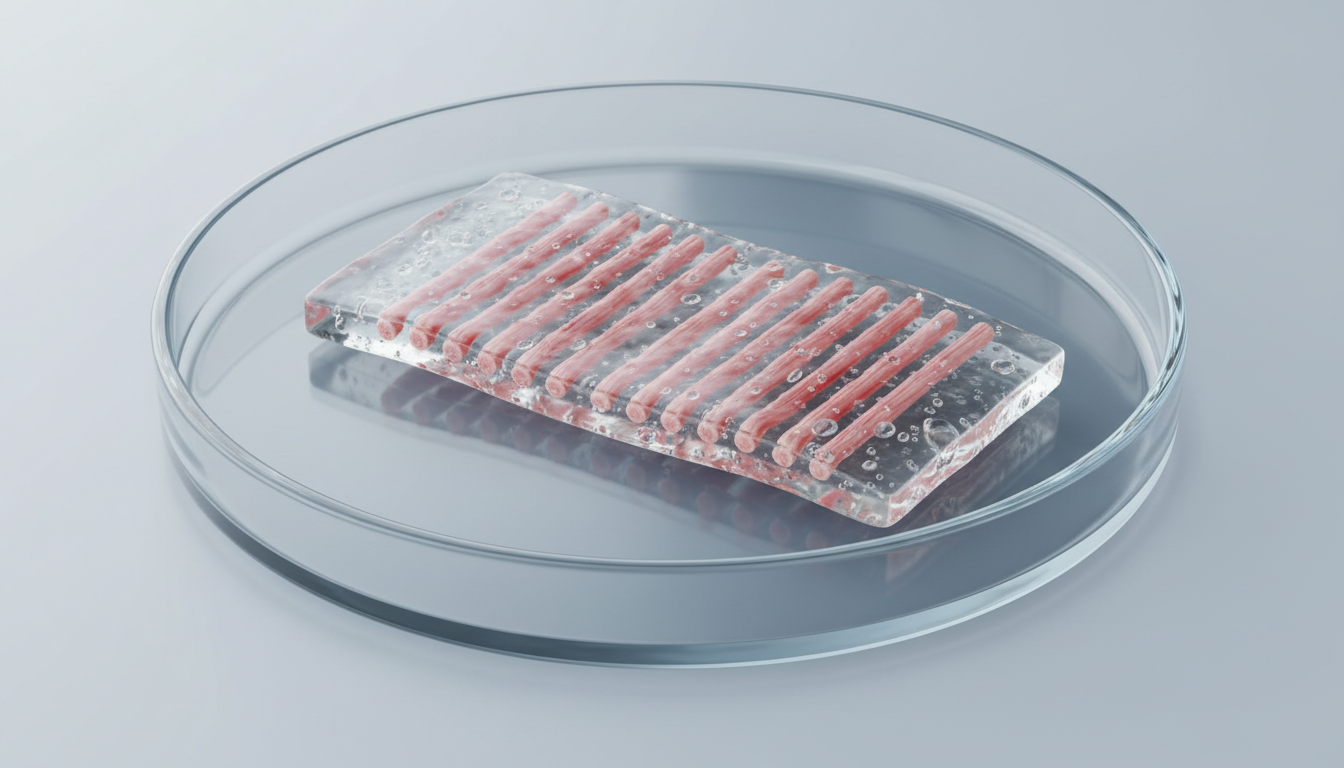
Each actuator is roughly 1.5 centimeters long. Researchers grow skeletal muscle tissue around a water-rich hydrogel scaffold, then use electrical stimulation to trigger contractions. Their model searches for muscle placement and scaffold geometry that maximize visible bending. Light-based volumetric 3D printing creates the scaffold, while fine grooves help muscle fibers attach and transfer force.
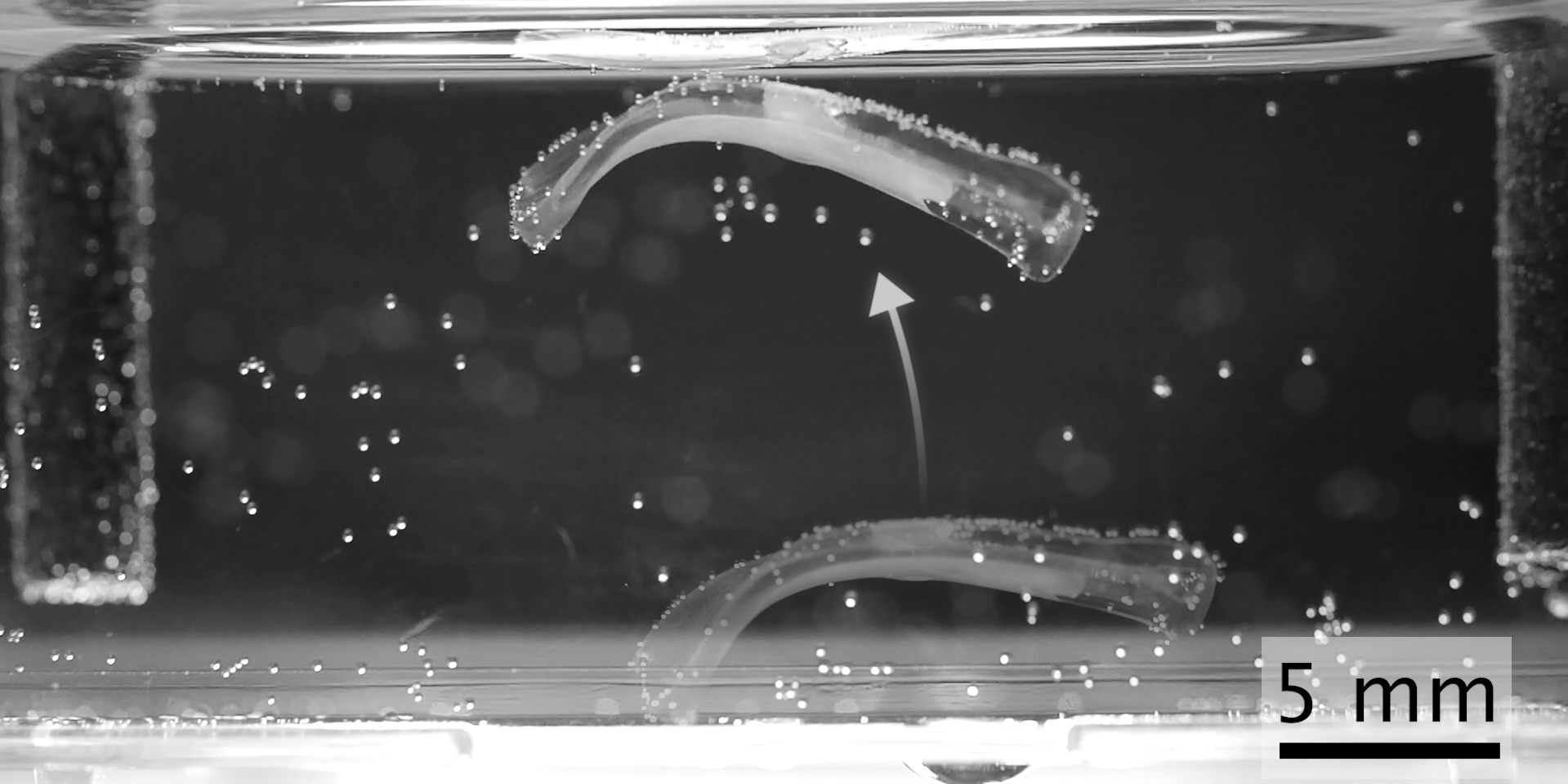
ETH Zurich researcher Aiste Balciunaite’s original demonstration shows computational design, cultivating living muscle on hydrogel, and movement of the resulting biohybrid robots; source: ETH Zurich.
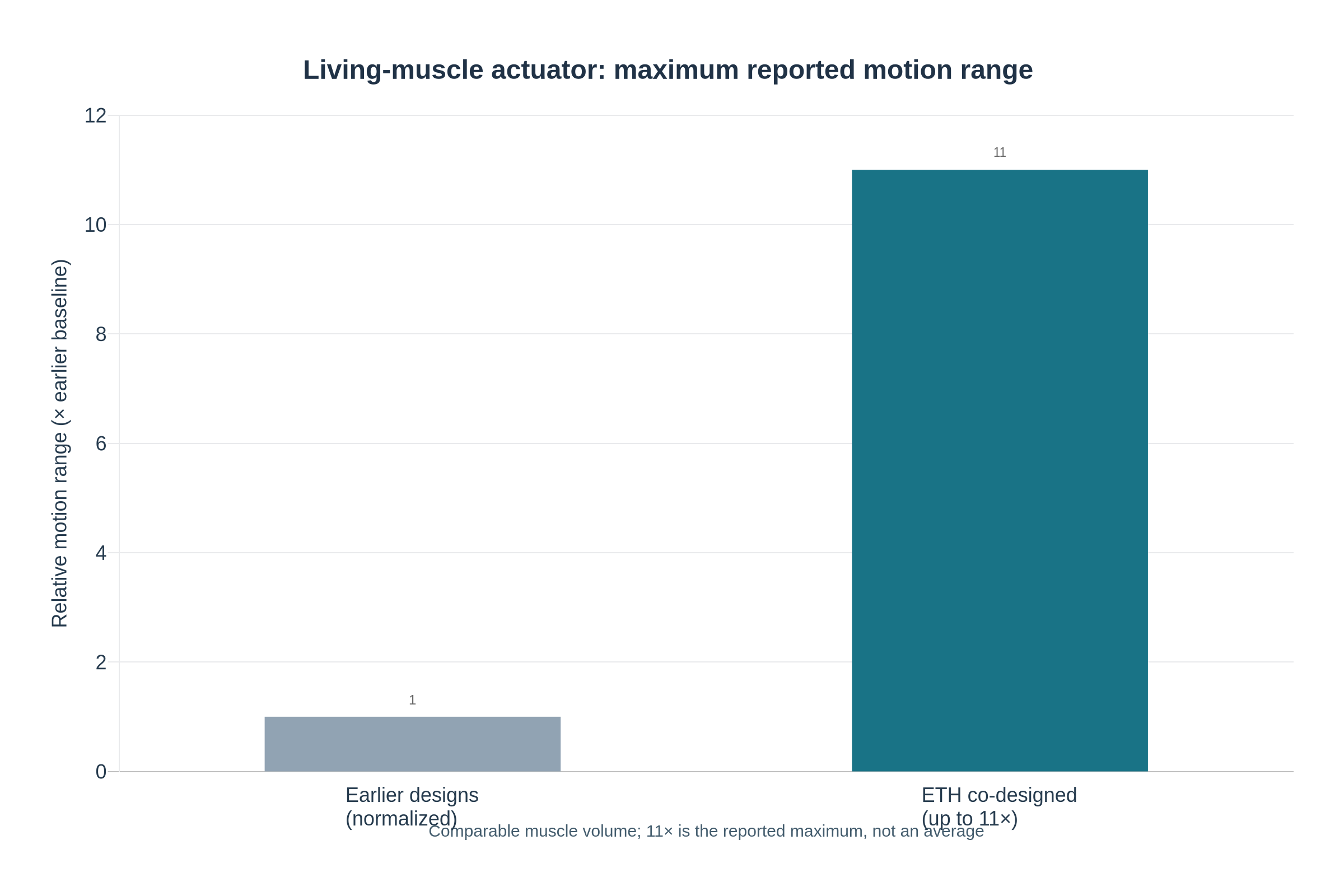
In the team’s best comparisons, the new design produced up to 11 times the range of motion of earlier bioactuators using comparable muscle volume. ETH reports that a jumping version lifted itself 5 millimeters from a dish—about one-third of its body length. A walking version moved at 6.2 millimeters per second. These are distinct measurements, not proof of full-size robotic strength or endurance.
Why the scaffold matters
What makes the project interesting is the engineering relationship between living material and its surroundings. A muscle can contract strongly but barely move a robot if it is poorly connected to its frame. The ETH team optimized both elements simultaneously, then refined simulations using experimental results. This differs from the thread-thin artificial motors and conventional humanoid actuators we’ve previously examined.
The performance gain is an upper reported result, not an average across every task. The research also should not be confused with ETH’s older muscle-sensing experiments or MIT’s flexible intestinal robot, which uses a different propulsion method. Each demonstrates a separate path toward soft machines that interact safely with delicate environments.
What still limits the technology
The largest obstacle is keeping the tissue alive. Today’s prototypes require nutrient solution, and larger devices may need artificial blood-vessel-like networks to supply oxygen and remove waste. Biological variation also makes repeatable manufacturing difficult. Like broader robotics deployment forecasts, possible medical and exploration uses remain future research—not commercial capabilities.
Next, scientists must improve muscle maturation, reliability and long-term survival while measuring performance outside controlled dishes. ETH has demonstrated an actuator-design principle, not an autonomous animal-like robot ready to work independently.
BitcoinVersus.Tech
BitcoinVersus.Tech Editor’s Note: We volunteer daily to ensure the credibility of the information on this platform is Verifiably True. If you would like to support our work and help further secure the integrity of our research initiatives, please scan the QR code below to donate 5,000 sats. For best results, scan the QR code from a laptop or larger screen.

Bitcoin address: 3C9o19EH5HSiwEPyCTmEKzxhNCbo2X6TTb. On a phone, open the QR image on another screen or copy and verify the address in your wallet before sending.
BitcoinVersus.tech is not a financial advisor. This media platform reports on financial subjects purely for informational purposes.


Leave a Reply