
Luxor says Bitcoin hashrate financing produced a 6–13% annualized BTC-denominated spread in September 2026 when deliverable forwards were paired with offsetting non-deliverable forwards. The figure is a reported financing/yield range from Luxor’s market—not a guaranteed investor return.
In its September 2026 Hashrate Lookback, Luxor said lenders were active buyers of deliverable hashrate forwards while miners used the contracts to raise capital, finance operations, and expand fleets. Because the deliverable contracts are prepaid, they can trade below non-deliverable forwards to compensate buyers for credit risk and the cost of capital.
How the Trade Works
A deliverable forward lets a buyer provide capital up front in exchange for future mining production. A non-deliverable forward settles financially against a reference hashprice. Luxor says pairing the two can allow a lender to lock a spread while giving a miner non-dilutive financing.
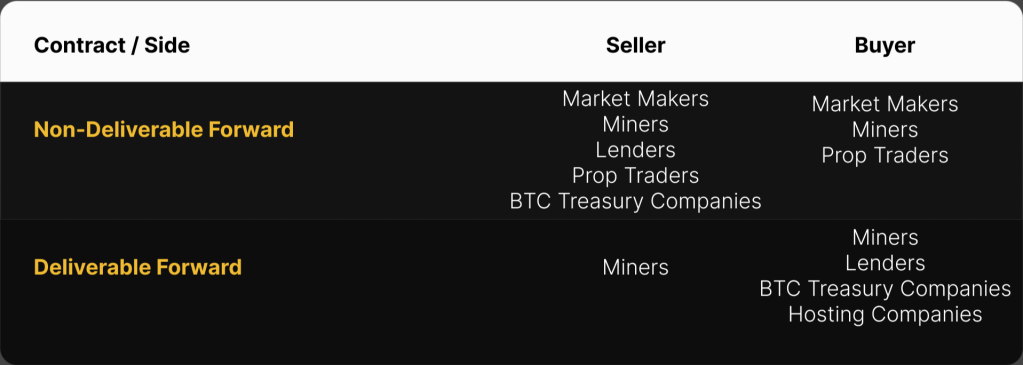
The economics matter because miner revenue is already exposed to hashprice, which packages Bitcoin price, network difficulty, transaction fees, and block subsidy economics into revenue per unit of hashrate. A miner can have efficient hardware and still see margins shrink when difficulty rises faster than revenue.
Luxor explains deliverable and non-deliverable hashrate forwards and how miners use them to hedge mining economics.
September Was Tougher Than the Bitcoin Price Alone Suggests
Bitcoin rose 7.3% from the start to the end of September, but network difficulty increased 5.52% across two upward retargets. Luxor said hashprice finished the month at $39.92 per PH/s/day, only 1.8% higher, while the seven-day network hashrate average climbed from 926 EH/s to 975 EH/s.
That is a useful reminder that ASIC efficiency is only one part of mining economics. Fleet efficiency, electricity, uptime, pool terms, network difficulty, financing, and hedging can all change whether a site remains profitable.
The 6–13% Number Comes With Real Risk
The 6–13% annualized range should not be read like a risk-free savings rate. Deliverable forwards depend on the miner actually delivering hashrate. Counterparty performance, credit quality, financing terms, contract tenor, fees, and the execution of the offsetting hedge all matter.
A CryptoSlate review of the same market data emphasized the same limitation: the reported spread still carries miner credit and delivery risk. Luxor’s own disclosure also warns that derivatives can lose money and that loss of principal is possible.
Hashrate Index highlighted how Bitcoin mining economics were already diverging from spot BTC price as hashrate derivatives became a larger part of the market.
Hashrate Is Closing In on 1 ZH/s
Luxor’s forward curve now implies network hashrate crossing 1 ZH/s in January 2027 at roughly 1,029 EH/s. The network may get there sooner: the seven-day average reached 999 EH/s on October 8, according to the report.
More hashrate improves Bitcoin’s aggregate proof-of-work security, but it also raises the competitive bar for miners. That makes capital structure increasingly important alongside hardware selection. BitcoinVersus recently ranked the most powerful Bitcoin mining machines in 2026, but even top-end machines still operate inside the same network difficulty and hashprice environment.
What It Means
The bigger story is that Bitcoin mining finance is becoming more structured. Miners are not limited to simply mining Bitcoin and selling coins for operating cash. Hashrate itself can be financed, hedged, prepaid, and traded.
That can give miners more tools to manage volatility, but it also moves some risk from Bitcoin’s spot price into contracts, counterparties, and execution. The 6–13% September spread is evidence that a market exists for that risk—not evidence that the risk disappeared.
BitcoinVersus.Tech
Editor’s Note: The 6–13% figure is Luxor’s reported annualized BTC-denominated yield/cost-of-capital range for the paired forward strategy in September 2026. It is not a guaranteed return. Derivatives, mining operations, and counterparty credit all involve risk.
We volunteer daily to improve the credibility of the information on this platform. If you would like to support the research, please donate here: 3C9o19EH5HSiwEPyCTmEKzxhNCbo2X6TTb
BitcoinVersus.tech is not a financial advisor. This media platform reports on technical and financial subjects purely for informational purposes.


Leave a Reply