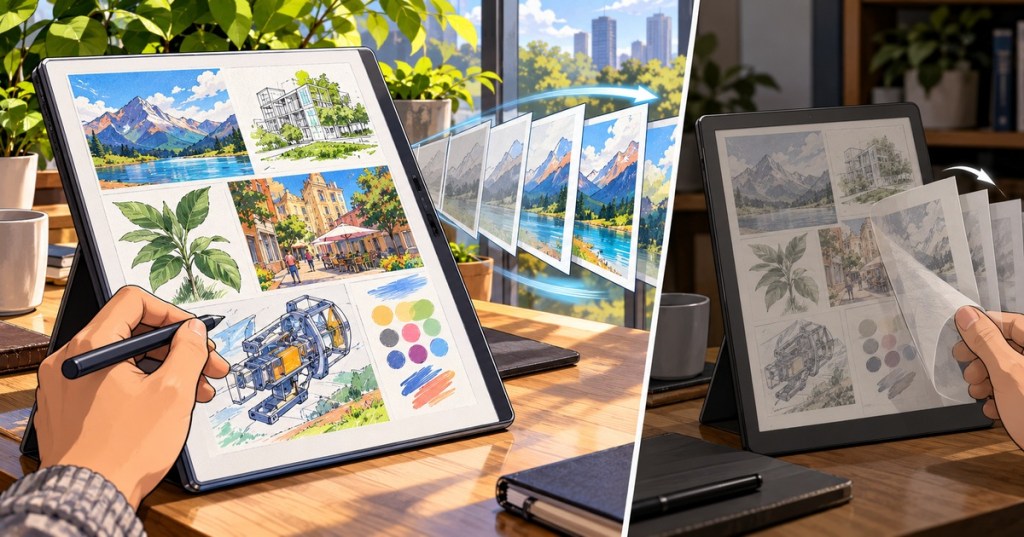
E Ink launched Kaleido 4 on October 15, pushing color electronic paper toward brighter pages, stronger contrast and faster motion while keeping the low-power, paper-like behavior that separates ePaper from conventional screens.
The headline numbers are substantial. E Ink says Kaleido 4 more than doubles color-gamut volume versus the previous generation to above 40K, raises white reflectance by 15%, improves contrast by 50% and can play video at up to 18 frames per second. The company also says screen graininess is reduced. Those gains target the areas where color ePaper has historically trailed the vividness and responsiveness of technologies covered in our LCD vs. OLED comparison.
Early ePaper users are already debating which Kaleido 4 improvement matters most: brighter whites, stronger contrast, richer color or faster refresh.
At the hardware level, Kaleido 4 adds a new oxide TFT backplane designed for higher driving voltages and quicker refresh. The first finished product is Hanvon Technology’s M10C II smart ePaper notebook. E Ink says Hanvon’s controller and driving technology make page turns and scrolling 27% faster on that device. The M10C II also includes a redesigned front light, a micro-etched glass writing surface and a battery-free pen with 8,192 pressure levels. Touch and pen systems remain a separate engineering layer from the display itself, as explained in our guide to digitizer components.
Good e-Reader’s side-by-side comparison of earlier color ePaper generations shows the tradeoffs Kaleido 4 is trying to improve.
The most important change may be that E Ink is positioning color ePaper for more than books. Its announcement specifically points to color PDFs, PowerPoint presentations, data charts, educational material, technical references and engineering drawings. That moves Kaleido closer to productivity hardware while preserving a display architecture very different from emissive OLED technology.
A useful limitation remains: Kaleido is not trying to become a conventional high-frame-rate monitor. E Ink’s 18 fps figure is a major step for electronic paper, but it is still far below the refresh rates common on phones, laptops and gaming displays. The Verge notes that Kaleido 4 still works within the color and resolution constraints of filtered color ePaper even as the new generation improves brightness, contrast and motion.
That makes Kaleido 4 less about replacing LCD or OLED and more about expanding where ePaper is practical. If the real-world panels match E Ink’s claims, documents, diagrams, note-taking and light multimedia work should look noticeably cleaner without giving up the core advantages that made electronic paper useful in the first place.
BitcoinVersus.Tech Editor’s Note:
We volunteer daily to ensure the credibility of the information on this platform is Verifiably True. If you would like to support to help further secure the integrity of our research initiatives, please donate using the QR code provided

For best QR-code scanning results, please scan this donation code from a desktop or larger screen. Mobile screens may prevent camera recognition.


Leave a Reply