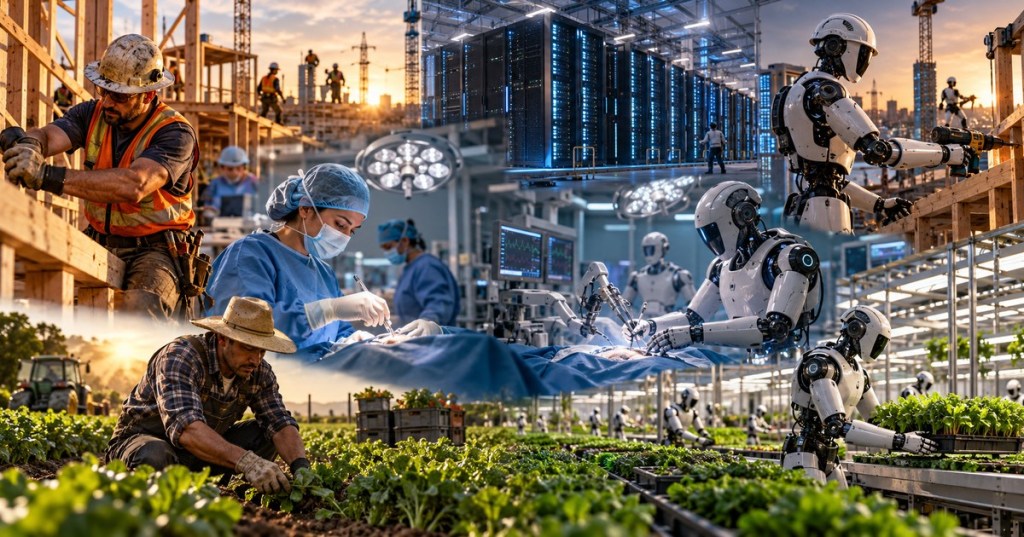
Bill Gates says humanoid robots could eventually make much of today’s physical labor economically unnecessary. In an October 22, 2026 interview with Nilay Patel on The Verge’s Decoder podcast, the Microsoft cofounder predicted major advances in robotic construction, agriculture and surgery over roughly the next two decades. He warned that the transition could be difficult even if automation ultimately makes essential goods and services more affordable.
Key Takeaways
• Gates considers 20 years a rough forecasting horizon, not a firm robotics deadline.
• He cited estimates ranging from two or three years to about eight years for important humanoid milestones.
• The economic and employment consequences remain uncertain.
• AI safety, affordable computing and reliable physical hardware remain important limitations.
The Interview
At approximately 42 minutes, Gates discussed how advances in robotic hands, dexterity and machine intelligence might reduce the cost of completing complex physical jobs. He raised the prospect of robots building homes, growing food and performing medical procedures, while stressing that technological progress is not guaranteed on a precise schedule.
Watch the full original interview with Bill Gates (the labor discussion starts around 39 minutes):
His more immediate concern is a disruptive adjustment period marked by winners and losers. The interview builds on Gates’ earlier essay about AI’s turbulent transition. These forecasts should not be mistaken for proven deployment capabilities.
What Robot Deployments Show Today
Commercial developments illustrate both the progress and remaining engineering challenges. BitcoinVersus.Tech recently reported on AGCO’s planned 2027 Digit robot pilot and Unitree’s H2-X demonstration. A pilot and a choreographed demonstration are very different from affordable, reliable, autonomous labor at population scale.
The practical questions extend beyond whether a robot can move. Systems must work safely near people, handle variable tasks, withstand long shifts and justify their energy, maintenance and computing costs. Gates has also discussed how automation may affect payroll-tax revenue, a separate issue debated in this Reddit discussion.
For context, the site’s earlier coverage of Gates’ AI safety concerns examines the controls that more autonomous systems may require. Whether widespread humanoid labor arrives within 20 years is still a forecast, not a verified industry timetable.
BitcoinVersus.Tech Editor’s Note:
We volunteer daily to ensure the credibility of the information on this platform is Verifiably True. If you would like to support to help further secure the integrity of our research initiatives, please donate using the QR code provided

For best QR-code scanning results, please scan this donation code from a desktop or larger screen. Mobile screens may prevent camera recognition.


Leave a Reply