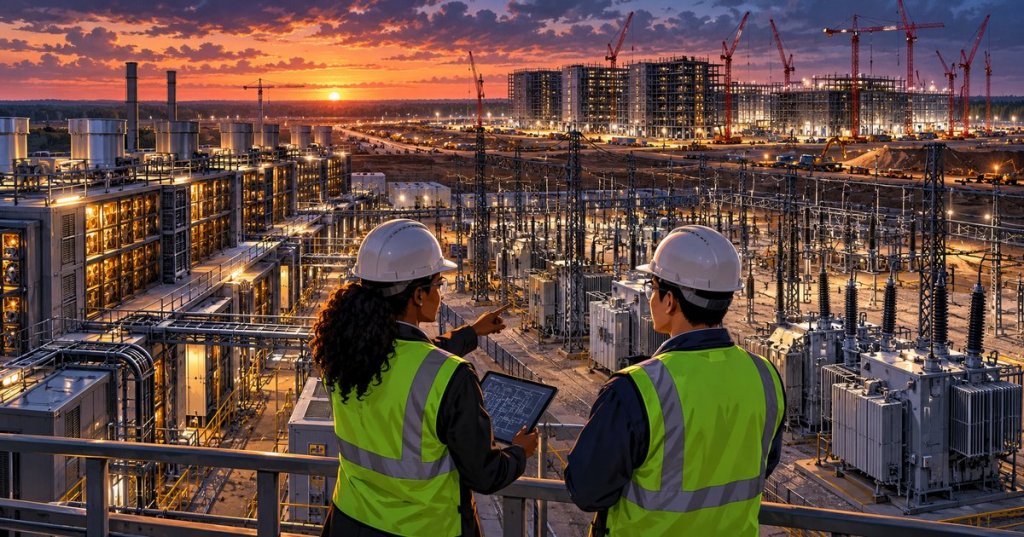
Core Scientific completed its acquisition of Polaris DS on August 13, 2026, paying approximately $444.3 million for a business holding access to about 440 MW of existing grid-connected power in Muskogee, Oklahoma. The deal, announced August 14, highlights how electricity infrastructure developed for Bitcoin mining can become strategically valuable for AI data centers.
Key Takeaways
- The acquisition closed on August 13; it is not merely a proposed merger.
- Polaris held about 440 MW of power already in service under Oklahoma Gas & Electric agreements.
- Core Scientific targets 1.5 GW of gross campus power, but the full expansion remains planned.
- The $444.3 million purchase may increase by another $40 million if a specific extra-power condition is met.
What the Acquisition Includes
The company’s August 14 Form 8-K confirms that the transaction closed August 13. The filing identifies approximately $444.3 million in cash consideration, subject to post-closing adjustments. It also permits a further $40 million payment if an additional 40 MW of firm capacity becomes available before December 31, 2026.
The acquired infrastructure includes power arrangements and an adjacent approximately 40-acre site described in Core Scientific’s original May proposal. Connected capacity is not interchangeable with installed GPU capacity: substations, buildings, cooling, networking and customer delivery still require execution.
Mining Power Becomes AI Infrastructure
Polaris had been using the electricity for Bitcoin mining. Core Scientific intends to expand high-density colocation instead, illustrating the trend tracked in our earlier CoreWeave–Core Scientific coverage. For context, our 75 EH/s mining capacity analysis explores how retired or relocated SHA-256 fleets can leave valuable power-ready sites behind.
Core Scientific says it aims for 1.5 GW gross power and approximately 1.0 GW leasable power at Muskogee through utility connections and behind-the-meter solutions. Its next roughly 82 MW of customer delivery is projected for the second half of 2027. Those are forward-looking targets, not delivered capacity.
The financial logic centers on scarce, energized real estate. Yet converting mining sites into AI campuses also carries construction, financing and customer concentration risks, which we examined in our report on mining-stock exposure to the AI market. The completed Polaris transaction establishes ownership and power access; its ultimate return still depends on converting those assets into reliable, revenue-producing data centers.
BitcoinVersus.Tech Editor’s Note: We volunteer daily to ensure the credibility of the information on this platform is Verifiably True. If you would like to support to help further secure the integrity of our research initiatives, please donate using the QR code provided

For best QR-code scanning results, please scan this donation code from a desktop or larger screen. Mobile screens may prevent camera recognition.


Leave a Reply