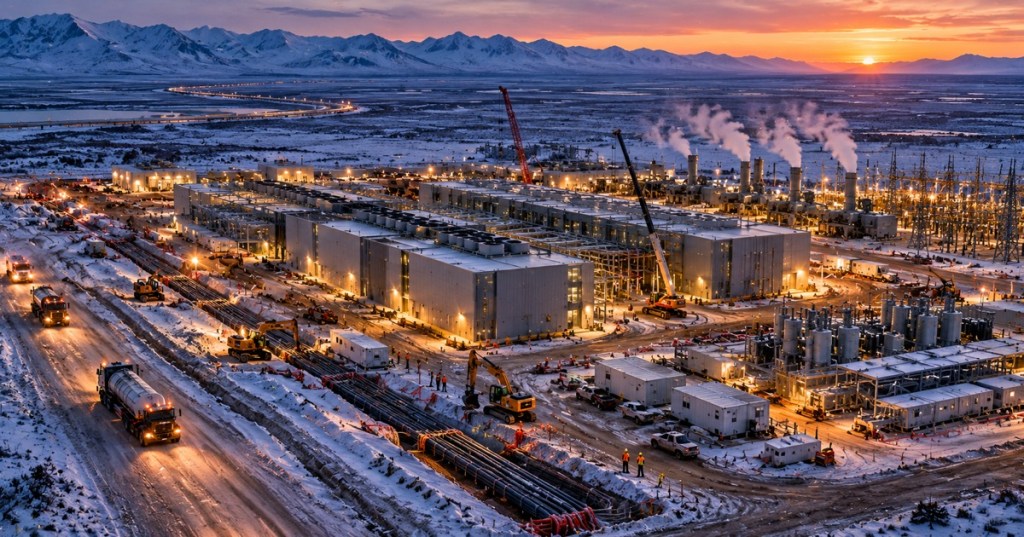
Alaska’s data-center ambitions have reached the gigawatt scale, but the state’s largest plans are still at the land, energy and permitting stages. In the second installment of BitcoinVersus.Tech’s state-by-state Top 3 data-center series, we examine the three biggest identifiable Alaska projects or closely related power-and-data-center development programs with publicly reported figures as of October 27, 2026.
Methodology: Rankings use the upper end of publicly disclosed project-associated generation capacity, not confirmed server IT load. That distinction is especially important in Alaska: the second entry is a proposed power plant marketed to attract a future data-center tenant, not a contracted 1,250 MW data center. The projects are not operating gigawatt campuses. Each ranking has a separately sourced real-world image; no invented project diagrams are used.
3. DeepGreen Cook Inlet Subsea-Compute Hub — 100 MW proposed generation
DeepGreen Cook Inlet SPV LLC wants to deploy 66 submerged compute modules linked to roughly 330–350 tidal turbines in the Upper Cook Inlet, near Nikiski and the East Foreland corridor. The proposal includes a 3.5-mile 115 kV hybrid power-and-fiber cable to shore. The company’s federal filing estimates 100 MW of generation primarily intended for its underwater computing system, but it does not establish a commissioned 100 MW IT load.

The September 4 FERC notice, docket P-15423-000 opened a public comment period ending November 2. A preliminary permit only prioritizes further study; it does not authorize construction. The Kenai Peninsula Borough, City of Kenai and fishing and environmental groups have intervened or raised concerns about fisheries, belugas, navigation and the proposed tidal equipment. See the dated permit chronology.
2. Terra Energy / Flatlands, Mat-Su — 1,250 MW proposed power plant; data-center load unknown
The Matanuska-Susitna development is frequently described as a 1.25 GW data-center opportunity. That figure actually describes a proposed coal-fired generating station near Skwentna, not a verified data-center campus IT load. Terra Energy Center Corporation and parent Flatlands Energy hope the power project can attract a large customer—possibly a data center—on industrial land near Port MacKenzie. The proposed plant would use carbon-capture technology, but the power station, transmission, carbon transport and prospective computing tenant all remain subject to major development work.
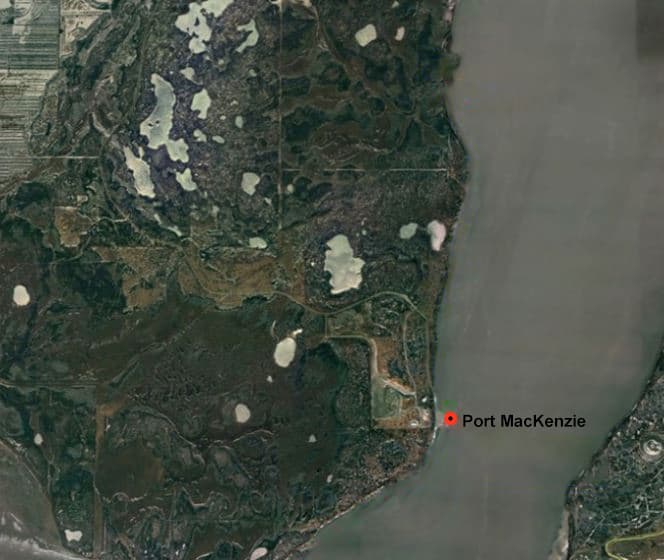
In March, the Mat-Su Assembly adopted a joint-marketing resolution after overriding a mayoral veto. It authorized outreach to possible tenants but did not approve a data center. October reporting documents an 829-acre University of Alaska industrial lease near the port. A federal $89 million selection supports engineering studies for the proposed 1,250 MW coal plant, not construction funding for a 1,250 MW AI facility. Review the award’s scope and timeline. Because the computing tenant and electrical requirement are unknown, this entry is a power-enabled development prospect, not a comparable committed campus.
1. STAK Energy North Slope Campus — up to 3,000 MW planned on-site generation
STAK Energy’s proposal near Dalton Highway Milepost 390, about 26 miles south of Deadhorse, is Alaska’s largest identified data-center development concept by its proposed power system. The Alaska Department of Natural Resources’ May 12 preliminary decision describes a 715.4-acre site, modular high-performance-computing buildings, an off-grid gas-fired plant sized between 1 and 3 GW, worker facilities and a dedicated gas pipeline. The 3 GW figure is the maximum generation design, not operational or contracted server load.

The developer’s lease application and development plan describes a roughly 640-acre gravel pad, a 1.8-mile access road and approximately 7.1 million cubic yards of gravel fill for permafrost stability. It targets initial operation in late 2028, conditional on approvals, financing, pipeline development and equipment procurement. The Alaska Public Media interview with Northern Journal reporter Nat Herz is a useful original audio report on STAK’s business model, power and connectivity uncertainties. No operating gigawatt-scale data center is established by these filings.
STAK argues that gas produced near the North Slope can provide behind-the-meter power without loading the Railbelt grid. Environmental organizations dispute whether the benefits justify emissions, land disturbance, permafrost effects and wildlife impacts. The Northern Alaska Environmental Center’s assessment identifies permitting and gas-pipeline gaps. Its concerns are attributed advocacy positions, not findings that a completed facility has caused those effects.
What about the Air Force’s Alaska AI data-center sites?
The U.S. Air Force also offered approximately 4,700 acres across Joint Base Elmendorf-Richardson, Eielson Air Force Base and Clear Space Force Station for possible privately developed AI data centers. The April 10 official announcement and federal solicitation document the initiative. As of the available September reporting, no developer award or site-specific MW figure had been confirmed. Therefore these three sites are excluded from the numerical Top 3 rather than assigned invented power capacity.
The power reality
The upper-end figures of 3,000 MW, 1,250 MW and 100 MW add to 4,350 MW of project-associated generation proposals. That is not 4.35 GW of future AI IT load: the 1,250 MW Terra project has no confirmed data-center buyer, STAK’s 3 GW is an upper design range, and DeepGreen’s 100 MW is estimated tidal generation. Alaska’s cold air offers cooling advantages, but Arctic construction, generation, transmission, fiber latency and permitting may dominate economics. Compare with our Dakotas data-center report and national AI megaproject ranking, which use differently defined capacity metrics.
Editor’s Note: This is the Alaska installment of BitcoinVersus.Tech’s state-by-state Top 3 series. We disclose when project generation capacity differs from IT load and label location photographs accurately. Support independent reporting with a 5,000-satoshi donation by scanning the QR code below.

Scan the QR code with a Bitcoin wallet, preferably while viewing this article on a second screen.


Leave a Reply