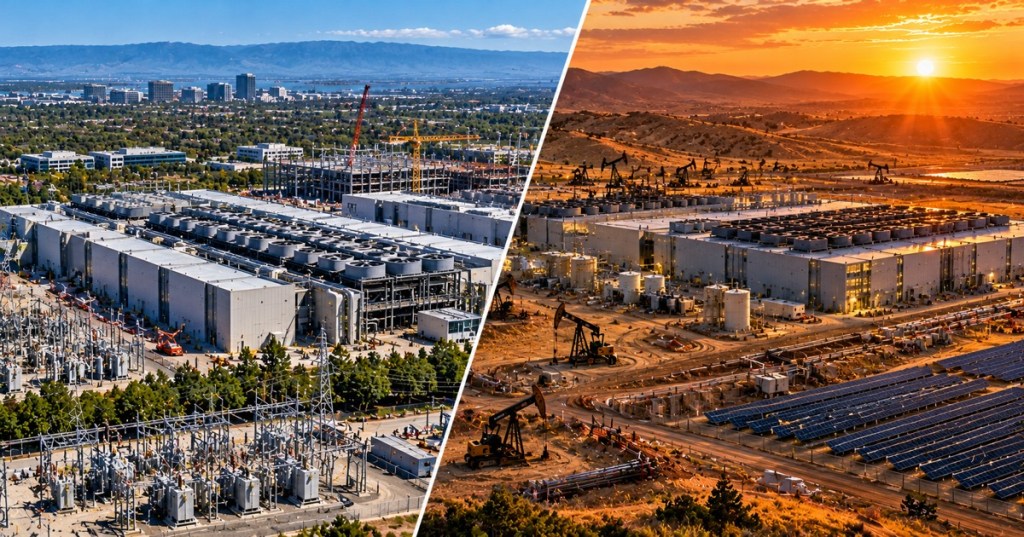
California’s next wave of large data-center projects is unfolding in two very different settings: San José’s established technology corridor and Kern County’s oilfields. This fifth report in BitcoinVersus.Tech’s state-by-state Top 3 series ranks major publicly documented proposed developments by reported maximum electrical demand, as of October 27, 2026. The first two are unambiguous data-center proposals; the third is disputed, because Google describes its 250 MW San José project as an internal chip-engineering research facility, not a data center.
The ranking excludes cancelled projects, and it does not confuse planned power with operational critical IT load. We provide the underlying official records, the current permitting picture and a separate sourced media item for each entry. No original diagrams are embedded.
3. Google Disk Drive, North San José — 250 MW disputed computing and research facility
Google has applied to develop up to three research-and-development buildings totaling about 482,790 square feet at 5079–5087 Disk Drive and nearby parcels. The City of San José’s official project notice lists an onsite switching station, substation and associated equipment with 250 MW capacity. Separately, CPUC draft Resolution E-5455 describes a proposed PG&E agreement for a 250 MW Google load at 5079 Disk Drive, with a projected December 2028 service date.
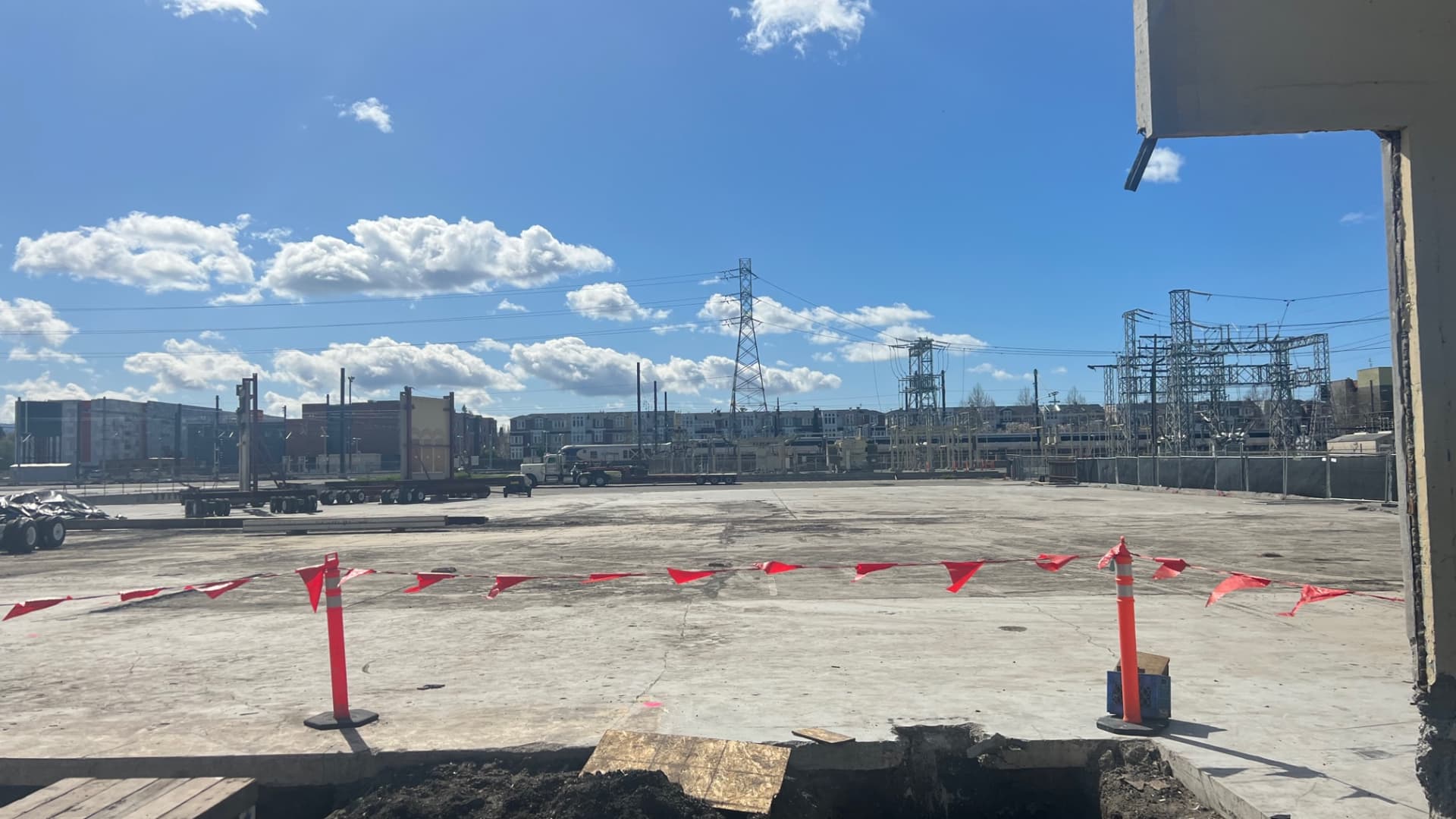
The classification is contested. San José Spotlight interviewed engineers who say the proposed cooling and electrical design resembles a data center. Google counters that the development is a research laboratory supporting internal chip engineering and lacks standard backup generation for customer-facing data centers. We include it as a large computing-related power proposal, not a confirmed commercial data center. The CPUC’s draft agreement was still awaiting a decision scheduled for October 29, according to the latest reporting.
2. Golden Valley Technology Hub, Kern County — 275 MW planned
Beacon Data Centers and California Resources Corporation propose a 275 MW AI-oriented campus at the Elk Hills Oil Field outside Taft. The project would cover about 100 acres, with approximately 400,000 square feet of computing space, an electrical substation and office facilities. The June developer announcement reported by Data Center Dynamics establishes the proposed 275 MW figure; it is not energized capacity.
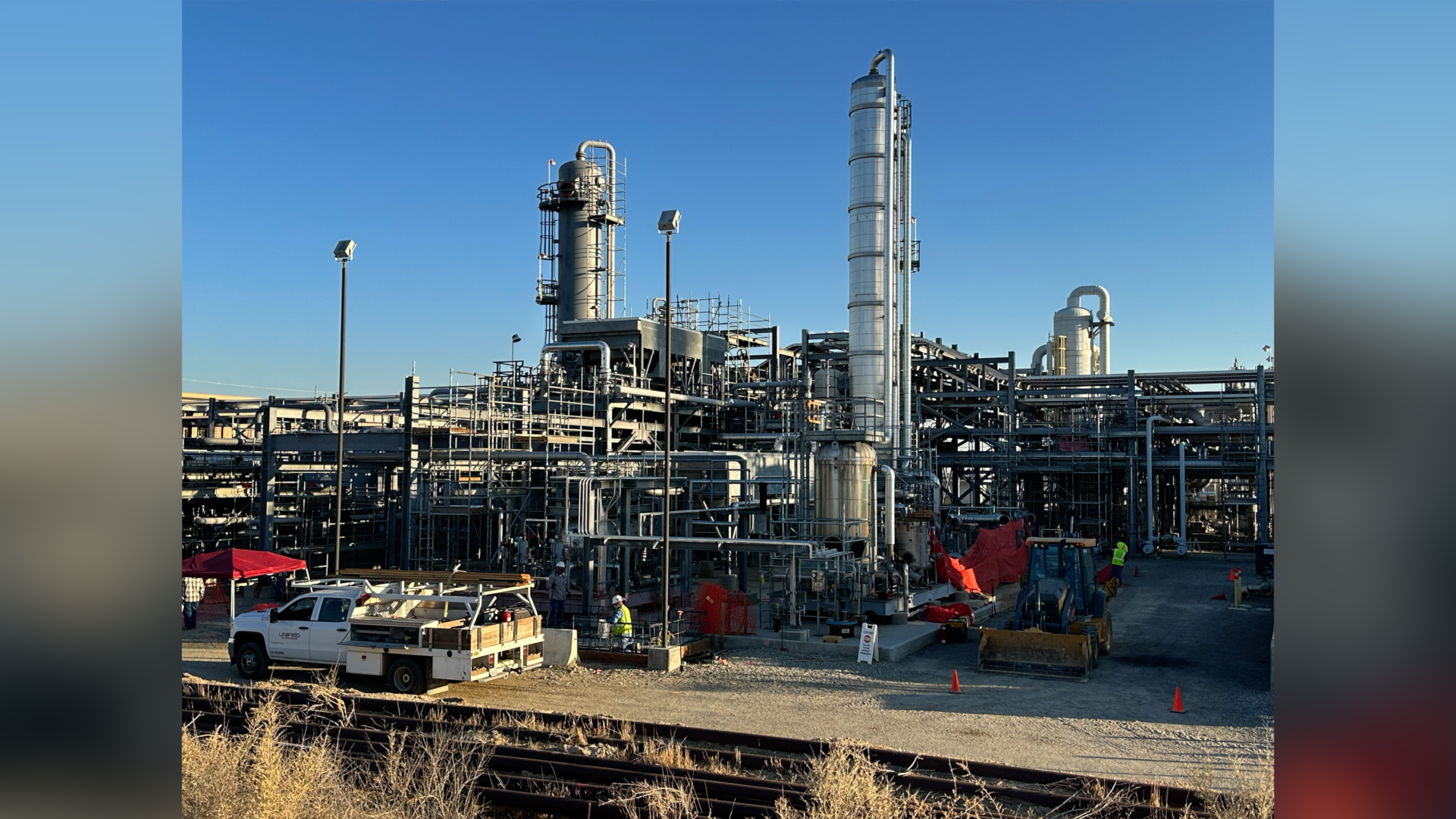
The Golden Valley plan differs from conventional grid-dependent campuses: it would use power from CRC’s existing Elk Hills generating plant, with grid access as backup, and recirculating liquid cooling. The developer’s FAQ states that construction timing is not yet determined and environmental review, permitting and commercial agreements remain outstanding. KERO’s on-location reporting features CRC executive Chris Gould and local residents discussing economic opportunity and environmental questions. The proposed project has not been commissioned.
1. Prologis STEM Park, San José — 396 MW planned data centers
Prologis STEM Park is the largest documented California proposal in this ranking. The developer’s conceptual plan for approximately 159 acres of city-owned land near Zanker Road and the San José–Santa Clara Regional Wastewater Facility includes four data-center buildings at 99 MW each, or 396 MW total. A separate advanced-manufacturing component is estimated at 100 MW and is not included in the 396 MW data-center ranking. The City of San José’s official project memorandum lists the building-by-building electrical and floor-area figures.
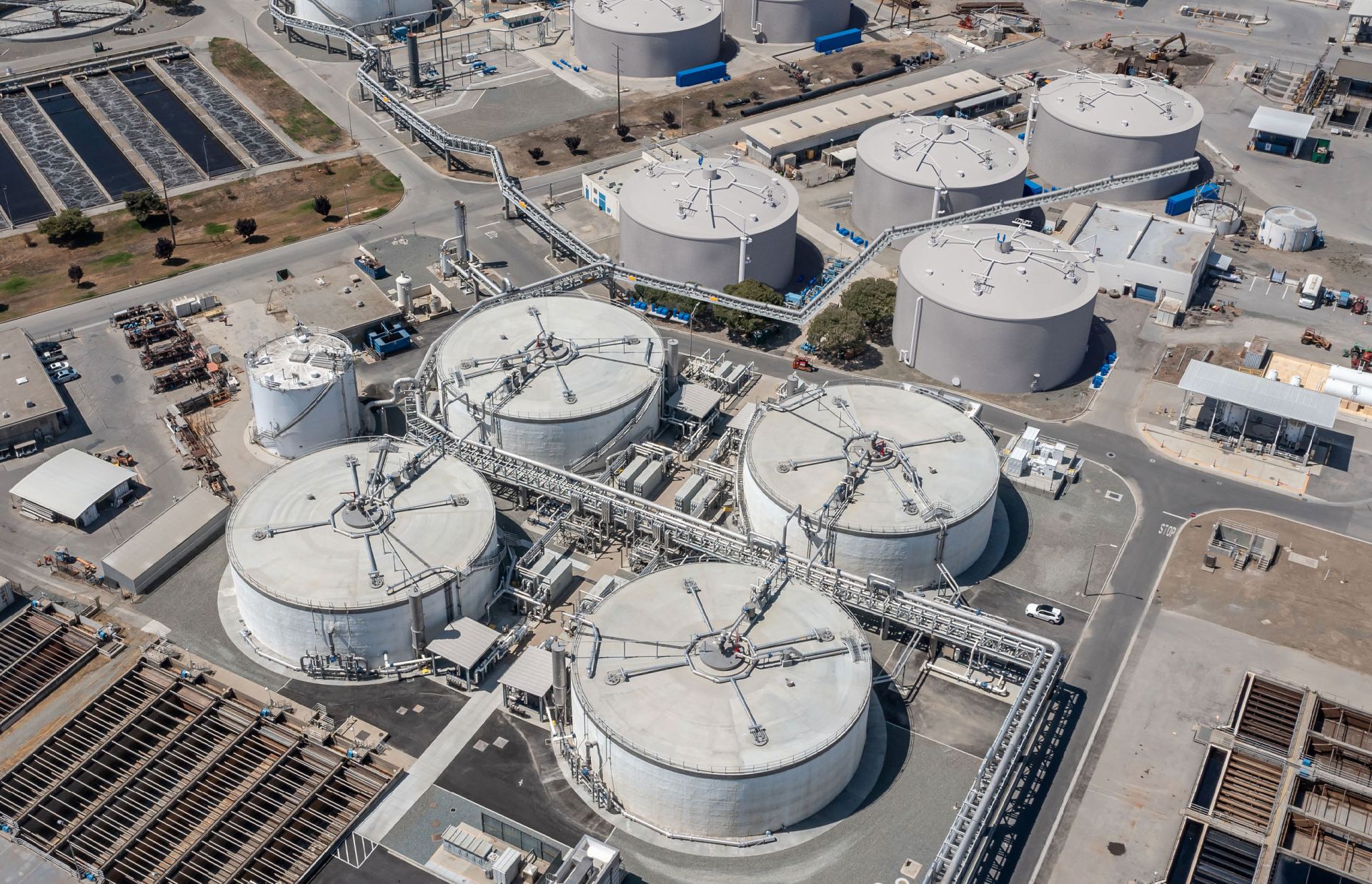
San José selected Prologis as its preferred developer in November 2025, but that selection is not final approval to build or operate the campus. The project also proposes roughly 785,000 square feet of advanced manufacturing, bringing the combined development beyond 2.4 million square feet. Campus project specifications describe an initial utility-power pathway of 250 MW, dependent on future arrangements and infrastructure. Environmental review, land agreements and phased utility service are still essential. October local reporting documents Prologis representatives discussing community environmental-review expectations.
Why California’s data-center rankings require careful definitions
The three figures total 921 MW of reported proposed electrical capacity, but this is not 921 MW of operating AI servers. Google’s 250 MW project may not qualify as a data center under the company’s stated use; Prologis’s 396 MW is a four-building design; and Golden Valley’s 275 MW remains a proposal with no construction start date. Some California trackers also list a 330 MW Imperial Valley development, but that project is stalled amid court-ordered environmental review and moratorium litigation, so it is excluded from this active-proposal ranking. Similarly, a previously proposed 270 MW Coachella Valley project was cancelled.
The engineering constraints differ across locations. Silicon Valley faces high-voltage interconnection queues, land-use scrutiny and backup-generator rules; Kern County offers an existing industrial generating station but faces carbon-emissions, water and environmental-review concerns. For a direct comparison with other states, see BitcoinVersus.Tech’s Arizona ranking and national AI megaproject report. Future state rankings will continue separating operational IT load from proposed grid demand and on-site generation.
Editor’s Note: This report links the original public project records, labels contested classifications and distinguishes location-context photography from actual project imagery. To support independent reporting, donate 5,000 satoshis by scanning the QR code below.

Scan the QR code with a Bitcoin wallet while reading this article on another screen.


Leave a Reply