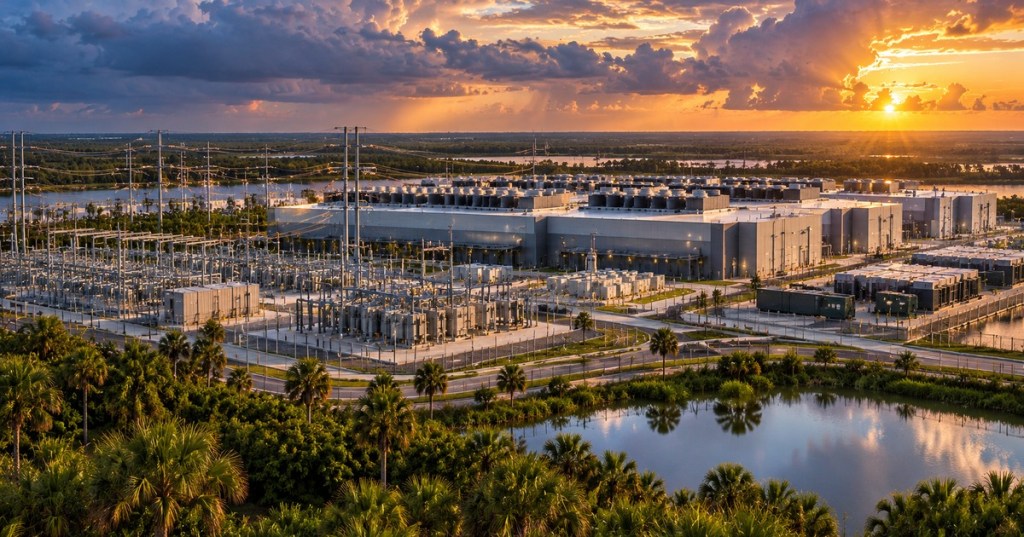
Florida has a 1.2-gigawatt locally approved data-center proposal, a 300 MW campus stalled by water constraints, and a 240 MW AI development still in its proposal stage. None of those headline megawatts should be mistaken for servers drawing power today. In the next installment of BitcoinVersus.Tech’s state-by-state data-center ranking series, we compare the largest credible, attributable capacity figures, their permitting status and the energy systems needed to bring them online, using public information available through October 27, 2026.
Ranking method: Order named Florida data-center projects by reported intended electrical capacity only where a developer, government record or contemporary reporting supports a comparable figure. We explicitly distinguish municipal land-use approval, completed water permitting, proposed campus power and operational IT load. This is a mixed-status project ranking, not a list of Florida’s currently operating data centers, and projected MW figures are not summed as energized capacity.
3. Atlas Compute — Fort Pierce, 240 MW Planned
Atlas Compute publicly describes a 240 MW AI-ready data-center campus in Florida, designed for high-density GPU computing. WFLX’s March 12 reporting ties its proposed site to Midway Industrial Park in the Fort Pierce area of St. Lucie County, where the company had secured land and a zoning-verification letter covered parcels around Post Office Road. The project was publicly discussed as a possible 2027 operation, not a guaranteed energization date. As of that March report, county staff said no formal project application had been submitted.
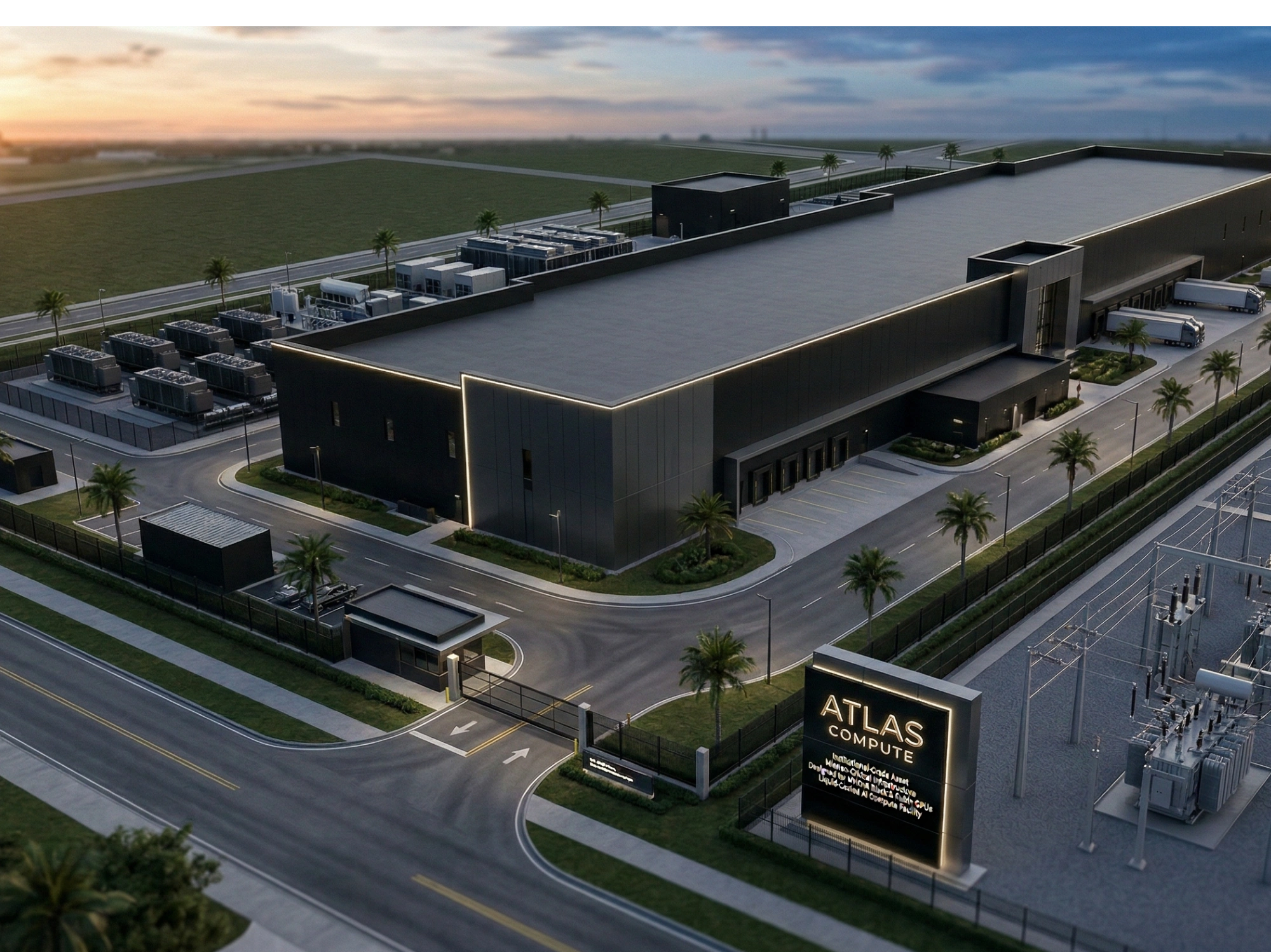
The developer’s site confirms the 240 MW headline, but that does not independently certify a signed utility-service agreement, committed customer demand or operational IT capacity. A facility research profile updated October 20 still categorizes the project as proposed. Its location illustrates the power-interconnection and cooling challenges that accompany a large new AI site on Florida’s Atlantic coast.
2. Cielo Digital Infrastructure — Haines City, 300 MW Target (Stalled)
The 300 MW Cielo campus was identified near Marion Road and State Road 544 East in Haines City, Polk County. Data Center Dynamics’ July 17 investigation described a project on roughly 74 acres, seeking about 150,000 gallons of water per day. That daily water figure is a proposed demand, not documented actual consumption. Public officials interviewed by FOX 13 said the city lacked sufficient available permitted water capacity and had received no formal development agreement, site plan or zoning filing as of its June 25 report.
A utility inquiry is not a construction authorization. The city sought a water-use permit modification through the Southwest Florida Water Management District, and regulators’ decision would not substitute for zoning and environmental reviews. Accordingly, Cielo stays second by its reported size, but the latest identifiable reporting describes its actual development status as stalled. A 300 MW marketing target must not be placed in an operating capacity total.
1. Stonebridge / Fort Meade — 1,200 MW Proposed Electrical Load (Locally Approved)
The largest substantially documented Florida proposal is Stonebridge’s planned campus on approximately 1,330 acres west of U.S. 98 in Fort Meade. In a June 15 public discussion, a Stonebridge principal described the scheme as 1.2 GW of power; the original recorded discussion is linked by Data Center Record. This is an announced campus electrical-load figure, not 1.2 GW of metered demand or a verified IT-only rating. The city’s commission voted unanimously on April 14 to approve a development agreement, following earlier land-use actions. That does not mean every construction and resource permit has been granted.
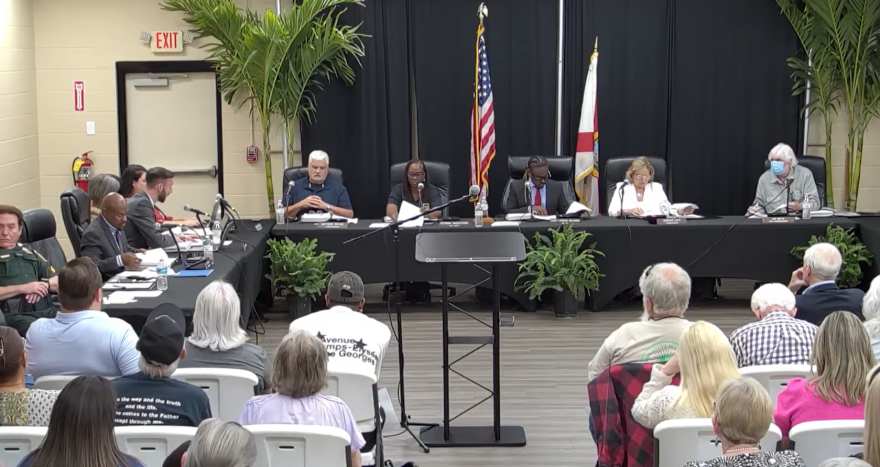
The biggest obstacle was identified in a signed April 14 letter from the Southwest Florida Water Management District: the city’s then-current water-use permit did not cover the data center. District governing-board approval of a modified permit is required before regulated site activity. The same letter records a 2028 operational target, which is a plan, not a commissioning guarantee. The proposal drew concern over water, power, air conditioning, noise and nearby residential areas. April reporting put the land area at roughly 1,300 acres. We could not independently confirm that the remaining water approval and all other permits had been secured as of this report.
Why Some Florida Lists Show a 4 GW Campus—and Others Do Not
The most important exclusion is the 4,000 MW sometimes attributed to the DCIP DeSoto County project. The county’s actual application register confirms that a 35,134-square-foot data-center and generation site on 34.22 acres received PUD rezoning approval on March 24. It also lists separate major 2026 applications for a 3.69-million-square-foot project on 274.26 acres and a 4.66-million-square-foot proposal on 553.79 acres. These are building areas and land-use applications, not proof that 4 GW of electrical service has been approved or financed. Some outside trackers model the site at 4 GW; those estimates are not a developer- or regulator-confirmed comparable rating, so the number is excluded from this ranking.
DeSoto’s October 27, 2026 commission agenda includes a further 3-F Ranch rezoning hearing, after the planning commission recommended denial earlier in October. The existence of a scheduled hearing does not establish its result. Similarly, the large Sentinel Grove proposal in St. Lucie County has been reported as withdrawn; a canceled or withdrawn megaproject is not automatically active capacity. A separate NextNRG Nassau County announcement refers to a potential 200 MW microgrid alongside 400 acres suitable for data centers, not a contracted 200 MW of data-center IT load.
Florida’s Energy Cost and Water Rules
Florida’s 2026 Senate Bill 484, signed into law May 7 and generally effective July 1, reinforces local land-use authority, adds special water-use permitting and directs utilities to charge large-load customers their full cost of service. It is intended to keep infrastructure and stranded-asset costs from being shifted to ordinary ratepayers. Florida Power & Light’s October 1 filing described minimum bills and long-term commitments for major power customers. Those rules are central to evaluating a megawatt announcement: the larger the projected load, the more decisive firm generation, transmission, utility tariffs and cooling water become.
The comparison with our Delaware Top 3 is instructive: that installment separates a historical proposal from two operating facilities. The Connecticut ranking also draws clear lines between speculative campus marketing and completed infrastructure. For national scale, consult our AI data-center megaproject ranking, which documents why IT megawatts, campus electrical capacity and utility service reservations must not be equated.
Editor’s Note: Rankings use reported intended project MW, not proof of operational electricity consumption. Project status, water permitting and power definitions are attributed and may change after October 27, 2026. The three separately sourced in-story images, the unique original 1200×630 cover and the donation QR are distinct assets. No original diagrams are embedded. To support BitcoinVersus.Tech’s independent reporting, donate 5,000 sats by scanning the QR code below.

Scan the QR code with your Bitcoin wallet while reading on a separate screen.


Leave a Reply