Nebraska’s data center industry is finding a new route to growth in 2026: build around existing power infrastructure, reuse industrial sites and negotiate local benefits before construction begins. A planned 368-megawatt redevelopment in Kearney, a newly acquired 42-megawatt mining facility in Minden and an approved 35-megawatt modular campus in Hallam show how developers are seeking practical footholds in a state that has tightened its approach to new projects.
The rankings below compare distinct, publicly documented Nebraska sites with attributable capacity figures from operators, filings or local permitting records. They are not a definitive census of the state’s physically largest data centers: Google and Meta already operate substantial Nebraska campuses, but comparable public site-level megawatt figures were not established in the primary records reviewed. These three figures also describe different stages—future expansion, existing nameplate capacity and an approved maximum—and should not be confused with power actually drawn today.
3. Monolith and Crusoe, Hallam — 35 MW Approved
Monolith and Crusoe won approval on October 5, 2026 for a 35-megawatt modular data center on approximately ten acres at Monolith’s existing Olive Creek industrial campus in Hallam, Lancaster County. The Hallam Village Board approved the special-use permit unanimously after months of public meetings, according to Nebraska Public Media. The approval authorizes a planned facility, not an operating 35 MW IT load.
The project could give an established industrial site a second economic purpose. Crusoe has experience operating modular computing infrastructure and building larger AI campuses elsewhere. The companies have discussed roughly 15 permanent jobs and local benefit payments. KLKN’s account of the approved arrangement says Crusoe would provide $1 million when the project begins operating, followed by $150,000 annually for ten years. Those payments are contingent on the development reaching its milestones.
Neighbors have asked whether the industrial zoning process adequately protects them from noise, lighting and future expansion. The Hallam Says No campaign, citing village documents, says the permit caps electrical demand at 35 MW and establishes a five-year average annual operational water-use limit of 770,000 gallons. The campaign also raises questions about subsequent phases on nearby land. Supporters point to jobs, community payments and reuse of an existing industrial parcel; critics want enforceable limits before additional development. Both arguments are relevant, and the new permit does not itself authorize a second hyperscale campus.
The next milestones are final construction scheduling, utility arrangements, commissioning and the actual operating load. As of October 29, the facility had local approval but no publicly confirmed opening date.
2. MARA Minden — 42 MW Existing Grid-Connected Site
MARA Holdings acquired a 42 MW nameplate-capacity data center in central Nebraska in January 2026, expanding its operating mining infrastructure. MARA’s current portfolio identifies the facility as Minden, Nebraska, on approximately seven acres. Its first-quarter SEC filing distinguishes 35 MW of operating Bitcoin-mining capacity from the site’s 42 MW nameplate. The higher number is the installed facility’s rated capacity, not evidence of continuous 42 MW consumption.
MARA has argued that energized sites and low-cost power provide a starting point for future high-performance computing. Its January acquisition adds equipment, electrical infrastructure and operating experience without requiring an entirely new greenfield site. That can reduce development risk and create an opportunity for additional computing investment if suitable customers, cooling and network upgrades follow. It does not mean the Minden mining facility has already been converted into a large AI training center.
A key public-interest question is how operators manage energy use when prices spike or the grid is under stress. Bitcoin mining can be curtailed more readily than some continuous cloud workloads, but the economic value of that flexibility depends on actual contracts and operating behavior. Publicly owned utilities must still recover infrastructure costs fairly. MARA’s annual filing describes a wider shift toward AI and high-performance computing while maintaining Bitcoin mining as its foundation; future conversion should be judged by announced tenants and commissioned equipment rather than marketing language.
1. MARA and Starwood Project Horizon, Kearney — Up to 368 MW Planned
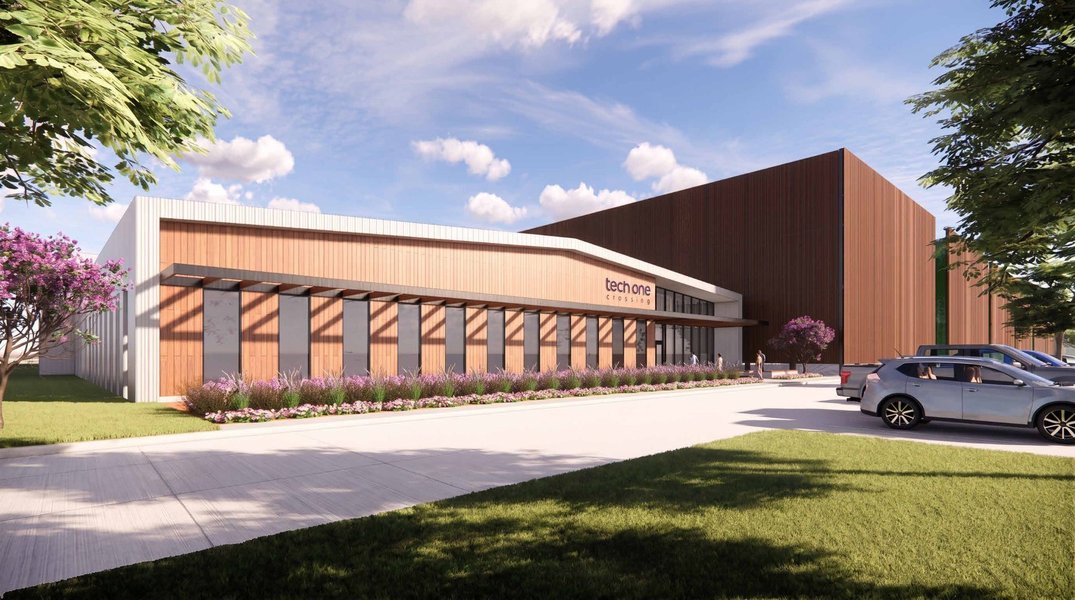
MARA and Starwood Digital Ventures are working on Project Horizon, a multistage data center redevelopment at Kearney’s Tech oNE Crossing business park. The official project website describes a 100 MW first phase using electricity already available to the adjacent Bitcoin mining operation. MARA’s corporate site gives 368 MW as the location’s longer-term gross potential, subject to expansion. The 368 MW is a development pathway, not a completed AI data center or 368 MW of newly contracted electricity.
The Kearney City Council approved the project’s conditional-use permit in September, after the city adopted tighter rules on data centers. The plan would construct enclosed data halls in stages and ultimately retire the older outdoor Bitcoin-mining operation. Local coverage of the city’s September hearing identifies the full 368 MW figure, while the developer describes approximately 72 acres for its initial business-park development.
The most constructive element of the proposal is its effort to reuse 100 MW of existing electric service rather than begin by requesting a wholly new supply allocation. The partners also propose workforce training with Central Community College and STEM support for local schools. Their website projects approximately 30 permanent jobs and $20 million in annual tax revenue at stabilization by 2028. These are developer forecasts, not independently audited employment or tax receipts. A phased, reusable power connection could make the site more competitive for computing tenants and avoid some of the disruption associated with building a new industrial campus from scratch.
The objections are substantial, too. Kearney residents have questioned noise, water use, electrical demand and whether the city can enforce commitments across future phases. Project Horizon says its closed-loop cooling system would use approximately 1,250 gallons a day after initial fill and that any new power infrastructure beyond the first 100 MW would be paid for by the developer. Those statements need to be tested against final designs, utility agreements and measured operating data. Nebraska Public Media’s reporting details the community debate and the transition away from the older mine.
The project could provide an example of how established Bitcoin-mining power infrastructure is repurposed for a broader mix of computing. Whether it succeeds will depend on securing a tenant, meeting local conditions and bringing each phase online without shifting costs to other electric customers.
Why Nebraska’s Other Major Campuses Are Not Assigned Megawatt Rankings
Google has invested more than $15 billion in Nebraska and operates or develops campuses in Papillion, Omaha and Lincoln, according to its official Nebraska page. The company says its Lincoln facility came online in 2026. Meta also operates major facilities in Sarpy County. These are established hyperscale developments, but public operator-level site megawatt figures comparable to the three above were not found in the primary sources reviewed. They may be larger than any ranked project; excluding them is a limit of the available capacity evidence, not a judgment about their importance.
Another potential giant is Stark Power’s Sagebrush proposal west of Hallam. Developer documents examined by Nebraska Public Media discuss a possible 1.7 GW campus, with land purchase options spanning more than 1,400 acres. However, Stark told the outlet it was evaluating the site and had made no final decision. Nebraska Public Power District confirmed an application and memorandum of understanding to begin its new-load review, not an approved 1.7 GW data center. It is therefore a serious prospect, but not an authorized 1.7 GW development for a definitive power ranking.
A still larger 1–3 GW Google-related southeast Nebraska concept appeared in documents reported by Flatwater Free Press in March. Google had not publicly confirmed the project and some named potential partners disputed involvement. It should not be counted as an approved or operating Nebraska facility. Neither should power-generation proposals be added to data center IT load.
A Growth Opportunity With Rules That Matter
Nebraska’s public-power model can be an advantage for data centers: local utilities understand their customers, large loads can help finance grid upgrades, and projects bring electrical construction, technical work, tax revenue and a reason for advanced computing skills to remain in the state. The infrastructure is also essential to everyday services, from banking and healthcare to cloud software and AI. None of that eliminates the responsibility to price new connections fairly, preserve water resources and give neighbors a meaningful role in permitting.
On July 21, 2026, Governor Jim Pillen signed an executive order restricting data-center access to incentives under the ImagiNE Nebraska Act while the state evaluates land, water and power impacts. The governor said the order was not a moratorium. The state’s Data Center Task Force is examining future guidelines. For the industry, clear and predictable rules could make sound projects easier to finance; for communities, the same rules must ensure that benefits and costs are transparent.
The decisive numbers will be the megawatts actually energized, who pays for upgrades, whether water and noise stay within permit limits, and whether projected jobs and tax receipts materialize. Nebraska has a credible foundation for more data center investment, but future scale should be earned through operating results, not inferred from a land option or a headline power figure. For comparison, see the Montana rankings and the Missouri rankings.
BitcoinVersus.Tech
Follow BitcoinVersus.Tech on X for technology reporting and research.
BitcoinVersus.Tech Editor’s Note: We volunteer daily to ensure the credibility of the information on this platform is Verifiably True.
If you would like to support our work and help further secure the integrity of our research initiatives, please scan the QR code below to donate (For the best results, scan the QR code on a Laptop or larger screen).
Suggested donation: 5,000 sats. Bitcoin address: 3C9o19EH5HSiwEPyCTmEKzxhNCbo2X6TTb. Confirm the address before sending.

BitcoinVersus.tech is not a financial advisor. This media platform reports on financial subjects purely for informational purposes.
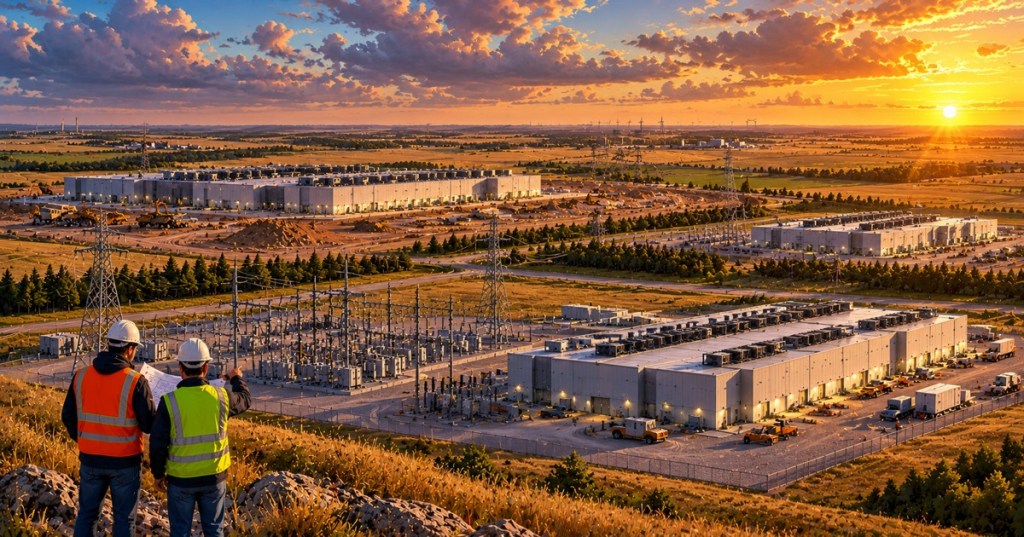
Featured image: Original editorial illustration of a hypothetical Nebraska data center campus, not a photograph of a specific facility.


Leave a Reply