
Nevada’s data center expansion is moving beyond the established campuses around Reno and Las Vegas into enormous master-planned industrial parks. In Storey County, Tract has assembled thousands of acres for future computing development while its affiliated builder Fleet is already constructing leased facilities. In Lyon County, a separate 1,000-megawatt proposal has won a crucial zoning vote. The opportunity is substantial: large infrastructure investments, skilled construction work and the possibility of a stronger regional technology economy. So are the demands on the state’s power grid, water supplies and local communities.
The three largest separately identified Nevada development sites with publicly documented project-level power figures are Tract’s Virginia Highlands Technology Park (2,500 MW marketed capacity), Tract’s South Valley Technology Park (1,215 MW long-range development potential) and Copia Power’s Monarch campus (1,000 MW proposed). These are ranked by the stated ultimate project plans, not power already energized. Virginia Highlands is a marketed development site, South Valley includes a genuinely under-construction but much smaller first facility, and Monarch has preliminary land-use approval but not construction authorization. Those differences are essential to understanding the numbers.
3. Copia Power Monarch, Mason Valley — 1,000 MW Proposed
Copia Power is proposing a 1,000 MW data center development across approximately 505 acres north of Yerington in Lyon County’s Mason Valley. On August 6, 2026, the Lyon County Board of County Commissioners approved a planned-unit-development zoning change by a 3–1 vote, with one abstention. The proposal encompasses up to 4.6 million square feet across eight two-story data center buildings, electrical infrastructure and supporting facilities.
This is a significant advance for a project seeking to diversify an agricultural region’s economy. Large computing customers could create construction jobs, utility investment and a new commercial tax base. In October reporting from The Nevada Independent, landowner Brian Masini described the prospect of development as an economic opportunity for a community struggling to sustain traditional farming. A new high-value industrial use can be attractive when agricultural margins and local services are under pressure.
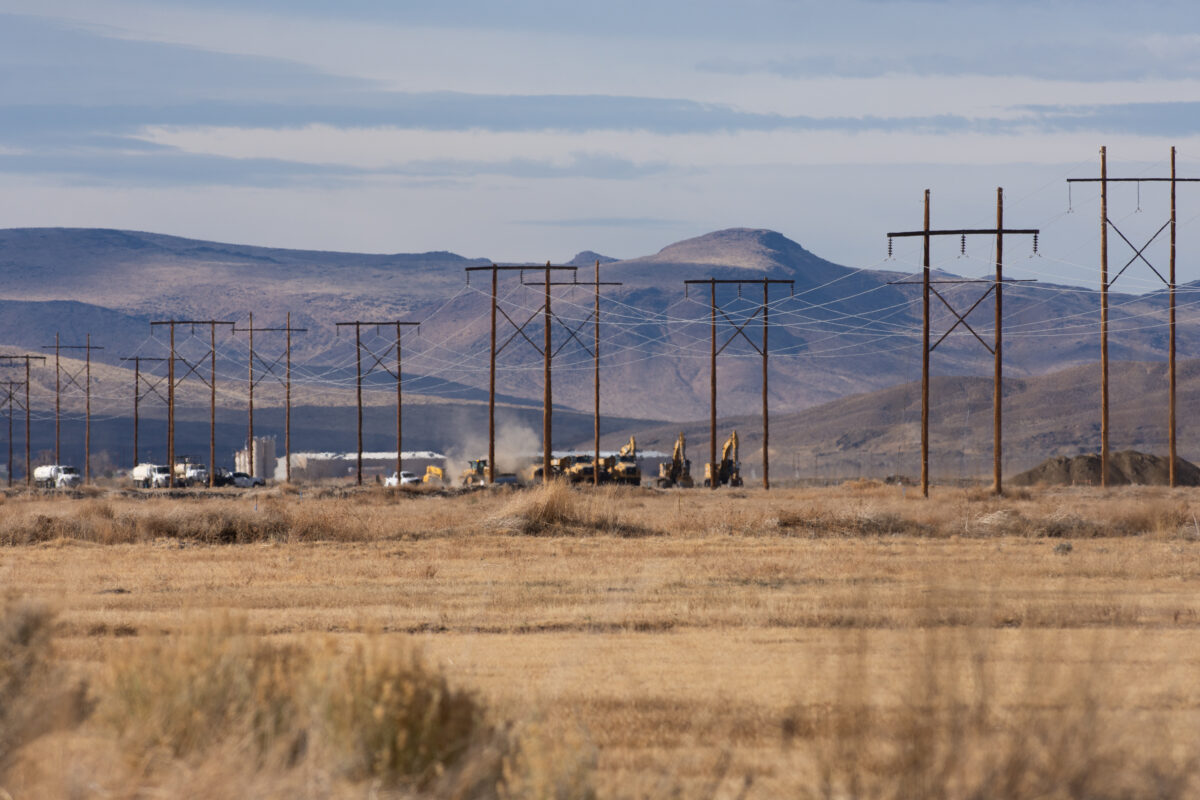
The county’s vote did not authorize construction. Copia must submit a final development plan, obtain water-rights and environmental approvals, complete its land purchase and satisfy roadway and emergency-response conditions. The plan includes a proposed 500 MW gas-fired generation facility and 500 MW battery energy-storage system; these are energy-supply and storage components, not additional data center IT demand to add to the 1,000 MW headline figure. The Fernley Reporter detailed the remaining permits and an initial construction timetable extending into 2027 and beyond.
Residents and members of the Walker River Paiute and Yerington Paiute tribes have raised objections involving groundwater, air emissions, cultural resources and the adequacy of public review. The concerns deserve meaningful scrutiny in a basin with a history of water conflicts. Supporters can reasonably argue that a data center offers economic diversification; the developer must still demonstrate that its water rights, air permits and infrastructure can support the project without imposing uncompensated costs on others. Approval of zoning alone does not resolve that test.
2. Tract South Valley Technology Park — 1,215 MW Ultimate Potential
Tract markets its South Valley Technology Park in Storey County at 1,215 MW of eventual campus capacity across approximately 1,534 acres. Unlike many speculative land banks, a substantial first project is genuinely underway. Its affiliated builder Fleet Data Centers broke ground in May 2026 on a leased facility within the park near USA Parkway at the Tahoe Reno Industrial Center.
The first South Valley data center is described in public financing and development reporting as a roughly 230 MW turnkey facility, including about 200 MW of critical computing power. This is a separate, far smaller figure than the 1,215 MW full-park potential. Fleet’s separate Peru Ridge project is another campus and is not added to South Valley’s capacity. Data Center Dynamics reported the groundbreaking, a long-term lease to an unnamed investment-grade tenant and the first project’s financing. The tenant has not been officially named, and reports identifying Nvidia should not be treated as a company confirmation.
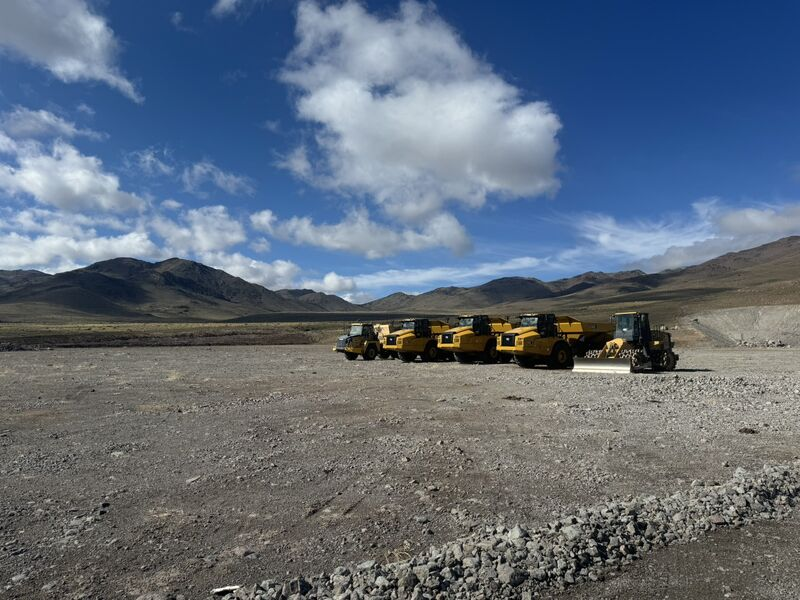
The economics help explain the appeal. Northern Nevada Business Weekly reported that Fleet’s first two Storey County projects together represent about $10 billion of planned construction investment and could support 1,000 to 1,500 trades workers at peak construction. The company has discussed substantial spending on local roads, water, wastewater and electrical systems. These are developer-reported investment and employment expectations, not a claim that all spending or jobs have already materialized.
Power delivery is a central unresolved issue. Fleet proposed a 144 MW temporary natural-gas generating plant for South Valley while NV Energy scales service, and state regulators gave the project conditional approval in September. That plant’s capacity is not another 144 MW of computing load. The utility and developer have disputed elements of their large-load agreements, and final interconnection, environmental conditions and the timing of permanent grid supply matter to the site’s actual commissioning schedule. Nevada Current has examined the tension between rapid construction and the state’s clean-energy goals.
The constructive path is to make the temporary-power arrangements transparent, allocate upgrade costs to the customers that cause them, and ensure any gas infrastructure is operated under its environmental permits. Nevada stands to gain a major digital infrastructure cluster if the first leased facilities perform as planned; residents are entitled to evidence that air quality and household electricity bills will not bear unaccounted-for costs.
1. Tract Virginia Highlands — 2,500 MW Marketed Development Capacity
Tract lists its Virginia Highlands Technology Park in Storey County at a potential 2,500 MW of future data center capacity, making it the largest single marketed development park with an explicit owner-published MW figure in this comparison. The 8,590-acre property sits between the Tahoe Reno Industrial Center and Virginia City Highlands and is divided into 11 parcels ranging from about 250 to 1,200 acres. Its industrial zoning supports future computing and energy infrastructure.
Tract’s June 18, 2024 acquisition announcement established that the land purchase had closed earlier that year. The company’s current project page identifies the site as owned and in development. Those are meaningful commitments: Tract has secured control of the property and is marketing it for data center uses. They are not proof that 2.5 gigawatts of grid service has been contracted, buildings financed, tenants signed or computing racks energized.
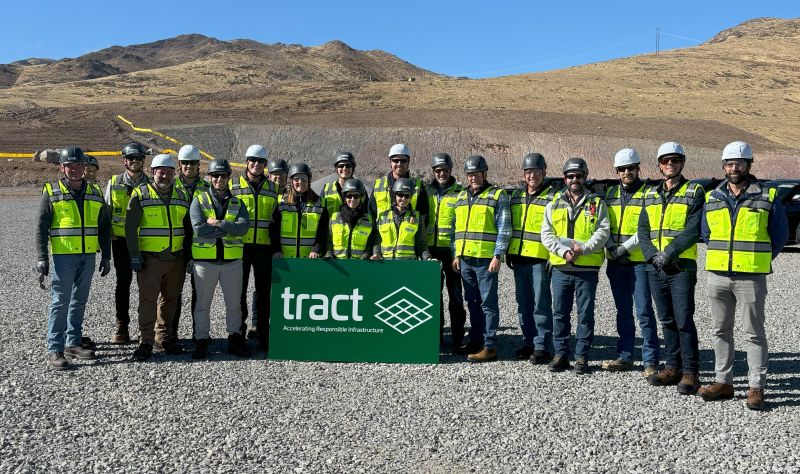
At this scale, a land developer’s role is different from that of an operating colocation provider. Tract acquires and prepares large industrial sites, pursues infrastructure and utility planning, and makes land available to builders and end users. Nevada’s Legislative Counsel Bureau data-center background memo explicitly distinguishes Tract’s land-development business from companies operating servers. That distinction prevents a 2,500 MW property marketing figure from being presented as 2,500 MW of operating AI capacity.
The advantage of such a land bank is long-term flexibility. Large parcels allow campuses, substations, cooling systems and transport routes to be designed together rather than added piecemeal to crowded industrial districts. Tract’s completed acquisition and existing regional construction experience give the plan substance. The remaining questions are equally concrete: where electricity would come from, how it would be transmitted, what water and air permits each future tenant would require, and how infrastructure costs would be shared. Future customers and approvals will determine how much of the 2,500 MW opportunity becomes a working data center.
Why Switch, Vantage and Other Nevada Campuses Are Not Ranked Above These Plans
Nevada already has major operating data center infrastructure. Switch opened its Tahoe Reno Citadel campus with a stated 650 MW original full-build design, while its current marketing discusses further multi-gigawatt expansion without a directly comparable finalized single-campus figure. A proposed 510 MW gas power plant associated with Switch, reported October 16, is generation rather than a new 510 MW server campus and is not added to Citadel’s power demand.
Vantage Data Centers announced a 224 MW NV1 campus in Storey County, with four buildings and an approximately $3 billion investment plan, and Fleet Peru Ridge has a separate roughly 230 MW first data center under construction. Google, Apple, Amazon and Novva have significant Nevada operations or plans. These developments are important and in several cases more advanced than Virginia Highlands or Monarch, but they do not exceed the stated ultimate figures of the three sites ranked here on the same project-development basis. The comparison does not imply they have less energized capacity today.
Nevada’s Growth Opportunity and Its Guardrails
Data centers support everyday digital services as well as AI: payments, business applications, healthcare records, communications and scientific research all depend on resilient computing infrastructure. Nevada has a practical opportunity to turn land, electrical expertise, fiber connectivity and a growing construction workforce into durable economic activity. But a megawatt commitment can reshape a utility’s capital plan, and water-intensive projects deserve particular scrutiny in arid basins.
On September 18, 2026, Governor Joe Lombardo issued Executive Order 2026-005, establishing a framework that calls for data center developers seeking state incentives to pay local school support taxes, cover project-specific electricity costs and meet community water and grid requirements. The order reflects a productive principle for both developers and residents: a project is easier to defend when its economic gains and infrastructure obligations are documented and enforceable.
The decisive measures over the next few years will be actual building completions, contracted and energized power, operating jobs, tax collections, verified water use and the cost of new transmission and generation. Nevada can welcome investment without presuming every proposal will succeed—and can protect local resources without dismissing the benefits of a growing computing industry. See BitcoinVersus.Tech’s Nebraska and Montana rankings for similar distinctions between operating sites, approvals and future capacity.
BitcoinVersus.Tech
Follow BitcoinVersus.Tech on X for technology reporting and research.
BitcoinVersus.Tech Editor’s Note: We volunteer daily to ensure the credibility of the information on this platform is Verifiably True.
If you would like to support our work and help further secure the integrity of our research initiatives, please scan the QR code below to donate (For the best results, scan the QR code on a Laptop or larger screen).
Suggested donation: 5,000 sats. Bitcoin address: 3C9o19EH5HSiwEPyCTmEKzxhNCbo2X6TTb. Confirm the recipient address before sending.

BitcoinVersus.tech is not a financial advisor. This media platform reports on financial subjects purely for informational purposes.
Featured cover: Original split-screen editorial illustration of an imagined Nevada computing construction site and completed campus; neither scene is a photograph of a specific project.


Leave a Reply