
The U.S. economy grew at an annualized 3.4% rate in the third quarter of 2026, accelerating from 2.2% in the previous quarter as consumer spending and business investment in computing equipment strengthened. The Commerce Department’s preliminary estimate, released Thursday, October 29, beat economists’ expectations even as a separate report showed inflation remained elevated.
Household spending increased at a 3.8% annual rate, while nonresidential fixed investment rose 12.7%, according to Associated Press reporting on the figures. Spending on information-processing equipment, including computers, was particularly strong. Analysts attribute an important part of that demand to the buildout of artificial-intelligence infrastructure.
CNBC Television reports on the October 29 GDP release and September inflation figures.
The figures offer another indication that investments in chips, servers and computing infrastructure are becoming a major source of economic growth. They also build on BitcoinVersus.Tech’s earlier reporting on the scale of America’s AI investment boom. However, GDP accounting does not isolate spending on AI as its own category, so not every dollar of equipment investment can be assigned to artificial intelligence.
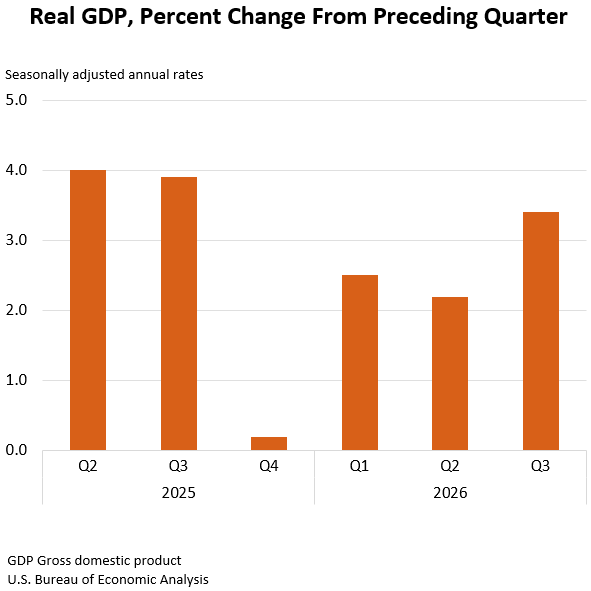
The headline growth masked weaker sectors. Residential investment declined, and a drop in exports together with higher imports weighed on GDP. Some imported computers and capital goods support the very AI infrastructure projects drawing fresh financing, but the resulting trade deficit still subtracts from the official growth calculation.
Inflation and household savings remain concerns
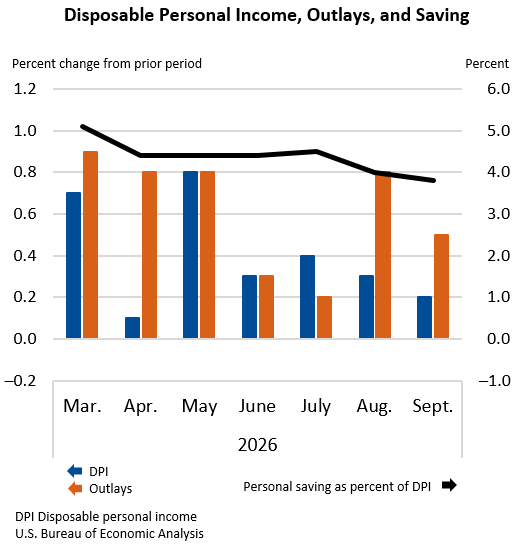
The BEA’s separate September income and spending report showed the personal consumption expenditures price index rose 3.6% from a year earlier, while core PCE inflation, excluding food and energy, reached 3.1%. After adjusting for inflation, disposable personal income fell 0.3% from August, and the saving rate slipped to 3.8%.
The data arrived one day after the Federal Reserve voted 10–2 to keep its benchmark interest-rate range at 3.75%–4%. Two policymakers favored a quarter-point increase. Chair Kevin Warsh said the central bank needed more information before its next decision, reflecting the challenge of balancing robust growth with inflation above its 2% goal. The debate helps explain why borrowing costs matter to both households and businesses.
Federal Reserve Chair Kevin Warsh’s full October 28 press conference, recorded before the third-quarter GDP estimate was published.
Thursday’s figures are preliminary, and the BEA has scheduled its second GDP estimate for November 25. Investors will be watching whether business investment keeps supporting growth while higher prices and reduced household saving begin to constrain spending.
Editor’s Note: We volunteer daily to ensure the credibility of the information on this platform is Verifiably True. If you would like to support our work and help further secure the integrity of our research initiatives, please scan the QR code below to donate 5,000 sats.

Scan the QR code using a compatible Bitcoin wallet while viewing the article on a laptop or larger screen. Donation address: 3C9o19EH5HSiwEPyCTmEKzxhNCbo2X6TTb.
BitcoinVersus.tech is not a financial advisor. This media platform reports on financial subjects purely for informational purposes.


Leave a Reply