
An interest rate is the price of using money across time. A borrower gets purchasing power today and promises to return more purchasing power later; a lender gives up the use of that money for a period and expects compensation. That simple exchange sits underneath mortgages, credit cards, business loans, bonds, savings accounts and much of modern finance.
The basic idea is older than modern banks or central banks. As societies developed bank deposits, banknotes, checks and ledger money, they also developed increasingly formal ways to price the use of capital. Today’s financial system is much more complex, but the core question is unchanged: what is it worth to move money from the future into the present?
Why money has a price
Suppose you have $10,000. You can spend it, hold it as cash, put it in a savings account, buy an asset, or lend it to someone else. If you lend it, you lose the ability to use it yourself until it comes back. Interest compensates you for that delay and for the possibility that the future will not unfold as expected.
This is sometimes called the time value of money, but interest is not just a reward for waiting. Real-world rates also contain compensation for risk, expected inflation, funding conditions and the length of the commitment. A one-month loan to a strong borrower is therefore a very different product from a 30-year mortgage, even though both are described with a percentage rate.
Four forces inside almost every interest rate
- Time: money available today is usually more flexible than the same amount locked away for years.
- Credit risk: a lender charges more when there is a greater chance of late payment or default.
- Inflation: if money is expected to buy less in the future, lenders generally want a higher nominal return.
- Market conditions: competition for funds, central-bank policy, bond yields, bank funding costs, liquidity and investor demand can all move rates.
These forces interact. A rate can rise because inflation expectations increased, because the borrower looks riskier, because investors demand more compensation for tying up money for a long period, or because the broader cost of short-term funding changed. That is why headlines that say “rates went up” are incomplete unless they specify which rate and why.
There is no single interest rate
The United States does not have one master rate that every lender simply copies. The Federal Reserve influences very short-term financial conditions and sets a target range for the federal funds rate, but it does not directly set your mortgage rate, auto-loan rate or credit-card APR.
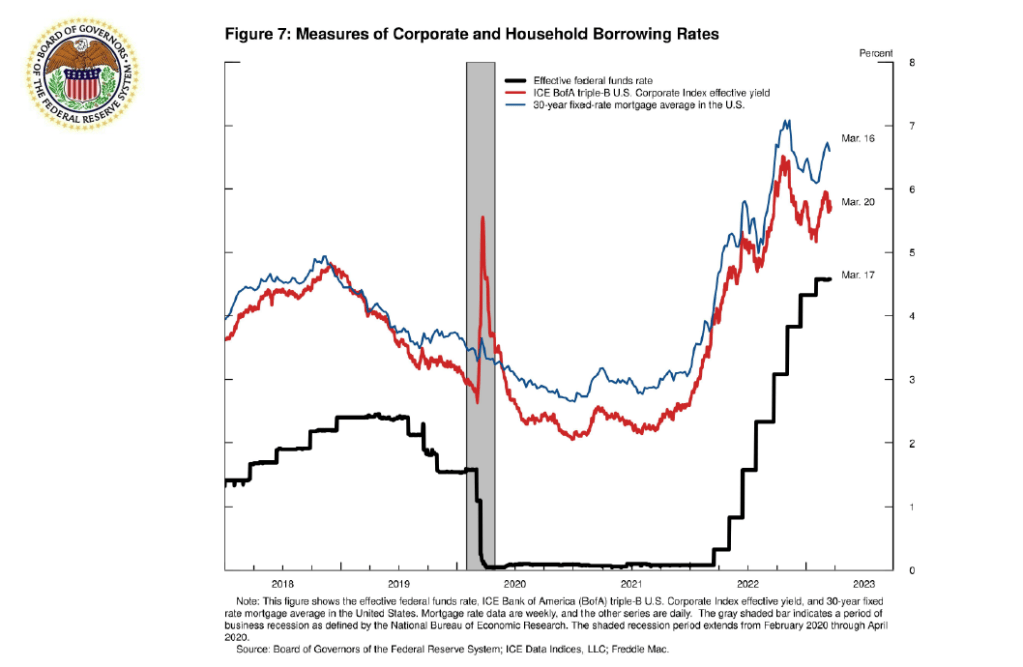
Longer-term rates are heavily influenced by bond markets. Investors continuously price expectations about future inflation, future central-bank policy, economic growth and the extra return they want for holding longer-dated debt. Banks then layer in their own funding costs, operating costs, credit risk and profit margin when they quote borrowers.
This is why the market can begin moving before a central bank actually changes policy. In 2024, for example, traders shifted their expectations around the size of a possible rate cut before the meeting itself—a pattern BitcoinVersus covered in “Markets Predict 50bp Rate Cut at September Fed Meeting.”
A real-world example of market participants repricing expectations before a Federal Reserve decision.
How a policy rate reaches everyday life
Changes in short-term policy rates spread outward through the financial system rather than jumping directly into every consumer loan. Banks compare the return available on reserves and money-market instruments with the return they could earn by making loans. Bond investors reprice securities. Businesses reconsider projects whose financing costs have changed. Consumers see different offers for credit, savings and mortgages.
The Federal Reserve Bank of St. Louis explains how the federal funds rate and interest on reserve balances work inside modern monetary-policy implementation.
The transmission is imperfect and uneven. Credit-card rates may react quickly because many are variable. A fixed-rate mortgage is priced from a longer chain that includes Treasury yields, mortgage-backed securities, borrower risk and market demand. A company issuing bonds faces yet another market. The phrase “the Fed cut rates” therefore does not mean every borrowing cost will fall by the same amount—or even immediately.
A simple loan example
Consider a $20,000 five-year auto loan. At a 5% annual rate, the payment is about $377 per month and total interest is roughly $2,645. At 9%, the payment rises to about $415 and total interest approaches $4,910. The vehicle did not become more expensive, but the cost of bringing future income into the present did.
This is one reason rate changes can influence the broader economy. Higher borrowing costs can make marginal purchases and projects unattractive. Lower rates can make financing easier, although cheap credit can also encourage excessive leverage or push asset prices higher if too much money competes for the same opportunities.
Why savers and borrowers see different rates
A bank might pay one rate on deposits and charge a higher rate on loans. The difference is not automatically pure profit. Banks must cover credit losses, staff, technology, regulation, liquidity needs, capital requirements and the cost of other funding. They also need a margin for taking risk.
Modern banking also means a bank is not simply taking one specific saver’s cash and handing the same dollars to one borrower. Bank lending can create new deposits on the banking system’s balance sheets, subject to capital, liquidity, risk and settlement constraints. That evolution from physical money toward ledger-based money helps explain why interest-rate transmission today is fundamentally a balance-sheet process.
The system’s architecture has changed repeatedly. Episodes of financial panic helped produce central banks, clearinghouses and lender-of-last-resort facilities, while earlier monetary regimes such as the gold standard constrained money and credit in very different ways.
Inflation changes what a rate really means
A quoted interest rate is usually a nominal rate. What matters to purchasing power is closer to the real rate: the nominal return after accounting for inflation. If a savings account pays 4% while prices rise 3%, the saver’s purchasing power is growing much more slowly than the 4% headline suggests.
That is why inflation reports can move financial markets even when no central-bank meeting is happening. BitcoinVersus has followed this relationship through coverage of consumer-price inflation and the longer-running debate over purchasing power, real estate and Bitcoin. When investors expect higher inflation, they often demand higher yields to protect future purchasing power.
Interest is not the same thing as investment return
An interest payment comes from a credit relationship: someone owes someone else money under agreed terms. An investment return can come from many other sources, including business profits, dividends, rents or changes in asset prices. The distinction matters because a higher promised yield usually means a different set of risks, not free money.
Bitcoin is a useful contrast. Holding Bitcoin itself is not the same as lending money, so the Bitcoin protocol does not promise holders an interest payment. A service offering “yield on Bitcoin” is adding another financial arrangement—such as lending, derivatives or custody—and therefore another layer of counterparty or market risk. That is separate from simply owning the asset, just as owning a house is different from issuing a mortgage against it. BitcoinVersus explored the asset side of that comparison in Bitcoin versus property.
A practical way to read any loan offer
The headline rate is only the beginning. Before accepting a loan, compare the annual percentage rate, whether the rate is fixed or variable, the length of the loan, the total amount repaid, fees, prepayment rules and what collateral is at risk. A lower monthly payment can simply mean the debt lasts longer.
- Ask what rate is being quoted. Nominal rate, APR and effective borrowing cost are not always identical.
- Look at total dollars paid. A long term can hide a large interest bill behind a comfortable monthly payment.
- Separate market risk from credit risk. A benchmark rate can fall while a risky borrower’s rate rises.
- Remember inflation. The real economic value of future payments depends on what money can buy when those payments arrive.
The takeaway
Interest rates exist because time, risk and purchasing power have economic value. They coordinate decisions between people who want to spend now and people willing to delay spending, while giving financial markets a way to price uncertainty about the future.
Once that idea is clear, the daily noise around mortgages, the Federal Reserve, bond yields and savings accounts becomes easier to interpret. The important question is not simply whether “rates” are high or low. It is which rate, for which borrower, over what period, and for what risk?
BitcoinVersus.Tech publishes financial subjects for education and general information. This article is not individualized financial advice.


Leave a Reply