
The gold standard was a monetary system in which a currency unit was defined by a fixed quantity of gold and could be converted into gold under the rules of the system. It followed earlier forms of commodity money, standardized coinage, and banknote and ledger money by tying paper claims and bank money back to a defined gold value.
Convertibility Was the Core Promise
Under a classical gold standard, the monetary authority stood behind a fixed conversion rule. If a currency was legally defined as a specific weight of gold, holders could expect qualifying notes or balances to be redeemable at that parity. The Federal Reserve describes the gold standard as a nominal anchor: the central bank commits to exchange domestic currency for a fixed quantity of gold. That convertibility promise is what made a banknote more than paper; it was a claim connected to a defined reserve asset.
Parity Meant a Fixed Gold Price
Parity was the official conversion relationship between currency and gold. In the United States, the statutory gold price was $20.67 per troy ounce before the 1930s gold-policy changes. If the legal dollar-gold relationship stayed credible, people did not need to carry bullion for ordinary payments; they could use banknotes and deposits because those claims were linked to gold at the promised rate. BitcoinVersus.Tech’s older history of the U.S. dollar follows this shift from metallic money toward paper claims and later fiat currency.
Gold Reserves Supported Redemption
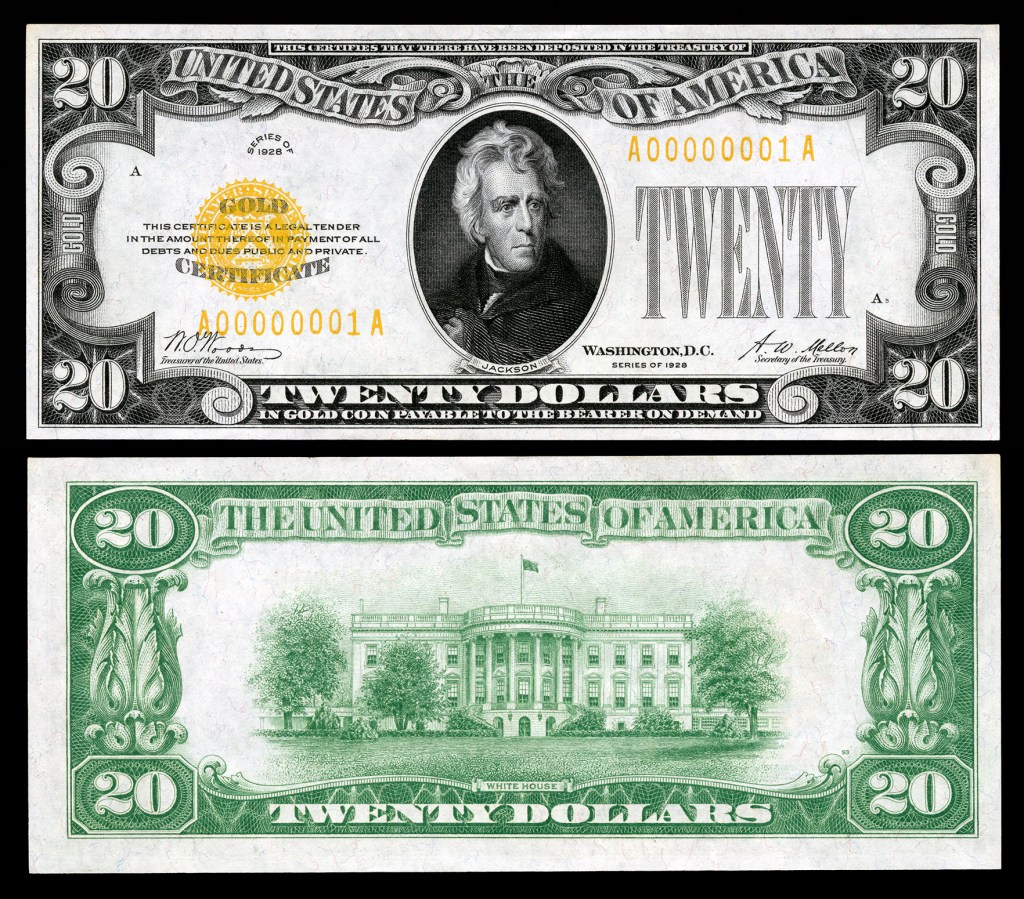
A gold-standard system did not require every paper note to sit next to an identical physical coin, but the institution promising conversion needed enough gold reserves—and enough confidence in those reserves—to meet redemption demand. That made reserve management central to monetary policy. If gold began leaving the banking system, authorities could tighten credit, raise interest rates, or take other steps to defend convertibility. The same reserve concept still exists today even though modern currencies are no longer redeemable for gold; BitcoinVersus.Tech has tracked the world’s largest official gold reserves and the modern gold market.
Gold Parity Linked Exchange Rates Between Countries
If two countries each defined their currency in terms of gold, their exchange rate was indirectly tied together through those gold definitions. For example, if one currency unit represented twice as much gold as another, the implied exchange relationship tended toward two-to-one, apart from transaction and shipping costs. This helped create relatively stable long-run exchange rates during the classical period, but it also meant domestic monetary policy had to respect international gold flows rather than focus only on local economic conditions.
The Gold Standard Constrained Central Banks
Under gold convertibility, a central bank could not treat money creation as completely independent from its reserve position. If too many currency holders demanded gold, the institution had to defend its reserves or suspend convertibility. That constraint could strengthen confidence in the currency, but it also limited how freely a central bank could respond to recessions, banking panics, or sudden liquidity needs. The previous lesson, OSHistory.005, showed why central banks were created to provide emergency liquidity; the gold standard placed an external limit on how elastic that liquidity could be.
Gold Supply Could Push Prices Up or Down
A gold standard could limit discretionary money creation, but it did not guarantee perfectly stable prices. The Federal Reserve notes that when gold production failed to keep pace with economic growth, the monetary system could experience deflationary pressure; large new gold discoveries could work in the opposite direction. This is the central tradeoff: the monetary base was tied to an external commodity supply rather than adjusted solely according to the needs of the domestic economy.
Convertibility Could Be Suspended in a Crisis
The gold standard depended on the promise of redemption, but governments sometimes suspended that promise during wars or severe financial pressure. Britain stopped gold payments during the 1797 Restriction Period and ultimately left the gold standard in 1931 after heavy reserve losses. In the United States, Roosevelt’s 1933–1934 gold program ended domestic dollar redemption into gold and changed the official gold price from $20.67 to $35 per ounce. The Federal Reserve’s own historical account describes this as a reversal of the earlier system in which holders could convert paper currency into gold.
Leaving the Classical Gold Standard Did Not End Every Gold Link
It is important not to compress several different monetary systems into one lesson. The classical gold standard, the interwar gold-exchange standard, and the later Bretton Woods system were not identical. They used gold in different ways and gave different actors different redemption rights. This lesson stops at the core classical idea—fixed gold parity and convertibility—while later lessons can treat those successor systems separately.
Gold and Bitcoin Solve Scarcity Differently
Gold and Bitcoin are often compared because both are scarce assets, but Bitcoin is not a gold-backed currency. A gold-standard note was a redeemable claim on an external reserve asset; Bitcoin is the native digital asset of its own distributed ledger, with issuance rules enforced by the protocol rather than by a promise to redeem it for something else. That distinction matters when comparing the history of monetary backing with Bitcoin’s fixed-supply design.
Prior Lessons
- OSHistory.001: The Coincidence of Wants
- OSHistory.002: Commodity Money — Why Some Goods Work Better as Money
- OSHistory.003: Standardized Coinage — Weights, Mints, Seigniorage, and Trust
- OSHistory.004: Early Banking and Ledger Money — Deposits, Banknotes, Checks, and Reserves
- OSHistory.005: Bank Runs and the Rise of Central Banking
Exercises
- Define convertibility in one sentence.
- Explain what a fixed gold parity means.
- Using a hypothetical currency, define 1 unit = 0.05 ounce of gold. How many units equal one ounce?
- Explain why a central bank losing gold reserves might raise interest rates under a gold standard.
- Give one advantage and one constraint created by gold convertibility.
- Explain why a gold standard is not the same thing as Bitcoin.
Knowledge Check + Answers
- What was the core promise of the gold standard? A currency unit had a defined relationship to gold and could be redeemed according to the system’s convertibility rules.
- What is parity? The official conversion relationship between a currency and a fixed quantity or price of gold.
- Why did gold reserves matter? They supported confidence that redemption requests could be honored.
- Could a gold standard still experience inflation or deflation? Yes. Changes in gold supply relative to economic growth could push the price level up or down.
- Why could gold convertibility limit a central bank? Excessive money creation or credit expansion could trigger gold outflows and threaten the fixed parity.
- Did the end of the classical gold standard immediately end every international link to gold? No. Later gold-exchange and Bretton Woods systems retained different forms of gold linkage.
- Is Bitcoin redeemable for gold? No. Bitcoin is its own native digital asset and is not a claim on gold reserves.
Elementary Conclusion
The easiest way to remember the gold standard is: paper and bank money were trusted partly because a fixed rule connected them to gold. The system gained credibility from convertibility and reserve discipline, but that same rule limited how freely monetary authorities could respond when economies, banks, or governments came under pressure. The next history lesson should move forward from this foundation without mixing every later gold-linked system into the same topic.
Editor’s Note
Featured image: realistic gold-bar photograph via Unsplash, cropped to exactly 1200×630. Body image: 1928 U.S. $20 Gold Certificate, Bureau of Engraving and Printing / Wikimedia Commons, public domain. Videos were selected from the Federal Reserve Bank of St. Louis, Bank of England, Atlanta Fed, Philadelphia Fed, Federal Reserve Education, MIT OpenCourseWare, Marginal Revolution University, and a directly relevant historical explainer. The Bluesky embed comes from Federal Reserve research on central-bank gold reserves.
Support and donation options are available through BitcoinVersus.Tech.
BitcoinVersus.Tech is not a financial advisor. Content is provided for informational and educational purposes.


Leave a comment