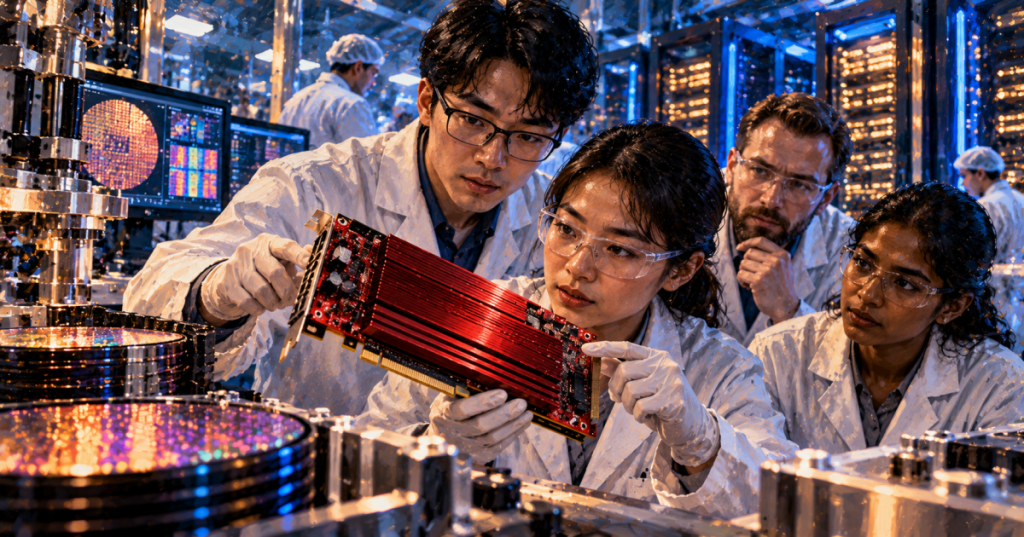
South Korean chipmaker FuriosaAI has raised $620 million in a Series D financing round that values the company at approximately $2.9 billion, giving it fresh capital to expand production of its RNGD AI inference accelerator and develop a third-generation chip. Announced October 28, the financing includes backing from South Korea’s National Growth Fund, Cisco Investments and other international investors.
The Seoul-based company says its RNGD card is already in mass production and expects to manufacture 20,000 units in 2026, with plans to more than double output next year. Those figures are company targets, not independently confirmed shipment totals. Samsung SDS and LG Group are among the customers deploying its technology, according to FuriosaAI.
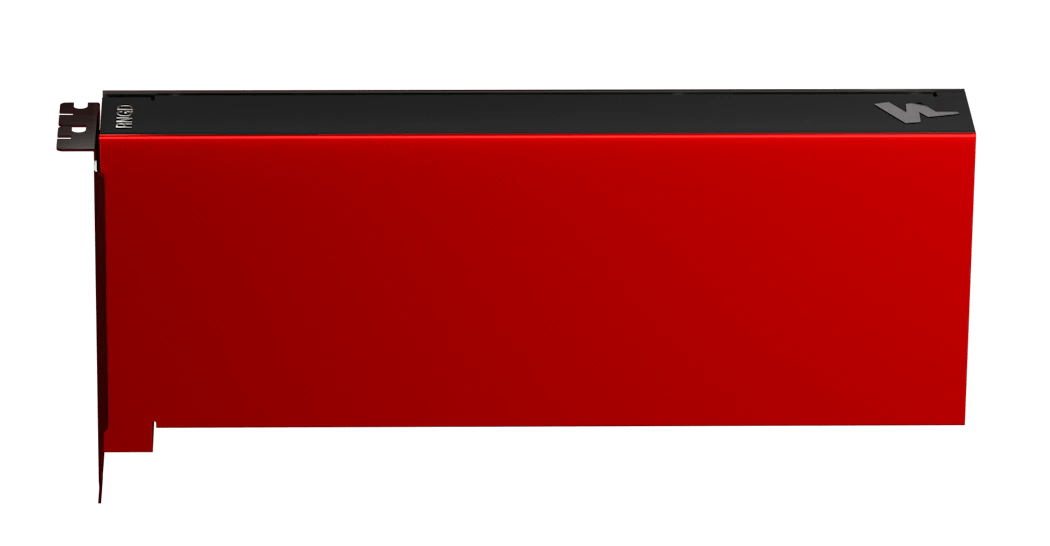
Unlike general-purpose GPUs used for both training and inference, RNGD is designed specifically to run trained models. FuriosaAI markets its 180-watt, air-cooled PCIe card to operators that want more inference capacity without rebuilding existing data center cooling systems. Its eight-card NXT server is specified at 3 kilowatts, 384 GB of HBM3 memory and 4 petaflops of peak FP8 computation.
Power efficiency is the selling point
Inference—the process of generating answers from an already-trained model—can create a substantial recurring electricity bill. FuriosaAI claims RNGD can serve roughly twice as many users per kilowatt as a comparable Nvidia RTX PRO 6000 configuration under its test conditions. That is a vendor benchmark, not a universal result across models, batching patterns or software stacks.
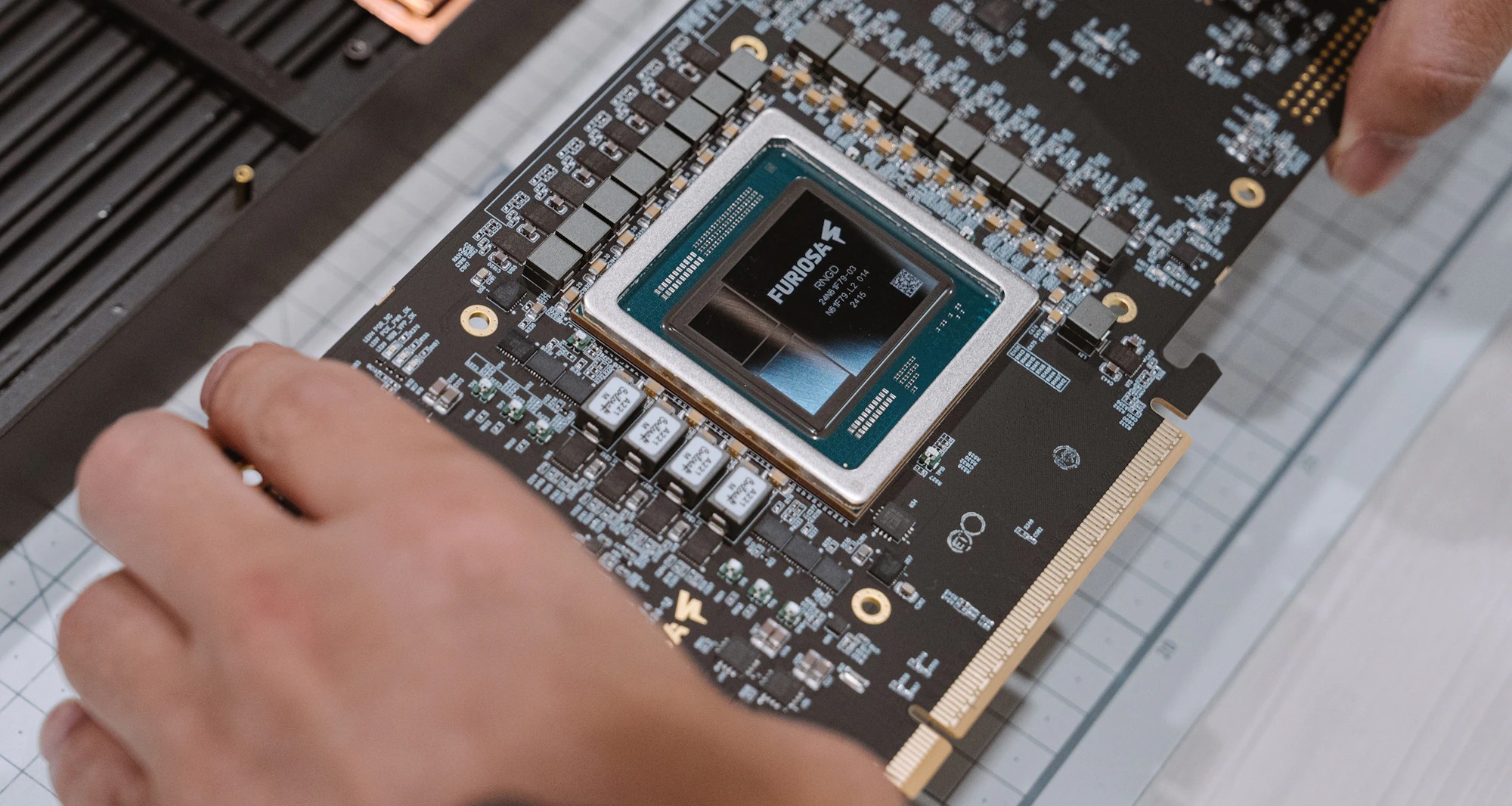
The processor uses FuriosaAI’s Tensor Contraction Processor architecture, which is designed to execute higher-dimensional tensor operations and reduce unnecessary movement of data. The chip includes 48 GB of HBM3 memory and a 1.5 TB/s memory interface. Actual throughput and power consumption depend on the model and deployment configuration.
Funding a production ramp and a 2nm successor
The round includes approximately $280 million from South Korea’s National Growth Fund. FuriosaAI plans to use the proceeds to scale deployments, strengthen its software stack and advance a third-generation accelerator being developed with Broadcom and other partners. The proposed successor uses a 2-nanometer, multi-die design with HBM4-class memory; it is a development roadmap, not a shipping product.
The company also points to an expanding software stack, including Kubernetes support and improvements to its inference runtime. That software work matters because chip performance alone does not guarantee that cloud operators can move production applications off established GPU platforms.
For data center operators, the test is whether the hardware delivers sustained throughput, low latency and lower cost at the wall socket across real workloads. FuriosaAI’s funding and production milestones make it a more substantial challenger, but claims of superiority over Nvidia still require comparable independent benchmarks.
We volunteer daily to ensure the credibility of the information on this platform is Verifiably True. If you would like to support our work and help further secure the integrity of our research initiatives, please scan the QR code below to donate 5,000 sats.

BitcoinVersus.tech is not a financial advisor. This media platform reports on financial subjects purely for informational purposes.


Leave a Reply