
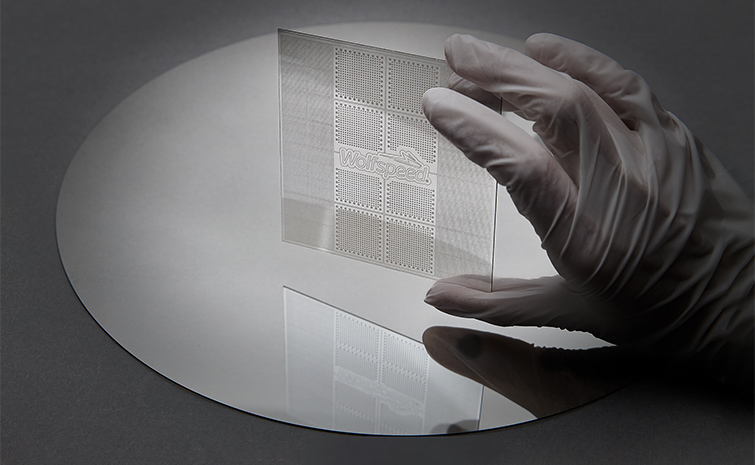
Wolfspeed introduced a commercially available transparent silicon carbide material on October 29, extending the semiconductor manufacturer’s wafer technology into augmented-reality optics and potential quantum-computing hardware. Branded TSiC, the optical-grade material is designed to transmit light with low absorption while maintaining the durability and thermal properties of silicon carbide.
The company says the new substrates are available in 150 mm and 200 mm diameters, with 300 mm versions offered for sampling. This is a materials launch, not an announcement that consumer AR glasses or working quantum computers already use TSiC. Wolfspeed has not published a product-specific price or named a mass-production customer.
Why transparent silicon carbide matters for AR glasses
An AR display uses optical waveguides to steer images into a wearer’s eyes. A material’s refractive index influences how much light can be guided through a thin optical layer. Wolfspeed argues that silicon carbide’s high refractive index, low birefringence and mechanical hardness could help make waveguides with wider fields of view and less bulky optical assemblies.
The trade-offs still depend on manufacturing quality, optical efficiency and integration with display components. TSiC substrates are engineered for low visible-light absorption and flat surfaces, according to Wolfspeed’s product documentation. The company has not disclosed head-to-head commercial headset performance measurements. Previous BitcoinVersus.Tech coverage of Snap’s AR glasses plans shows why lighter, more capable optics remain an important challenge.
Wolfspeed’s 2025 overview of silicon carbide wafer manufacturing. Archival manufacturer footage illustrating its materials platform.
Quantum potential comes with a larger caveat
Silicon carbide can host engineered crystal defects that researchers investigate as qubits and light-emitting quantum interfaces. Wolfspeed says a single crystalline platform could support quantum-state storage and optical links, potentially simplifying future devices. However, commercial substrate availability is not evidence of a complete, fault-tolerant quantum computer; useful systems would still require control, isolation and error-correction advances.
The broader research connects material purity and defect engineering with optical behavior, topics examined in BitcoinVersus.Tech’s semiconductor photoluminescence explainer and its reporting on compact photonic waveguides.
Wolfspeed’s 2022 opening of its 200 mm silicon carbide fabrication facility. The video documents existing manufacturing infrastructure, not the new TSiC release.
Wolfspeed has already expanded its 200 mm silicon carbide materials portfolio, while work on larger 300 mm substrates continues. Whether TSiC gains widespread use will depend on wafer yields, pricing and customers successfully integrating the material into finished products.
Editor’s Note: We volunteer daily to ensure the credibility of the information on this platform is Verifiably True. If you would like to support our work and help further secure the integrity of our research initiatives, please scan the QR code below to donate 5,000 sats.

Scan the QR code with a compatible Bitcoin wallet while viewing this article on a laptop or larger screen. Donation address: 3C9o19EH5HSiwEPyCTmEKzxhNCbo2X6TTb.
BitcoinVersus.tech is not a financial advisor. This media platform reports on financial subjects purely for informational purposes.


Leave a Reply