
San Francisco startup Discovered Materials announced a $1 million prize pool on November 5, 2026, for solutions to five longstanding materials-science problems. The company, which develops artificial-intelligence tools for semiconductor research, enlisted academic advisers to identify problems involving superconductivity, chip interfaces and thermal properties. The awards are an announced research challenge, not evidence that any problem has been solved.
The company emerged from Y Combinator’s spring 2026 program and previously disclosed a $9 million seed financing round. Its official website describes AI agents that generate candidate materials, simulate properties and support laboratory testing. TechCrunch reported the new prize initiative on November 5 after speaking with co-founder Advaith Sridhar and researchers involved in selecting the questions.
Five scientific questions, not five finished products
The proposed challenges include explaining cuprate superconductivity, predicting atomic structures at silicon–silicon dioxide interfaces, connecting microscopic grain structures to heat-transfer behavior, explaining light-induced changes in superconducting materials, and improving density-functional-theory calculations. Their difficulty varies: some ask for a physical theory, while others seek more accurate numerical methods.
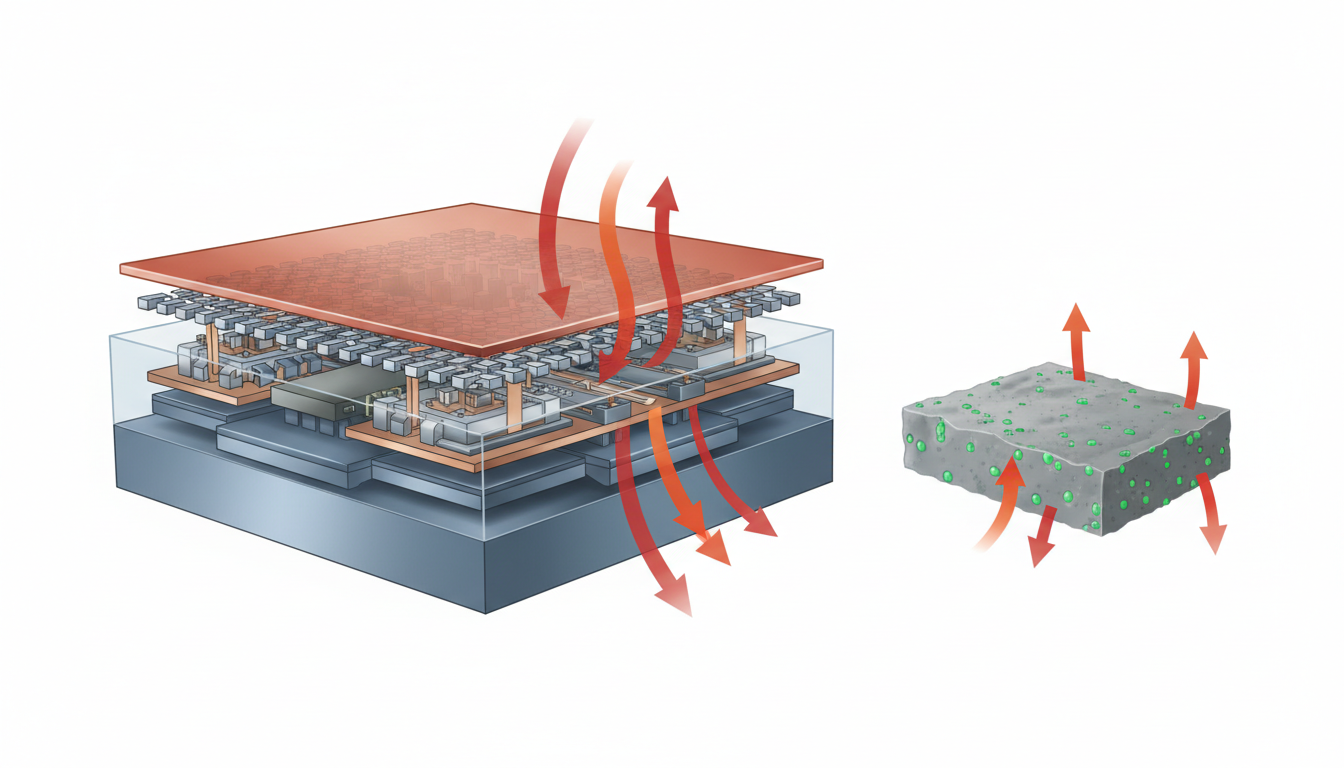
Silicon dioxide interfaces are especially important because they influence electrical behavior and reliability in semiconductor devices. Thermal materials matter because densely packed chips generate substantial heat. Better predictive methods could reduce costly experimentation, but a mathematically promising model must still survive measurements, manufacturing tolerances and long-term reliability tests.
The startup says frontier AI models were allowed to work on the questions for several days with online resources and made little progress. That assessment is based on company-led testing described to TechCrunch, not an independently reproduced benchmark result. A prize amount also does not establish the conditions for payment; the public materials reviewed do not provide complete judging rules, deadlines or eligibility terms.
Why AI materials research remains difficult
In conventional computational materials science, density functional theory estimates electronic behavior from quantum-mechanical approximations. Researchers combine such calculations with experimental measurements to narrow candidate compounds. AI systems can accelerate proposal and screening, but errors in simulation assumptions or training data can lead to candidates that fail when fabricated.
Discovered Materials says its existing Material Discovery Bench was developed with contributions from researchers associated with IBM, imec, Stanford and Cambridge. The company also claims to have synthesized thermal-interface candidates comparable with established commercial products. Detailed public measurements sufficient to independently validate the latter claim were not available in the sources reviewed.
The engineering problem connects with earlier BitcoinVersus.Tech coverage of atomically thin magnetic materials and possible successors to conventional silicon. Both topics demonstrate how laboratory material properties must be distinguished from mass-produced chips.

A benchmark for scientific progress
The broader goal is to create problems with meaningful verification standards so AI models can be assessed against difficult physical science questions. Stanford researcher Felipe Jornada, who helped develop the challenges, told TechCrunch that understanding unresolved material behavior could influence electronics, energy storage and manufacturing.
Relevant BitcoinVersus.Tech reporting includes research on harvesting data-center heat, silicon-carbide material development and the historical foundations of engineered materials. Each illustrates the distance between identifying useful physical behavior and deploying reliable technology.
Sridhar told TechCrunch that he now expects the company to identify an industrially useful material in less than a year, an accelerated forecast rather than a demonstrated achievement. The next measurable milestones are publication of complete prize rules, reproducible solutions and independent experimental validation. Until then, the $1 million initiative remains a test of whether AI can help answer difficult questions—not proof of a new semiconductor manufacturing breakthrough.
Editor’s Note: Reporting distinguishes the company’s public claims and founder forecasts from independently demonstrated materials results. Primary context comes from Discovered Materials’ website; the November 5 challenge was reported by TechCrunch. Illustrations are conceptual and are not laboratory photographs.

We volunteer daily to ensure the information on this platform is Verifiably True. If you would like to support the research, please scan QR code.


Leave a Reply