Investment manager VanEck argued on November 4 that Bitcoin miners converting facilities into artificial intelligence data centers had been caught in an indiscriminate market selloff. Its tracked group of powered-shell providers declined about 35% on average during October, although VanEck reported no cancellations of signed leases among the public companies it analyzed. The assessment is an investment thesis, not proof that the shares are undervalued.
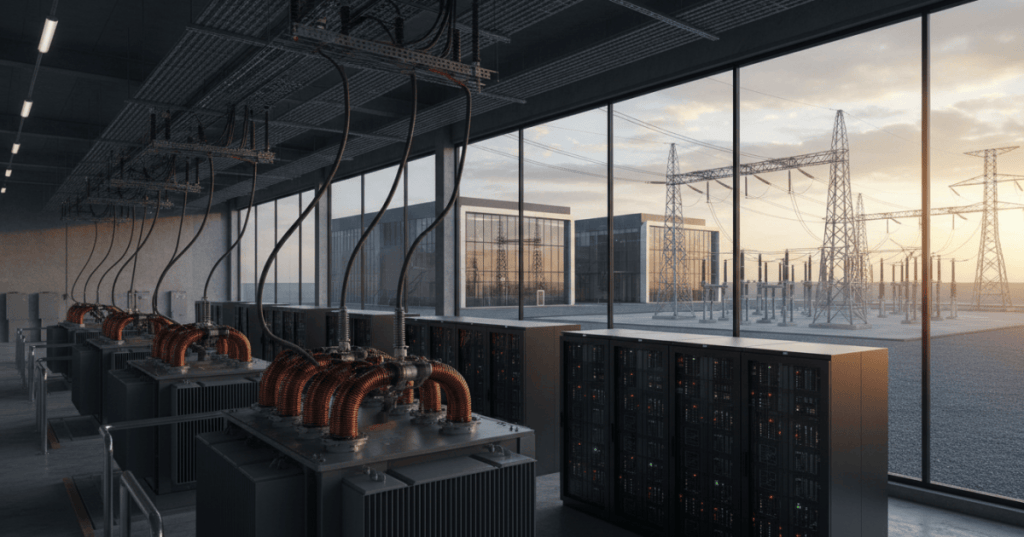
The findings add a fresh valuation argument to earlier reporting on miners’ grid-connected power assets. A Bitcoin mining campus may already have substations, transformers, utility agreements, land and high-capacity electrical infrastructure. Reusing those assets for AI computing can shorten development timelines, but server halls, cooling and financing may still require extensive upgrades.
Powered buildings are not GPU clouds
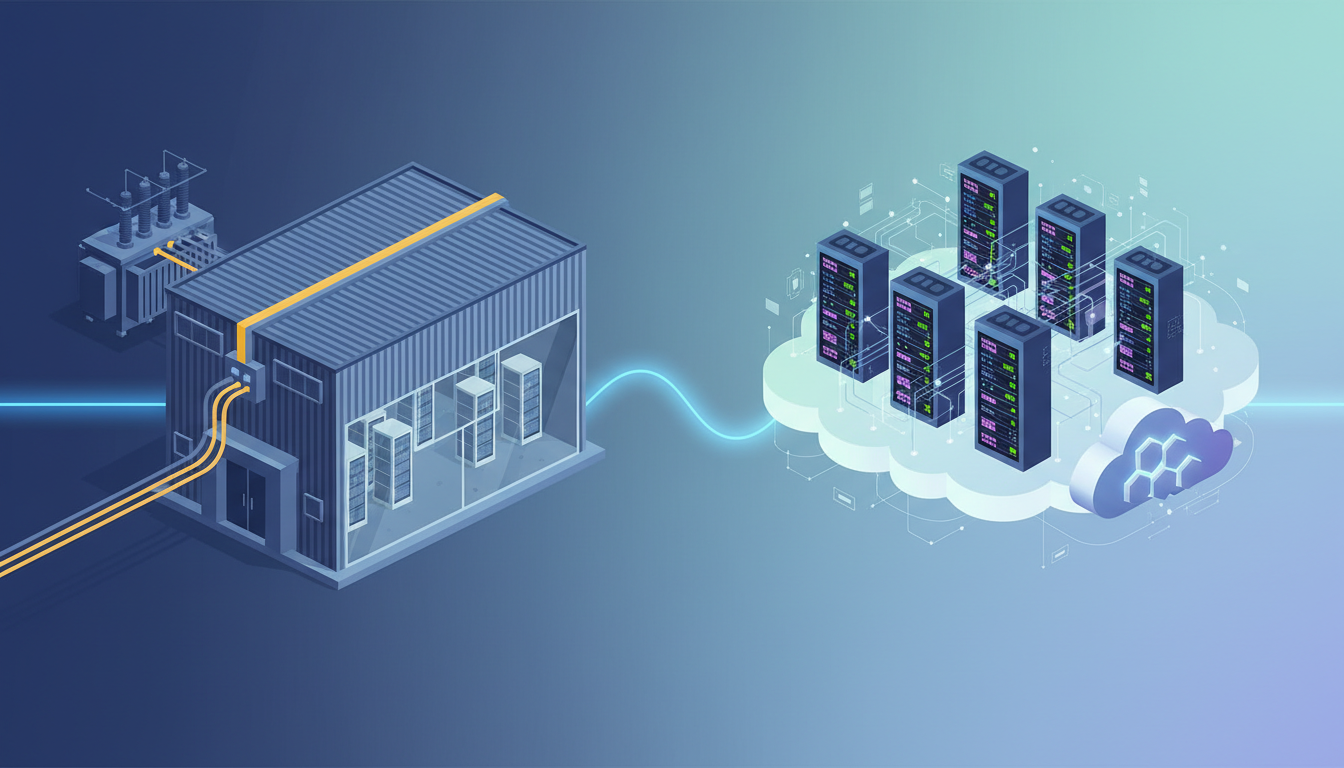
VanEck distinguishes powered-shell providers from neocloud companies. A powered-shell operator supplies an energized building or campus where customers install computing equipment. A neocloud buys graphics processing units and rents computing capacity to customers. Some companies, including IREN, operate across both models.
The distinction matters because building leases may run 10–20 years, while GPU rental contracts can be considerably shorter. VanEck argues investors treated the models as though they carried identical financing and obsolescence risks. Its November 4 research note cites rising borrowing costs, inflation concerns and political uncertainty as major drivers of the selloff.
Grid connections become a scarcity argument
VanEck points to approximately 2,290 gigawatts of projects in the United States interconnection queue during 2025, compared with 53 GW reaching commercial operation that year. The roughly 2% comparison is a flow-to-stock ratio, not a probability that an individual data center will connect. The broader queue also contains electricity generation and storage projects, so its entire capacity should not be described as pending AI demand.
For miners with operating electrical infrastructure, scarcity can strengthen negotiations with tenants. Recent Riot data center leasing coverage demonstrates how long-term contracts are increasingly central to former mining sites. Meanwhile, Cipher’s Texas power pipeline shows why announced gigawatts must be separated from capacity already energized and available to tenants.
Financing risks remain substantial
VanEck estimates that its powered-shell group trades at roughly half the 2028 enterprise-value-to-EBITDA multiple of established data center real estate trusts. The comparison depends on forecasts, projected project completion and differing operating risks. An apparently cheaper multiple is not evidence of equivalent assets or earnings quality.
The report estimates that the next unsigned expansion phase could require $5.7 billion–$9.1 billion in equity, leaving a possible $0.6 billion–$3.2 billion funding gap across selected companies. Those figures are scenario estimates rather than confirmed capital raises. Higher construction costs, delayed utility connections, tenant credit problems and shareholder dilution could weaken returns.
Bitcoin mining can provide interim revenue while an AI conversion is planned, although profitability depends on network difficulty, Bitcoin prices and electricity costs. Earlier hashprice and power-cost analysis explains why mining cash flow cannot be assumed to remain stable. The IREN transition similarly highlights differences between contracted future revenue and recognized results.
Investors will need to track energized megawatts, executed leases, financing terms, construction delivery and actual rental income. VanEck’s bullish conclusion remains a forecast contingent on those milestones, not a guaranteed rebound.
Editor’s Note. The November 4 VanEck report is the primary source for the selloff figures and valuation estimates. VanEck may hold positions in companies discussed. The May 2026 video provides earlier context rather than footage of the latest research. The two illustrations are editorial artwork. Video playback requires independent browser testing.

Scan the donation code from another device if your phone cannot scan its own screen.
We volunteer daily to improve the credibility of the information on this platform. If you would like to support the research, please donate here: 3C9o19EH5HSiwEPyCTmEKzxhNCbo2X6TTb
BitcoinVersus.tech is not a financial advisor. This media platform reports on technical and financial subjects purely for informational purposes.


Leave a Reply