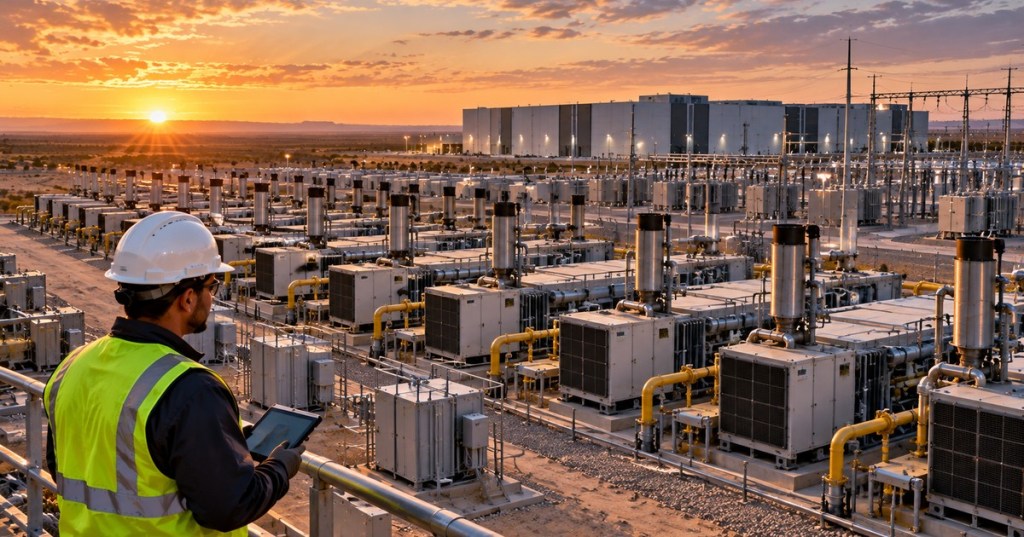
Kodiak Gas Services plans to supply 76 megawatts of primary, natural-gas-fired electricity to a West Texas data center under a six-year agreement announced September 21. The company expects to begin deploying generation equipment in the fourth quarter of 2026, with installation continuing into early 2027.
Kodiak will provide approximately 40 reciprocating-engine generator units and supporting electrical equipment. Its announcement did not identify the data-center operator, its contracted investment-grade hyperscaler or the GPU designer guaranteeing the data-center lease.
The agreement covers behind-the-meter baseload capacity: power generated near the facility rather than bought solely through a conventional utility supply. That makes the engines a proposed primary electricity source, not merely emergency generators.
How the 76 MW system would work
Kodiak has not published a project commissioning date, the value of the six-year contract or a price per megawatt-hour. It expects to begin recognizing revenue in the first quarter of 2027, but revenue timing does not establish when every generator will be operating.
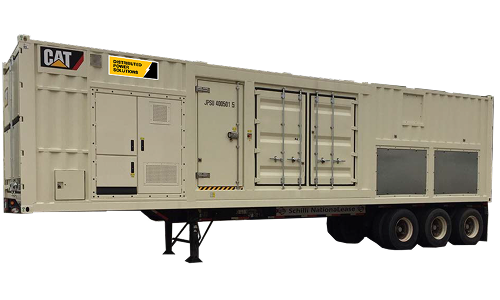
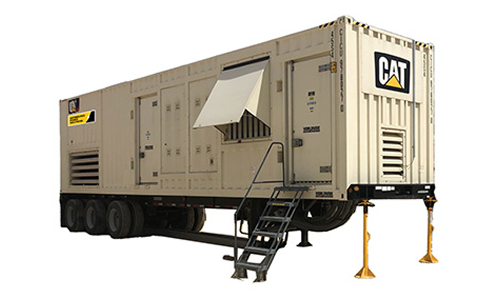
The roughly 40 engines would be deployed with the balance-of-plant equipment needed to operate a power site, including distribution and controls. Kodiak’s generator fleet includes several reciprocating models, but the company did not specify the models or their individual ratings for this agreement.
Such modular units can be staged as data-center demand increases. They also depend on gas delivery, emissions permits, cooling, maintenance and reliable operation. Natural gas combustion produces carbon dioxide and other air pollutants, while upstream methane leakage can increase the fuel’s overall climate impact.
A growing business in behind-the-meter power
Kodiak said this is its second long-term agreement to supply primary electricity to a data center. About half its power-generation portfolio was under long-term contracts at the September announcement, and management targets two gigawatts of generation capacity by 2030. The 2 GW figure is a company goal, not installed power at this site.
A broader shift toward on-site generation is emerging as data-center developers seek ways to build without waiting exclusively for grid interconnections. The economics depend on gas prices, operating efficiency, emissions compliance and the cost of maintaining generators over the contract term.
In a BloombergNEF discussion recorded at its April 2026 New York summit, industry executives examine how LNG exports and rising data-center electricity demand compete for U.S. natural gas. This is industry context, not footage of Kodiak’s planned deployment.
The next milestone is physical deployment. Until Kodiak confirms the generator configuration, first power, fuel supply arrangements and operating performance, the 76 MW should be treated as contracted capacity rather than electricity already delivered. Texas is also seeing gas-linked Bitcoin mining projects and large AI data-center proposals competing for access to energy infrastructure.
BitcoinVersus.Tech — Independent reporting on energy, Bitcoin mining, data centers and technology.
Editor’s Note: We volunteer daily to ensure the credibility of the information on this platform is Verifiably True. If you would like to support our independent reporting, scan the original QR code below to donate 5,000 sats. Best results on a laptop or larger screen.

On mobile, save or screenshot the QR and use your Bitcoin wallet’s scan-from-photo option if supported. Otherwise, display it on another screen and scan it using your phone.
BitcoinVersus.tech is not a financial advisor. This media platform reports on financial subjects purely for informational purposes.


Leave a Reply