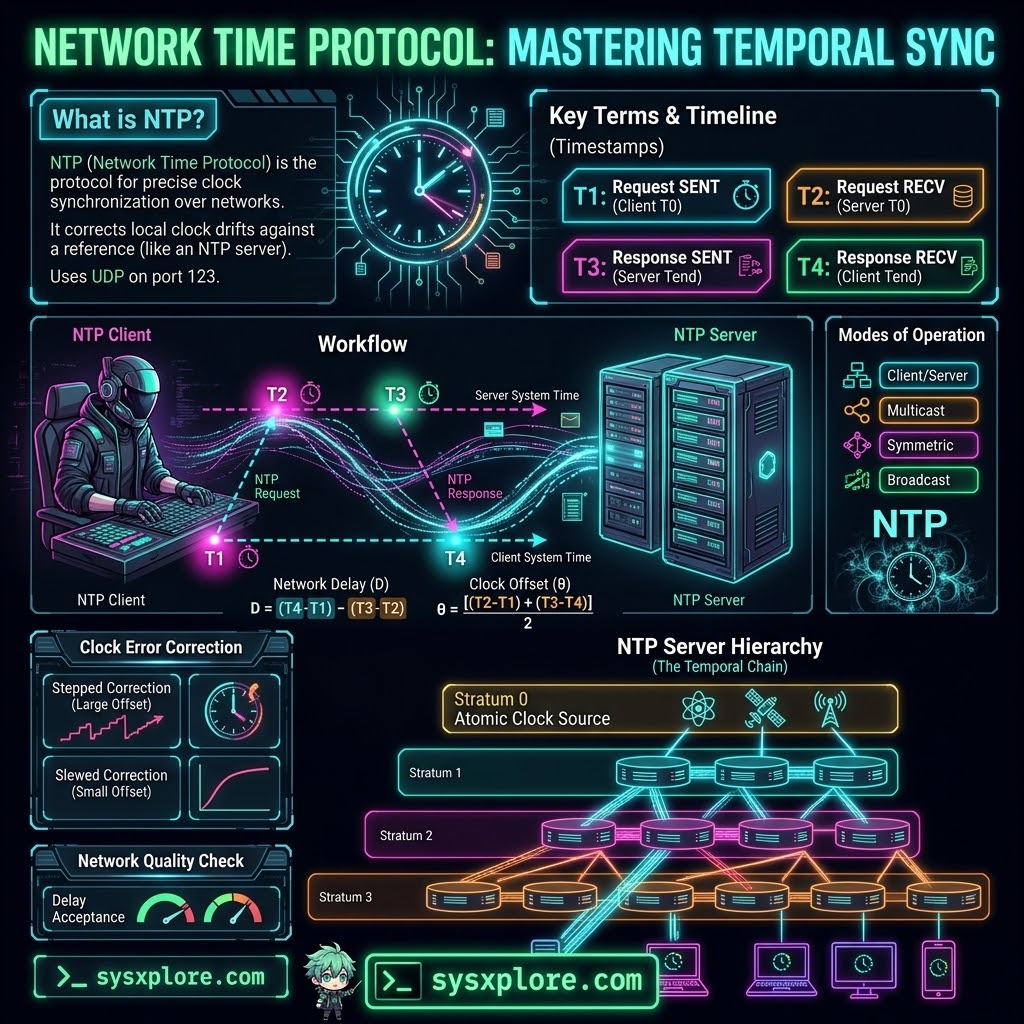
Network Time Protocol (NTP) servers synchronize computer clocks to Coordinated Universal Time (UTC) by transmitting timestamp data over UDP port 123, typically keeping endpoints within milliseconds of true time across the public internet.
The protocol organizes servers into a stratum hierarchy that acts like a pyramid of precision: Stratum 1 servers sit at the top, connected directly to atomic clocks or GPS-disciplined oscillators, while Stratum 2 servers sync to Stratum 1, Stratum 3 to Stratum 2, and so on down the line.
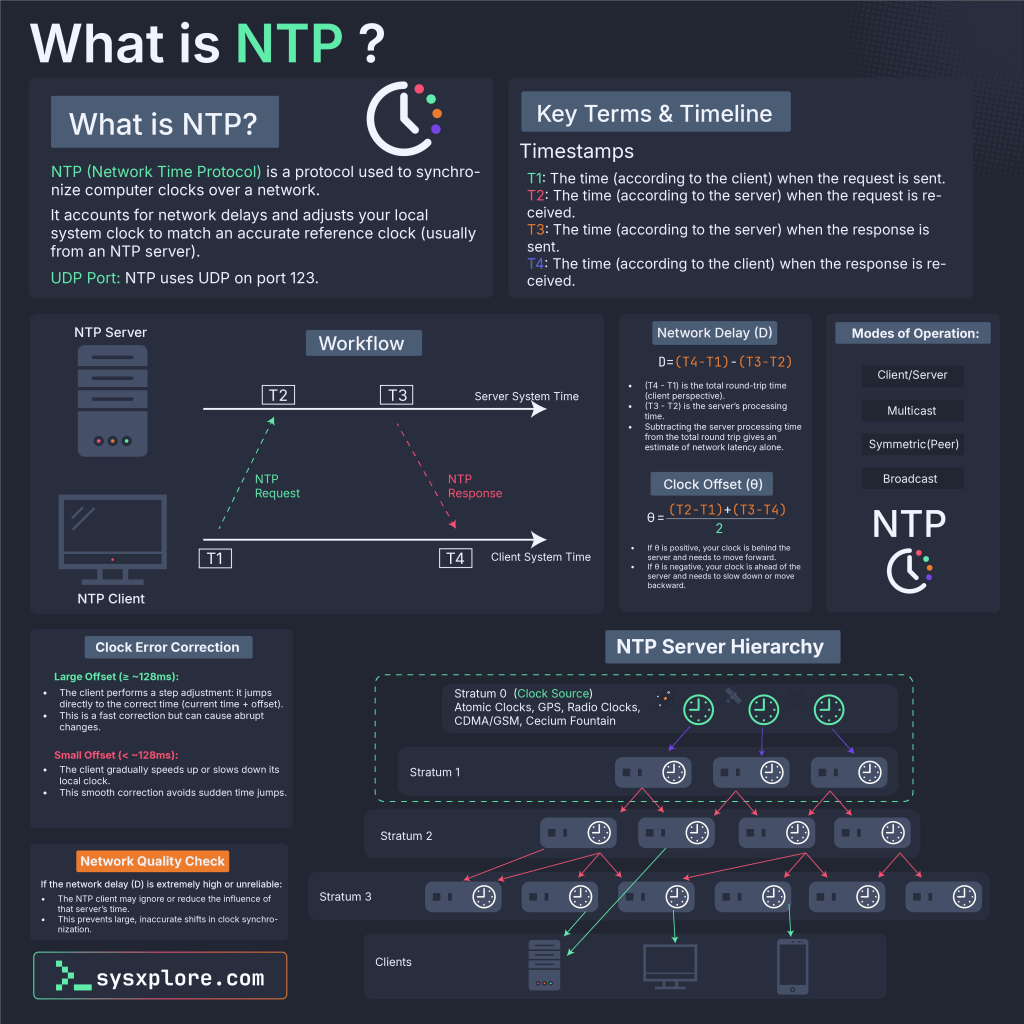
For example, pool.ntp.org is a global volunteer cluster where millions of devices query Stratum 2 and Stratum 3 servers without ever needing to know which atomic clock started the chain. This layering prevents any single reference clock from becoming a bottleneck while still giving every client a traceable path back to UTC.
Organizations that cannot tolerate clock drift often run their own Stratum 1 NTP server tied to a roof-mounted GPS antenna or a cesium reference. A major stock exchange, for instance, might deploy a Meinberg or Spectracom GPS NTP appliance on its local network so that every trade timestamp aligns to UTC within a fraction of a millisecond—well within regulatory requirements.
Because the protocol uses lightweight UDP port 123 packets rather than TCP handshakes, a single Stratum 1 box can answer thousands of requests per second without adding connection overhead.
Even a small business can harden its Active Directory domain by pointing all Windows clients to an internal Stratum 2 source that syncs upstream to NIST or Google Public NTP, cutting external dependency and firewall exposure.
Whether you are troubleshooting Kerberos authentication errors, correlating logs across a Kubernetes cluster, or certifying trades for FINRA, the underlying mechanism is the same: NTP marches every system toward the same UTC baseline through a scalable, redundant stratum model.
Public services like time.google.com and time.nist.gov make it trivial for home users and cloud instances to join the hierarchy, while enterprise teams can build private strata for compliance. Understanding how UDP port 123, stratum levels, and reference clocks interact is the first step toward eliminating the “clock skew” warnings that silently break distributed systems.
BitcoinVersus.Tech Editor’s Note:
We volunteer daily to ensure the credibility of the information on this platform is Verifiably True. If you would like to support to help further secure the integrity of our research initiatives, please donate here: 3C9o19EH5HSiwEPyCTmEKzxhNCbo2X6TTb
BitcoinVersus.tech is not a financial advisor. This media platform reports on financial subjects purely for informational purposes.


Leave a Reply