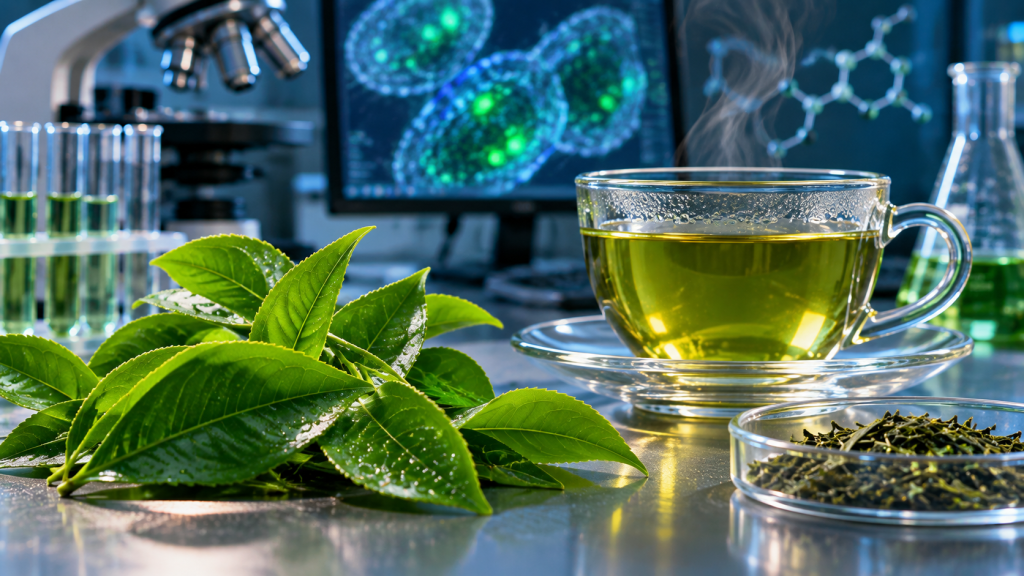
A green-tea compound called epigallocatechin gallate (EGCG) was associated with lower estimated biological age and reduced mortality in an analysis of 10,977 U.S. adults. The study, published November 2, 2026, in Aging Cell, also found longer lifespans in laboratory worms exposed to EGCG. The human findings remain observational and do not demonstrate that drinking tea extends life.
Researchers led by scientists at Fujian Medical University and Fuzhou University Affiliated Provincial Hospital combined U.S. National Health and Nutrition Examination Survey (NHANES) records with experiments in Caenorhabditis elegans worms and cultured mouse liver cells. Separating the human associations from the laboratory interventions is essential to interpreting the results.
What the human data showed
The researchers compared adults reporting no EGCG intake with those reporting lower or higher intake. The groups consuming EGCG had adjusted biological-age acceleration scores approximately 0.53 and 0.62 years lower, respectively, than non-consumers. Biological age was estimated using PhenoAge, which combines chronological age with routine blood markers. A difference in a biological-age score is not the same as a measured extension of lifespan.
Mortality analysis included 10,964 participants. Over an average 7.9 years of linked follow-up, 1,276 deaths were recorded. After statistical adjustments, mortality hazard ratios were 0.83 and 0.82 for the lower- and higher-intake groups versus non-consumers—relative associations of about 17% and 18% lower hazard, not absolute reductions in a person’s probability of death. Estimated remaining life expectancy at age 45 differed by roughly 1.22 and 1.27 years, respectively. None of these estimates establishes causation.
The exposure measure came from limited self-reported dietary recalls, which may not capture long-term habits. Tea drinkers can also differ from non-drinkers in income, smoking, diet and medical history despite statistical adjustment. Notably, EGCG was supplied predominantly by tea, including black tea; the study did not exclusively test green-tea drinkers.
Worms provided a possible mechanism
In C. elegans experiments, EGCG extended lifespan by up to 10.73% under the tested conditions and improved measures of health during aging. Gene-expression and lipid studies pointed to peroxisomes—cell structures involved in processing very-long-chain fatty acids. When researchers reduced activity of genes needed for peroxisome formation or fatty-acid breakdown, the worm longevity benefit disappeared.

In mouse liver cells made senescent by a chemotherapy drug, EGCG also reduced some laboratory markers associated with cellular senescence. Neither those cell results nor the worm experiments prove an anti-aging effect in humans.
Why the finding matters
The potential cellular pathway gives researchers something concrete to investigate in better-controlled human studies. Earlier BitcoinVersus.Tech reports examined how close science is to addressing aging, claims about future healthy lifespans, animal longevity research, and gene editing and longevity. EGCG adds a nutrition-and-cell-metabolism angle without supplying evidence for human rejuvenation.
Ordinary tea consumption should not be confused with concentrated EGCG supplementation. High-dose green-tea extracts have been linked to liver injury. Researchers still need prospective human studies and controlled trials before recommending EGCG as a longevity intervention.
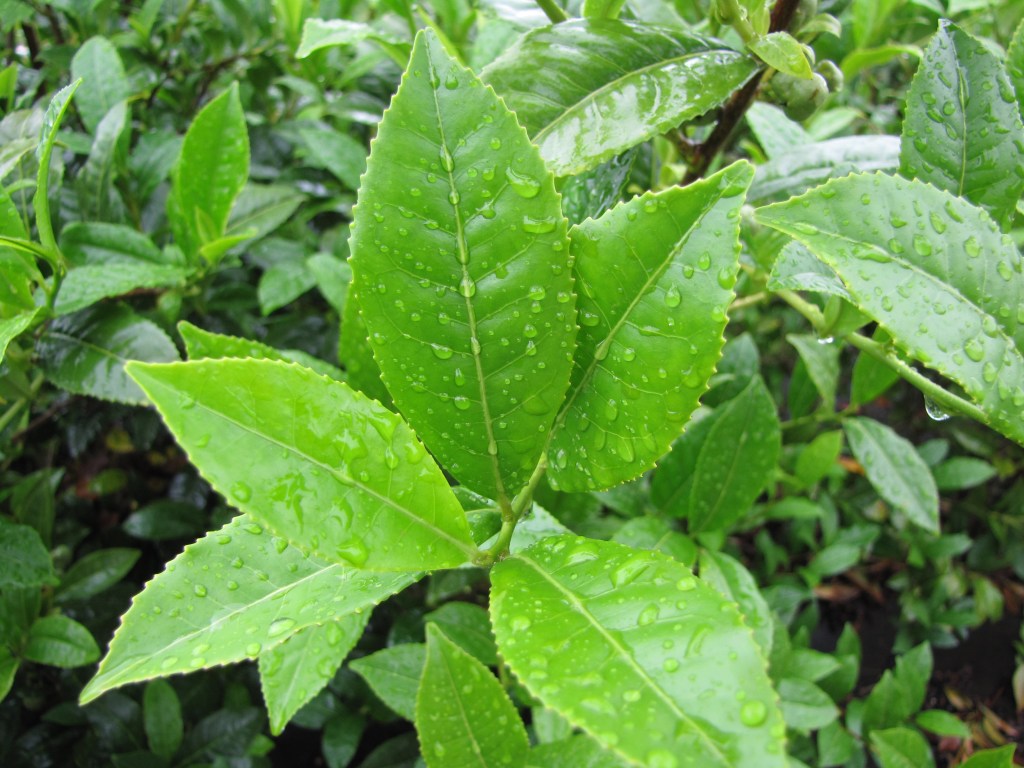
Editor’s Note: Human data are observational; the 10.73% lifespan change occurred in laboratory worms, not people. The featured cover is editorial artwork, and in-body photographs illustrate the plant and research organism.
We volunteer daily to improve the credibility of the information on this platform. If you would like to support the research, please donate 5,000 sats using the original Bitcoin donation QR code below.

BitcoinVersus.tech is not a financial advisor. This media platform reports on technical and financial subjects purely for informational purposes. Biotechnology and nutrition reporting is not medical advice or a recommendation to use supplements.


Leave a Reply