
Palo Alto Networks agreed on November 18, 2026, to acquire Applied Compute, an artificial intelligence company specializing in post-training and inference for open-weight models, in an all-stock deal valued at $4.5 billion, subject to adjustments. The transaction remains pending regulatory clearance and other closing requirements, with completion expected during Palo Alto Networks’ fiscal third quarter of 2027. The SEC filing and company announcement confirm the agreement. The news is not evidence that the companies have already combined their products or operations.
The planned purchase would expand a cybersecurity vendor into infrastructure that trains, customizes and runs AI models. Applied Compute provides a platform for adapting downloaded models to enterprise data and serving responses through inference workloads. Palo Alto Networks says it wants to combine those capabilities with security controls, allowing businesses to operate models in public clouds or environments governed by national data-residency rules.
Why open-weight models are attracting security vendors
An open-weight model makes its trained numerical parameters available for deployment or adaptation, although licensing conditions can differ from traditional open-source software. Enterprises may favor greater control over model selection, hosting costs, proprietary data and specialized performance. BitcoinVersus.Tech previously explained the distinctions between open-weight and closed models. Model accessibility alone does not mean the surrounding software, data or runtime is secure.
Palo Alto Networks official video, March 27, 2026: “How to Stop Adversarial AI Threats with Prisma AIRS 3.0.” Archival product explanation, not footage of the November 18 acquisition announcement.
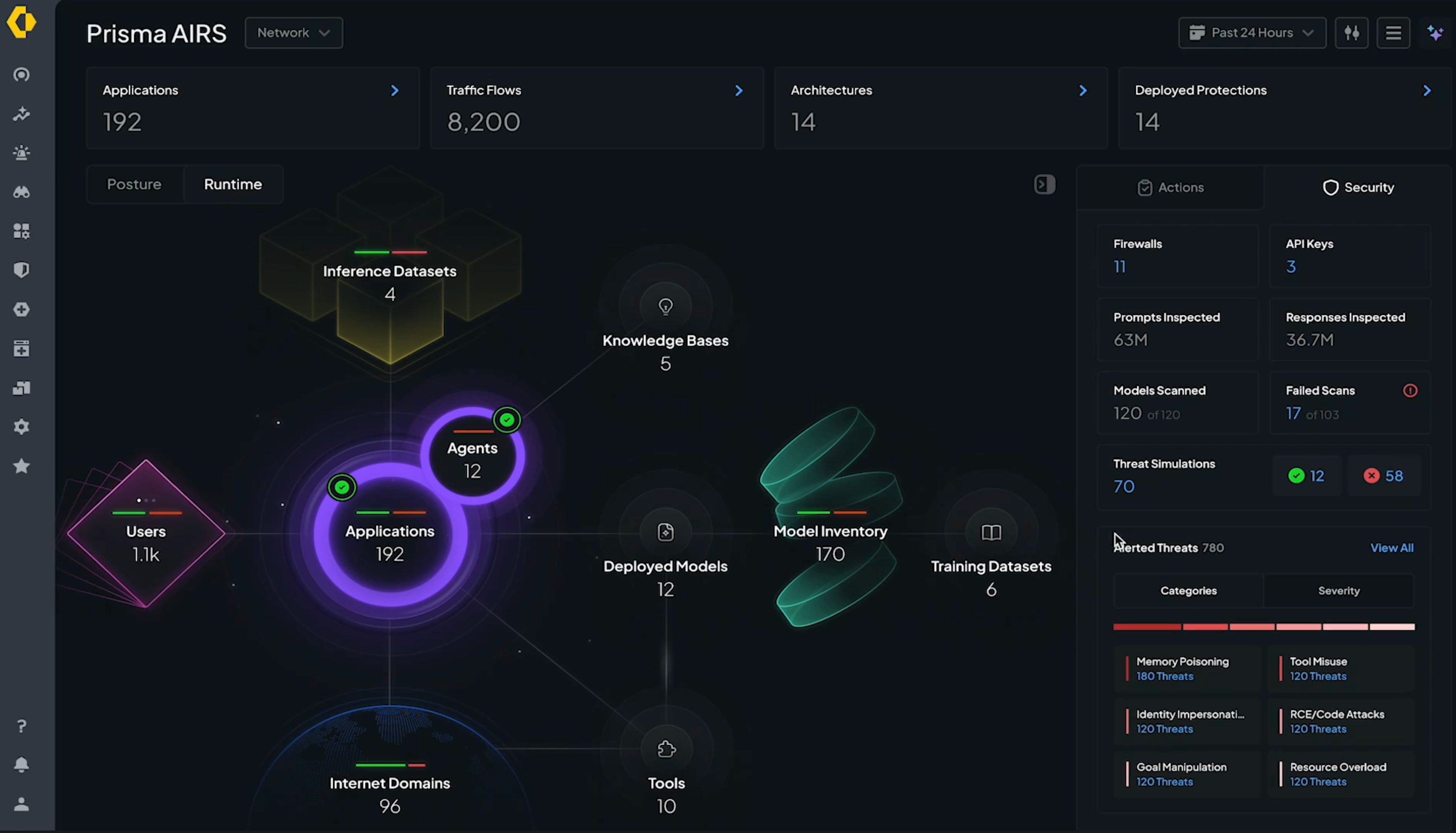
A secure deployment needs controls at several layers. Teams must inspect downloaded model files, govern access to training data, isolate inference workloads, monitor prompts and tool calls, and restrict agents that can alter infrastructure or retrieve sensitive records. Model poisoning, prompt injection and data leakage remain separate risks even when the inference platform is operated by a security specialist.
The proposed deal has strategic and financial implications
Applied Compute’s team is expected to join Palo Alto Networks after closing. Co-founder and chief executive Yash Patil is slated to become co-chief AI officer. Palo Alto Networks says the acquired research group could improve its own large and small AI models while offering enterprise customers a path to deploy customized open-weight systems. The announced product integration and timing remain plans, not established operating results.
Palo Alto Networks reported fiscal first-quarter 2027 revenue of $3.44 billion, up 39% from a year earlier, and next-generation security annual recurring revenue of $9.73 billion, up 66%. Those figures describe the established business before the Applied Compute combination. The quarter ended October 31, 2026. The company released its results on November 18. Annual recurring revenue is a contract-based run-rate measure, not the same as quarterly recognized revenue.
Palo Alto Networks official video, March 26, 2026: “AI Enterprise Security: Securing Autonomous Agents and Machine Workflows.” Archival overview of the company’s security strategy, not an acquisition briefing.
Integration challenges could limit the benefits
Buyers will need measurable evidence that the combined platform improves model quality, inference economics and protection without unacceptable latency or vendor lock-in. Running customer-adapted models also raises questions about audit trails, data retention, access controls, encryption and responsibility for security incidents. An all-stock acquisition carries valuation and shareholder dilution considerations, while regulatory review and technical integration could delay the expected timetable.
Palo Alto Networks has previously expanded AI security testing and automation. Related reporting covers continuous AI security testing and its earlier Console AI-agent transaction. Its existing products still face conventional threats, as illustrated by coverage of a GlobalProtect VPN vulnerability exploited by ransomware groups. AI security initiatives do not eliminate the need to maintain established network defenses.
The acquisition could give Palo Alto Networks a stronger role in enterprise AI model operations, beyond perimeter and runtime protection. For now, the confirmed event is a signed $4.5 billion agreement. Whether customers gain more secure or efficient open-weight deployments will depend on closing, integration, independent performance testing and clearly documented controls.
Primary sources: SEC Form 8-K, November 18, 2026; SEC Exhibit 99.2, acquisition announcement; fiscal Q1 results.


Leave a Reply