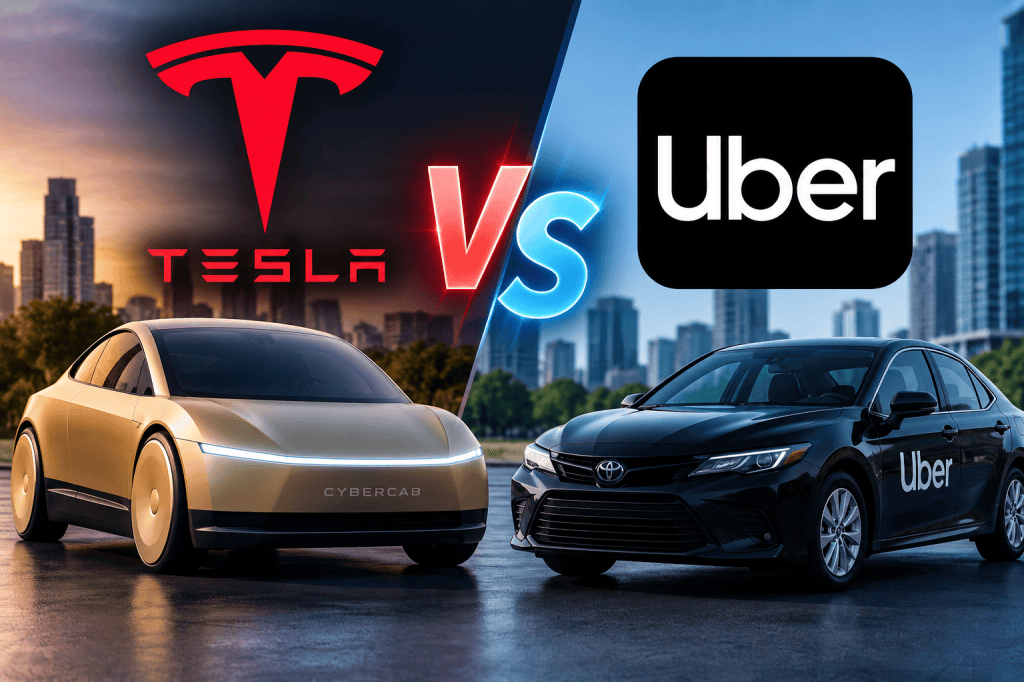
Tesla’s Cybercab has entered limited public service in Austin, Texas, giving riders access to the company’s purpose built autonomous taxi for the first time. Early fare data suggests Tesla may be able to undercut conventional ride hailing prices by a wide margin.
A rider reported paying $9.65 for a 15 minute Cybercab trip on September 4, compared with $16.99 for a Tesla Model Y Robotaxi and roughly $21 for an Uber including tip for the same trip.
The Cybercab fare was about 54 percent lower than the reported Uber total, although Tesla has not published a standard Cybercab fare schedule and one early trip cannot establish typical pricing.
Lower operating costs are central to Tesla’s robotaxi strategy.
Cybercab was designed from the ground up for autonomous transportation and removes the steering wheel and pedals found in conventional passenger vehicles.
Tesla began Cybercab production during 2026 after starting pilot production earlier in the year, and the company says the vehicle will serve as a core component of its expanding Robotaxi fleet.
Tesla currently offers Robotaxi service in limited areas of Austin, Dallas and Houston in Texas, along with Miami, Orlando and Tampa in Florida, while Cybercab rides remain restricted to limited areas of Austin.
Tesla’s existing Robotaxi pricing already showed signs of competing aggressively with established ride hailing services before Cybercab entered service.
Pricing data published earlier in 2026 by ride comparison platform Obi found Tesla Robotaxi fares were significantly cheaper than major competitors in San Francisco, with Tesla rides averaging roughly half the price of Waymo and remaining below Uber and Lyft on a per mile basis.
Cybercab could push operating economics lower because Tesla designed the vehicle specifically around autonomous fleet use rather than adapting a conventional passenger car for taxi service.
The rollout also arrives under federal scrutiny. The National Highway Traffic Safety Administration is evaluating Tesla’s certification of Cybercab because the vehicle lacks conventional controls and mirrors covered by existing federal motor vehicle safety standards. Reuters reported that roughly 45 Cybercabs were registered in Texas as the commercial rollout began, while the broader Tesla autonomous fleet in the state totaled about 420 vehicles.
Regulatory reviews, fleet availability and real world operating performance will determine how quickly Tesla can scale Cybercab beyond Austin and whether early fares near $10 become sustainable commercial pricing rather than introductory rates.
BitcoinVersus.Tech Editor’s Note:
We volunteer daily to ensure the credibility of the information on this platform is Verifiably True. If you would like to support to help further secure the integrity of our research initiatives, please donate here: 3C9o19EH5HSiwEPyCTmEKzxhNCbo2X6TTb
BitcoinVersus.tech is not a financial advisor. This media platform reports on financial subjects purely for informational purposes.


Leave a Reply