
Bitcoin ownership becomes more complicated when the owner loses a signing device, cannot access a recovery phrase, or dies. Liana Wallet 16.0, released November 3, 2026 by Wizardsardine, makes several tools for managing those risks easier to use. Its newest features include Taproot as the default for newly configured wallets, standardized encrypted wallet-policy backups, clearer transaction labels, and a security repair for an attack involving malicious Electrum servers.
As our OpenSwap privacy coverage explains, wallet features can evolve without changing Bitcoin’s consensus rules. Instead, it makes existing Bitcoin script capabilities accessible through a wallet whose spending policy can provide a delayed recovery route. A recovery key activates only after a coin’s relative timelock expires.
Wizardsardine-linked Liana product demonstration, recorded before version 16. The video explains the wallet’s underlying approach but does not demonstrate the November 2026 interface. Watch directly on YouTube if the embedded player does not load.
How Bitcoin inheritance works without handing over a key
A typical arrangement uses a primary key for ordinary spending and a separate recovery key protected by a relative timelock. Bitcoin’s script conditions restrict the backup signer until the delay matures. The owner can move coins to fresh outputs before their individual delays expire, restarting the countdown for those coins. It is therefore more precise to think about timelocks on individual unspent transaction outputs (UTXOs), not one global timer attached to a person’s wallet.
An heir also needs the wallet’s descriptor, which records spending conditions and key derivation details, not merely a seed phrase. Preserving signing keys without enough information to reconstruct the intended script can make recovery difficult or impossible. Liana’s official inheritance walkthrough recommends planning the recovery path and keeping the required documentation accessible to the intended signer.
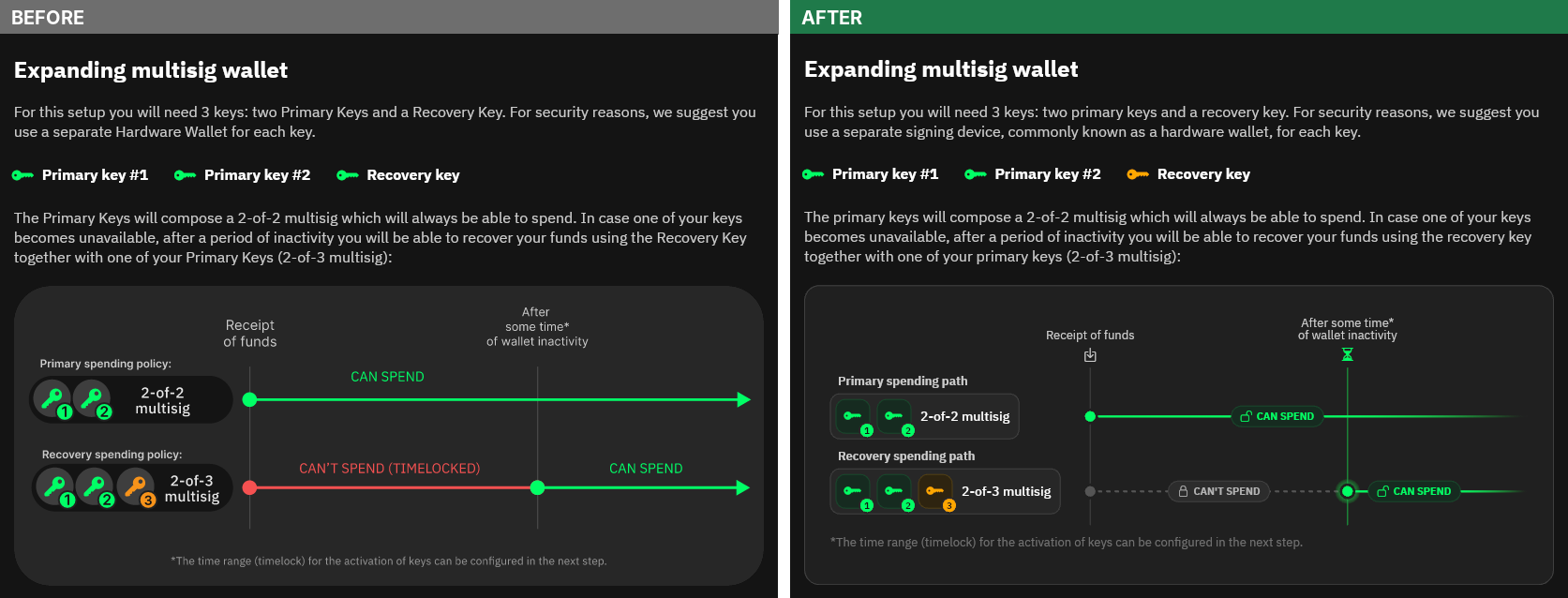
Taproot defaults and encrypted descriptor backups
Version 16 now recommends Taproot when creating a wallet. Under compatible spending conditions, a Taproot spend can keep unused recovery branches out of the published transaction and reduce the data needed on-chain. Hardware signer compatibility still matters; users may need to select the supported SegWit alternative. Privacy and fee advantages depend on the actual transaction path, not simply on ticking a setting.
The release also exports encrypted descriptors in the BIP138 format as .bip138 files, replacing the previous .bed format for new backups. Older backups remain readable in version 16, but older Liana releases cannot read the new format. A descriptor backup is not a replacement for the private signing-key backups. In a separate hardware-wallet development, BitcoinVersus.Tech covered COLDCARD’s codex32 and split-secret recovery features. The two systems protect different pieces of the recovery puzzle.
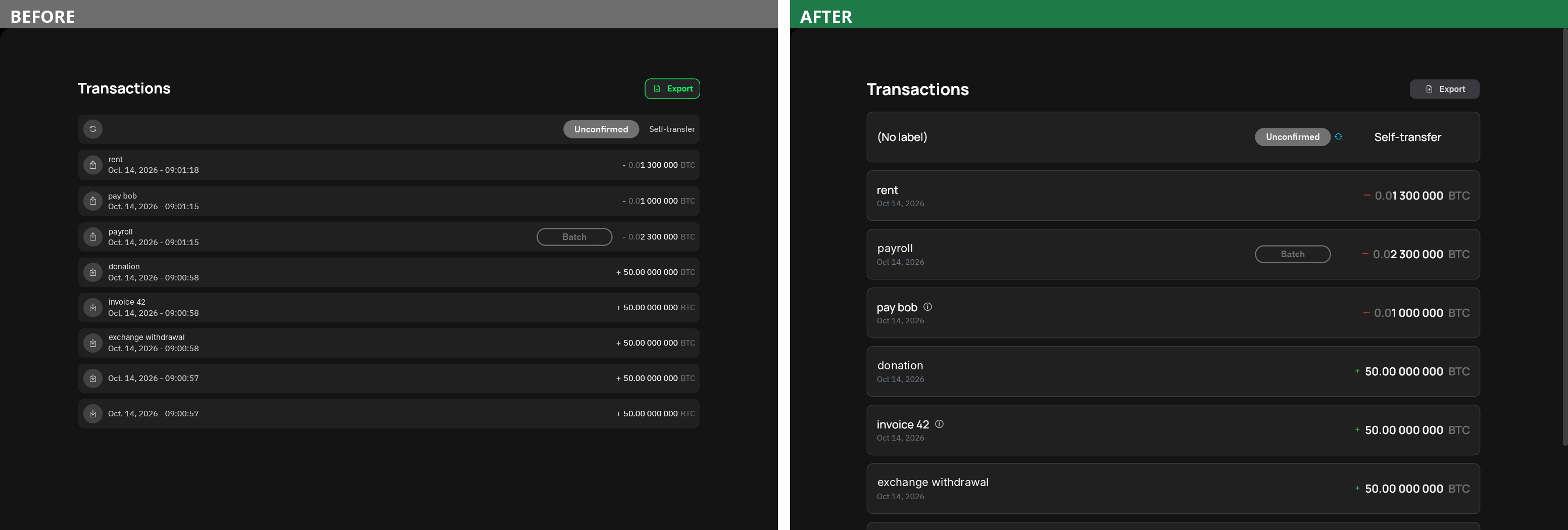
The security fix matters more than the interface
Wizardsardine also fixed a medium-severity weakness in the replace-by-fee (RBF) workflow. A malicious third-party Electrum server could misrepresent an outgoing payment and present a conflicting transaction paying the attacker when the user tried to raise a fee or cancel a payment. The exploit still required the user to sign an unintended replacement; it was not a remote theft of private keys. Version 16 checks transaction signatures and wallet ownership before preparing the replacement.
The practical defense remains to use a trusted node and verify destination addresses on a signing device. BitcoinVersus.Tech has separately reported an Electrum fee-bump exploit and a Bitcoin Core Tor/I2P privacy fix. Different incidents reveal why wallet security depends on transaction construction, network information, and human review, not on encryption alone.
The update has an important compatibility limit
Opening an existing Liana installation in version 16 migrates its database. According to the developer, version 15 and earlier cannot reopen a migrated database. Anyone operating the wallet on multiple computers should plan compatible upgrades and confirm verified backups first. The new release improves usability, but it does not eliminate the operational responsibilities of self-custody: tracking time-sensitive recovery paths, keeping descriptors and keys recoverable, and making a clear plan for beneficiaries.
Sources and media verification
Wizardsardine’s November 3 release announcement; Liana v16.0 GitHub release notes; Bitcoin Optech newsletter #432; official Liana resources and videos. YouTube is an authentic archival product demonstration, not a version-16 feature test. Cover image is an original colored-pencil editorial illustration; two interface comparisons come directly from the developer.
We volunteer daily to ensure the credibility of the information on this platform is Verifiably True. If you would like to support to help further secure the integrity of our research initiative, please scan the QR code below.



Leave a Reply