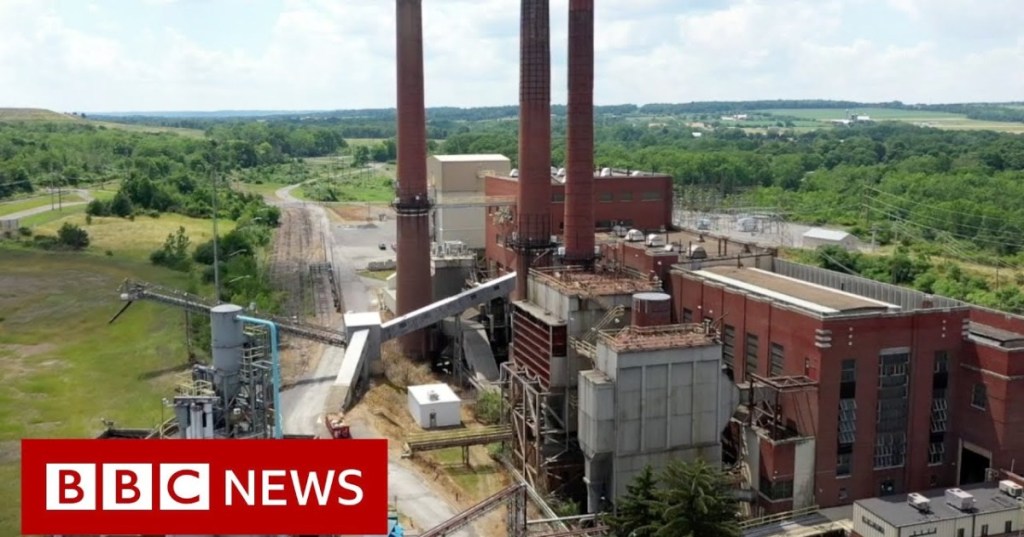
Vulcan Infrastructure and Power, formerly Greenidge Generation Holdings, is advancing design work for a potential 14 MW modular AI and high-performance computing (HPC) installation at its existing power plant near Dresden, New York. The company’s November 16 quarterly filing also describes a proposed initial 40 MW facility in Columbus, Mississippi. Both projects remain in predevelopment, without binding construction commitments. The existing New York generating station, by contrast, has a 106 MW nameplate rating and already serves Bitcoin miners and the wholesale electricity market.
A generating station with two electricity customers
The New York facility burns natural gas and supplies electricity directly to its adjacent data center while exporting power to the New York Independent System Operator (NYISO). Its November registration statement explains how wholesale prices and demand influence the volume of exported power. A behind-the-meter configuration places the computing load within the generating facility’s electrical boundary. It can reduce dependence on imported grid power without eliminating fuel, maintenance or environmental compliance costs.
The 106 MW figure represents generation nameplate capacity rather than the amount reserved for ASICs or future GPUs. At uninterrupted nameplate output, the plant would produce 2,544 MWh in 24 hours, a theoretical maximum before outages, auxiliary consumption or dispatch constraints. Our earlier Greenidge permit litigation coverage provides background on the site’s regulatory history.
Proposed compute capacity
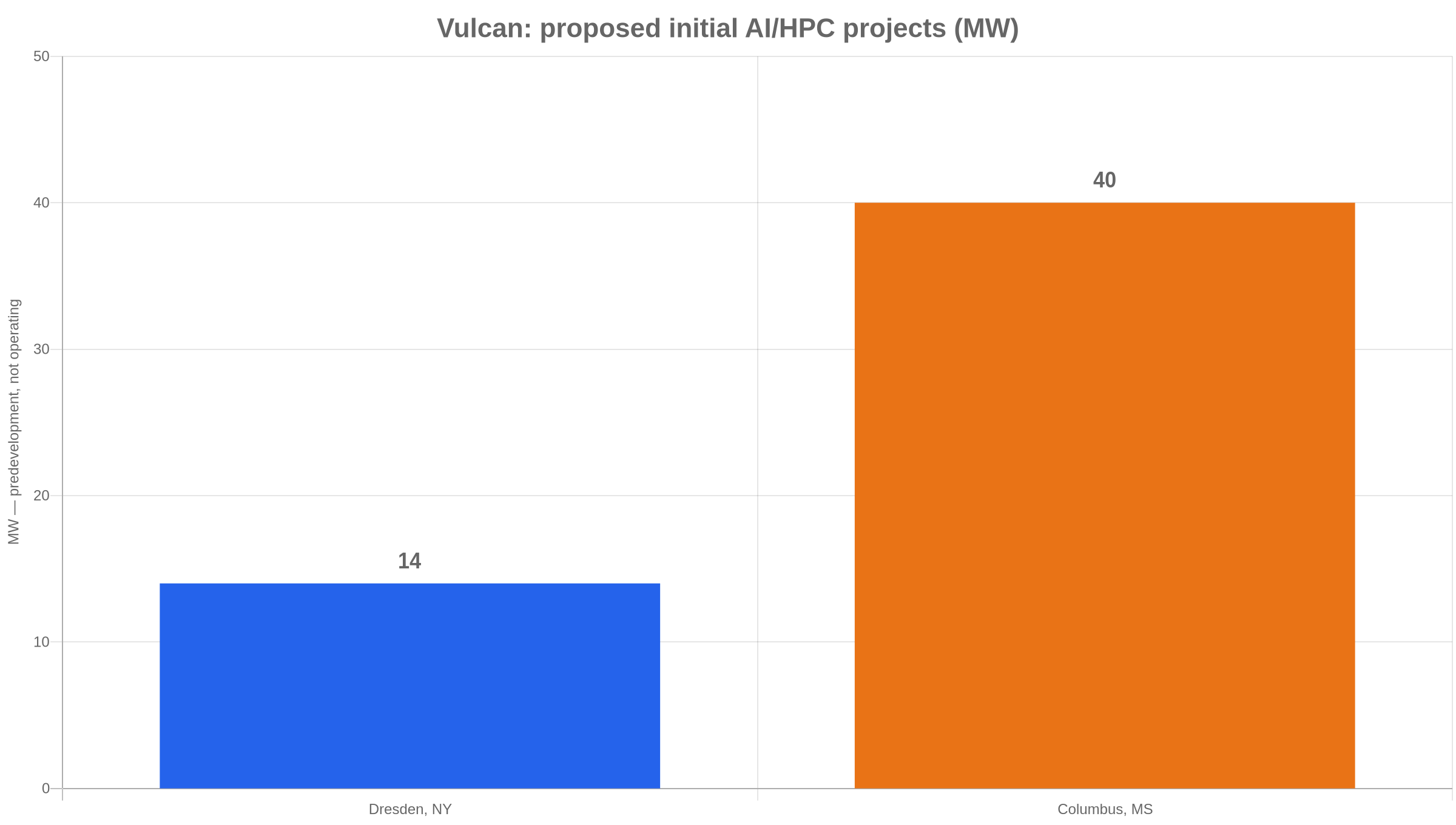
The two initial projects total 54 MW of proposed capacity. The 14 MW Dresden installation would replace existing equipment, while Columbus would be a separate development on company-owned land. Vulcan is evaluating a request for up to 250 MW of additional service through local utility channels in Mississippi; requested service is not an approved interconnection. The distinction also matters for Keel’s Québec conversion, where contractual power does not establish operational AI capacity.
Why flexibility matters
Bitcoin miners can curtail independent ASICs in response to electricity prices. A tightly coupled GPU cluster generally requires different networking, cooling and service reliability arrangements. A power plant supplying either workload must balance generation capability, electrical losses, grid commitments and the computing customer’s requirements. A similar relationship between gas production and computing appears in Saskatchewan’s proposed off-grid mining project.
Vulcan reported $26.1 million in power and capacity revenue for the first nine months of 2026, up 58% from a year earlier, in its November 16 earnings release. That revenue includes electricity sales and capacity-related compensation, rather than Bitcoin production alone. The increase does not establish improved overall profitability.
The engineering milestones ahead include tenant agreements, financing, required approvals, equipment procurement and commissioning. As with MARA’s operational mining expansions, the decisive measure will be documented energized capacity, not the size of a proposed project. Local environmental concerns about the Dresden plant, documented by Inside Climate News, also remain relevant when evaluating any future expansion of electricity consumption.
We volunteer daily to ensure the credibility of the information on this platform is Verifiably True. If you would like to support to help further secure the integrity of our research initiative, please scan the QR code below.

For mobile scanning, open the article on another display and scan the QR code with a Bitcoin wallet. The voluntary donation amount is 5,000 sats. Verify the receiving address 3C9o19EH5HSiwEPyCTmEKzxhNCbo2X6TTb before sending.
BitcoinVersus.tech is not a financial advisor. This media platform reports on financial subjects purely for informational purposes.


Leave a Reply